Self-publishing has opened doors for authors like never before. You can write, design, publish, and distribute your book without a traditional publishing deal. But with that freedom comes a crucial question: Which platform should you use to reach your audience effectively?
Two of the most widely used self-publishing platforms are IngramSpark and Amazon KDP. Each offers print-on-demand services, global distribution, and tools to get your book into readers’ hands—but their strengths and limitations differ.
In this guide, we’ll explore both platforms, compare them in detail, and provide actionable advice so you can choose the right approach for your self-publishing journey.
A Complete Guide to IngramSpark for Self-Publishing Success
IngramSpark is a self-publishing platform built for authors who want professional-quality books and broad distribution. Unlike platforms that focus solely on online sales, IngramSpark allows authors to reach bookstores, libraries, and retailers worldwide.
One of the biggest advantages of IngramSpark is its print-on-demand flexibility. You can choose multiple trim sizes, paper types, and finishes, including hardcover options. This means your book looks polished and professional, which is particularly important if you aim to sell in physical stores.
Another key feature is global distribution. IngramSpark connects authors to thousands of bookstores and libraries beyond Amazon. This extended reach can be crucial for building a long-term author brand.
You also get full control over your metadata and ISBNs. By using your own ISBN, your imprint appears on the book instead of the platform’s. This enhances credibility, especially for authors who want to establish a professional publishing brand.
Finally, IngramSpark supports multiple formats—both print and ebook—so you can reach readers in different mediums. Overall, it’s ideal for authors looking to combine professional quality with extensive reach.
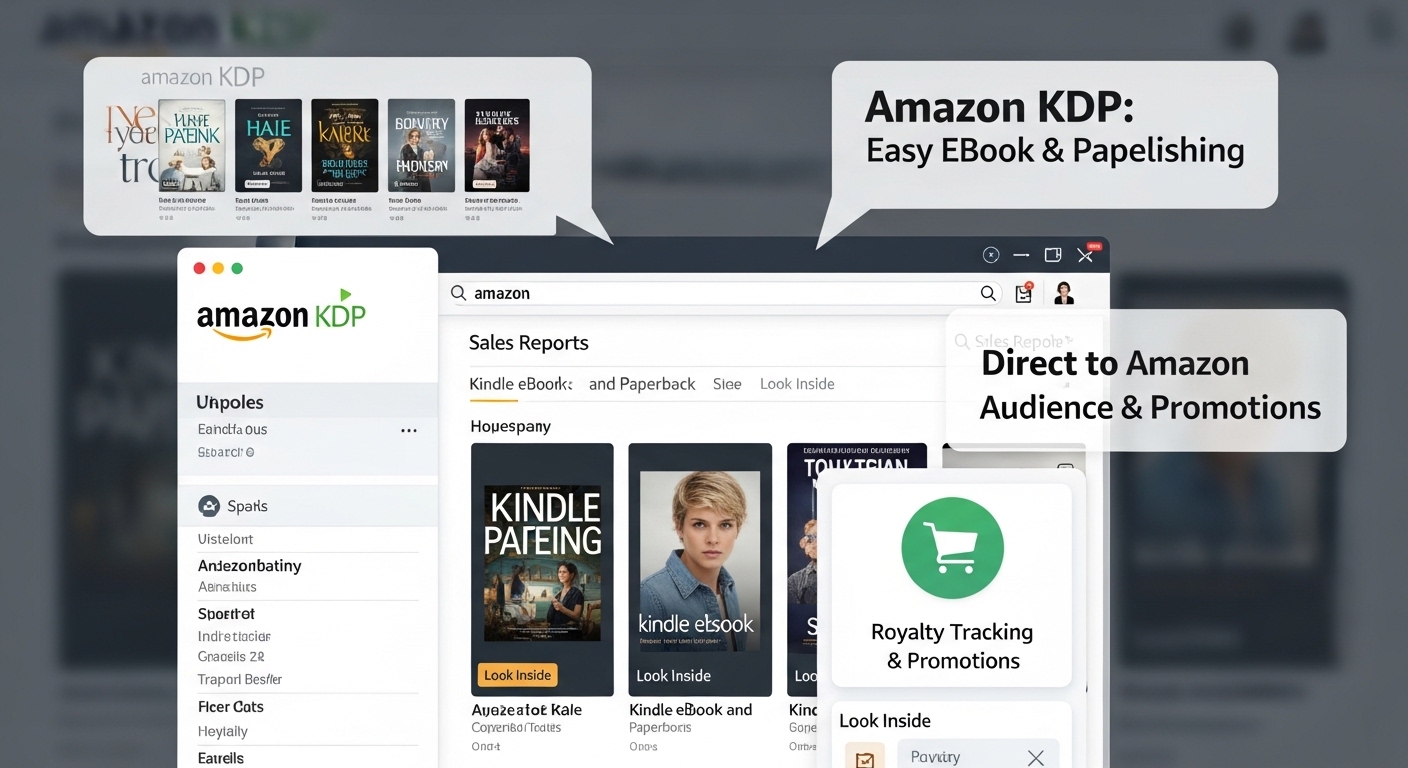
For authors focused primarily on Amazon sales, KDP is an easy, cost-free way to get started and reach a massive audience quickly.
Comparing IngramSpark and Amazon KDP
While both platforms provide self-publishing tools, they cater to different needs. The following table summarizes the main differences:
| Feature | IngramSpark | Amazon KDP |
| Print Quality | High-quality options with multiple trim sizes, finishes, and paper types | Good quality; fewer customization options |
| Distribution | Bookstores, libraries, online retailers worldwide | Primarily Amazon marketplaces |
| ISBN Ownership | Author-owned; full control over imprint and metadata | Free ISBN; Amazon listed as publisher |
| Upfront Cost | Setup fees and optional proofing | Free |
| Royalties | Flexible; typically 45–70% after printing costs | 60–70% for ebooks; print ~60% minus printing |
| Ease of Use | Professional-oriented; setup is more complex | Beginner-friendly; easy to use |
| Marketing Tools | None built-in; external marketing required | Integrated: Kindle Unlimited, Amazon Ads, promotions |
| Formats Supported | Paperback, hardcover, ebook | Paperback, hardcover, ebook |
From this comparison, the choice isn’t about “better” or “worse,” but about what aligns with your publishing goals.
Choosing the Right Platform Based on Your Publishing Goals
The best publishing setup ultimately depends on your priorities as an author. Some writers prioritize speed and simplicity, while others focus on broader distribution and professional print options. Understanding how each platform aligns with your goals can help you make a strategic decision.
When IngramSpark May Be the Better Choice
For authors aiming to position their book for wider distribution and professional print editions, IngramSpark often provides advantages. Its distribution network extends beyond online marketplaces into physical retail channels and libraries.
IngramSpark is particularly suitable if you want:
- Professional print quality, including hardcover editions
- Access to bookstores and libraries beyond online retailers
- Control over your own publishing imprint, maintaining a professional publishing identity
- International distribution, allowing your book to reach retailers and institutions worldwide
Because of these capabilities, many authors who want their books stocked in bookstores or available through library systems choose IngramSpark as part of their publishing strategy
When Amazon KDP May Be the Best Fit
Amazon’s Kindle Direct Publishing platform is often the first choice for authors seeking a fast, straightforward publishing process. It provides immediate access to a massive online audience and integrates tightly with Amazon’s marketplace.
KDP works best if you are looking for:
- Quick and free publishing with minimal setup requirements
- Primary exposure through Amazon’s large customer base
- Built-in promotional tools, including subscription programs and advertising options
- Paperback and eBook editions primarily aimed at Amazon readers
For many first-time authors, KDP offers a convenient entry point into self-publishing due to its simplicity and accessibility.
Why Many Authors Use Both Platforms
Instead of choosing one platform exclusively, many successful self-published authors combine both services to maximize reach. This approach allows them to benefit from Amazon’s enormous marketplace while still accessing the broader distribution network available through other channels.
A common strategy looks like this:
- Amazon KDP for Amazon-focused paperback and eBook sales
- IngramSpark for hardcover editions and bookstore or library distribution
Using both platforms strategically allows authors to expand their availability across multiple markets while maintaining credibility in both online and traditional retail spaces. By leveraging the strengths of each platform, authors can create a more comprehensive publishing strategy that supports long-term visibility and growth.
Practical Tips for Using Both Platforms
Using multiple publishing platforms can significantly expand your book’s reach, but it requires careful coordination. Without proper planning, authors may run into issues such as inconsistent metadata, pricing conflicts, or formatting discrepancies.
The following practical tips will help ensure your book is presented professionally across all distribution channels.
Assign Formats Strategically
Each platform tends to serve a slightly different role in the publishing ecosystem. Instead of duplicating the same setup everywhere, it’s often more effective to assign formats based on the strengths of each platform.
- Use one platform primarily for marketplace-focused distribution.
- Use another platform for broader bookstore or library distribution.
- Ensure the correct file type and format is uploaded to match the platform’s requirements.
- Avoid overlapping distribution paths that could cause listing conflicts.
Maintain Metadata Consistency
Metadata is the backbone of book discoverability. Inconsistent metadata across platforms can confuse retailers, disrupt catalog indexing, and even lead to duplicate listings.
- Keep the title, subtitle, and author name identical across all platforms.
- Use the same book description and keywords wherever possible.
- Ensure ISBN numbers match the correct edition of your book.
- Maintain consistent category and genre classifications.
Plan Pricing Carefully
Pricing becomes more complex when multiple distribution channels are involved. Printing costs, platform fees, and retailer markups can affect the final retail price.
- Calculate printing and distribution costs before setting your retail price.
- Adjust pricing to maintain healthy profit margins across platforms.
- Avoid large price differences between platforms that may confuse buyers.
- Monitor market trends and adjust pricing strategically when needed.
Use Author-Owned ISBNs
Owning your ISBNs provides long-term control over your publishing identity and imprint. Relying on free platform-assigned ISBNs can limit flexibility if you later move or expand your distribution.
- Purchase ISBNs directly from an official ISBN agency.
- Assign a unique ISBN to each format or edition of your book.
- Use the same publisher imprint name across platforms for brand consistency.
- Maintain records of ISBN assignments for future releases.
Always Review Proof Copies
Before approving wide distribution, reviewing a proof copy is essential. Digital previews often fail to reveal issues that appear in the final printed product.
- Check margins, spacing, and typography for readability.
- Verify image quality and alignment throughout the book.
- Inspect the cover placement and spine alignment
- Look for formatting inconsistencies between chapters.
By organizing formats strategically, maintaining consistent metadata, planning pricing carefully, using author-owned ISBNs, and reviewing proof copies, authors can successfully manage multiple publishing platforms while ensuring a professional and polished book presentation.
Planning ISBNs Across Formats
Every edition and format of your book requires a separate ISBN. Proper planning prevents confusion and ensures professional cataloging.
| Book Format / Edition | ISBN Required? | Notes |
| Paperback (First Edition) | Yes | Each format needs its own ISBN |
| Hardcover (First Edition) | Yes | Different from paperback |
| Ebook | Yes | Digital formats require unique ISBNs |
| Audiobook | Yes | Separate ISBN for audio editions |
| Revised Edition | Yes for major updates | Minor edits may not need a new ISBN |
| Translations | Yes | Each language edition requires a unique ISBN |
| Box Sets / Bundles | Yes | Treated as a new product with a new ISBN |
Tip: Buying ISBNs in blocks saves time and cost if you plan multiple books or formats.
FAQ: IngramSpark vs Amazon KDP
Q1: Can I use both platforms for the same book?
Yes. Many authors use KDP for Amazon sales and IngramSpark for bookstores and libraries. Consistency in ISBNs and metadata is crucial.
Q2: Which platform offers higher royalties?
KDP offers competitive ebook royalties; IngramSpark allows flexible pricing and can provide higher margins for print editions.
Q3: Do I need a separate ISBN for each platform?
Not per platform, but each format requires its own ISBN.
Q4: Which platform is better for hardcover books?
IngramSpark provides higher-quality hardcover printing with more customization options.
Q5: Are there upfront costs?
KDP is free; IngramSpark charges setup and optional proofing fees.
Final Thoughts
Choosing between IngramSpark and Amazon KDP isn’t about one being better. It’s about matching the platform to your publishing goals:
- IngramSpark: Professional print quality, bookstore/library reach, author imprint control.
- Amazon KDP: Easy setup, instant Amazon exposure, and built-in marketing.
Many authors benefit from using both strategically, leveraging KDP for Amazon-focused sales and IngramSpark for professional presentation and broader distribution. By carefully planning your ISBNs, formats, and metadata, you can ensure your book reaches readers while maintaining credibility and maximizing profits.