You’ve typed the final sentence, gone back more times than you can count, and finally reached that rare moment where your manuscript feels… complete. It’s exciting—but also a little disorienting. Because finishing your book doesn’t answer the next big question:
What now?
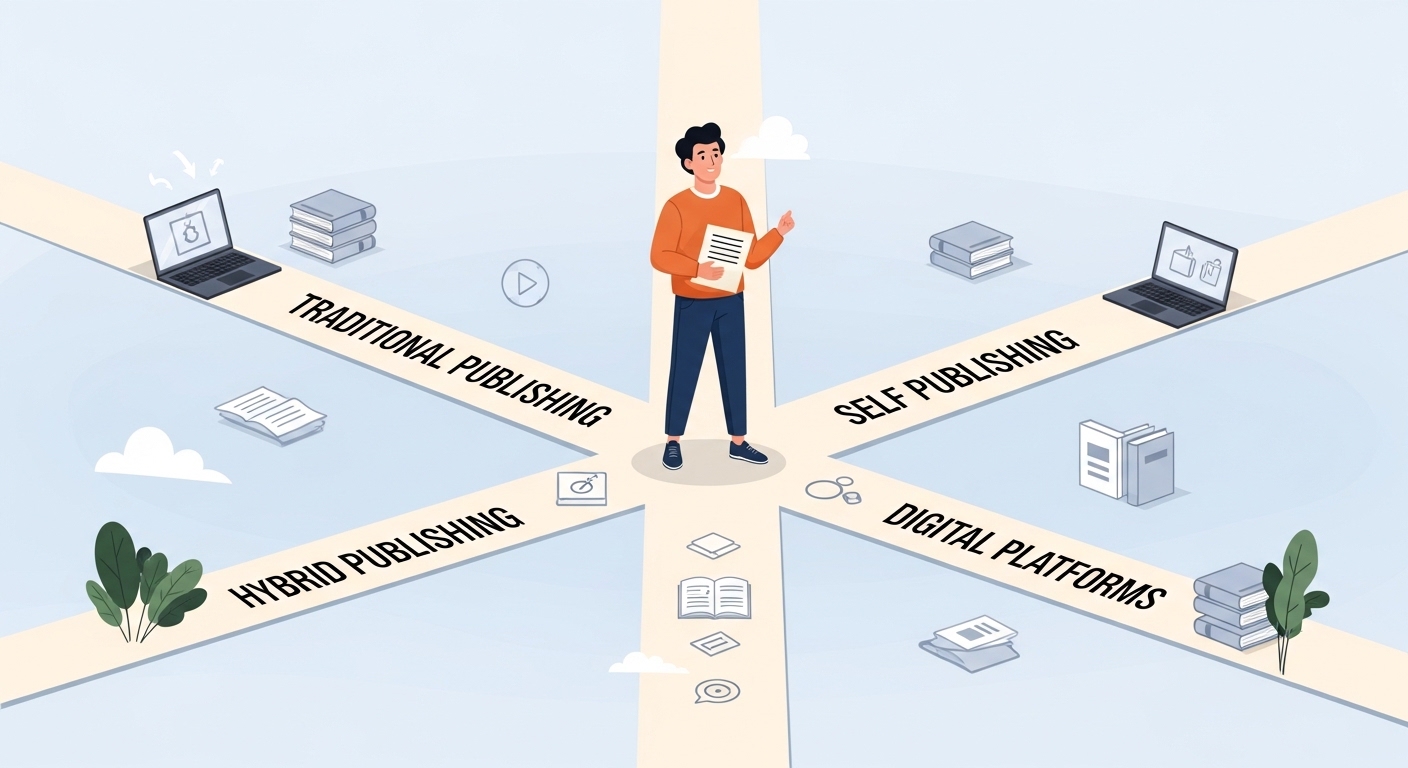
The truth is, there isn’t just one path forward anymore. The publishing world has evolved into a landscape filled with options—each with its own advantages, trade-offs, and long-term impact on your writing career. Choosing the right one isn’t about following a trend. It’s about understanding what fits your goals, your timeline, and the kind of control you want over your work.
Let’s walk through the real publishing paths available to you right now—and what they actually look like beyond the surface.
For decades, traditional publishing has been seen as the “gold standard.” It offers credibility, professional support, and access to established distribution channels. But it’s also the most competitive path. The process typically involves submitting your manuscript (often through a literary agent), waiting through long response times, and potentially going through multiple rounds of rejection before receiving an offer—if at all.
What makes this route appealing is the built-in infrastructure. Editing, design, printing, and distribution are handled for you. There’s also a sense of validation that comes from being selected in a highly competitive environment. However, it comes with trade-offs. You’ll likely give up a significant degree of creative control, earn a smaller percentage per sale, and wait much longer to see your book published.
This path suits writers who value industry recognition, are patient with timelines, and are comfortable navigating a competitive submission process.
Self-Publishing: Control, Speed, and Entrepreneurial Freedom
Self-publishing has grown into one of the most viable and empowering options available to writers today. It allows you to take full control of your work—from editing and design to pricing and release strategy. Unlike traditional publishing, you don’t need approval from anyone to move forward. Once your book is ready, you can publish it on your own timeline.
This level of control also means responsibility. You are in charge of quality, presentation, and visibility. Success doesn’t come from simply publishing—it comes from how well you position and manage your book afterward. Writers who choose this path often think like creators and business owners. They experiment, adapt, and build their audience over time. While it may take longer to gain traction, the long-terincome potential can be significantly higher if done strategically.
Hybrid Publishing: A Middle Ground with Shared Investment
Hybrid publishing sits somewhere between traditional and self-publishing. It typically involves paying for professional services while still benefiting from a more structured publishing process. In this model, you may receive support with editing, design, and distribution, but you also share in the financial investment. Because of this, it’s important to carefully evaluate what you’re getting in return. The appeal here is convenience and guidance. For writers who want professional support but don’t want to navigate everything alone, hybrid publishing can feel like a balanced option.
However, not all hybrid models are created equal. Some offer real value, while others simply charge high fees without delivering meaningful results. Due diligence is essential before committing to this path.
Independent Small Presses: Niche Focus with Personal Attention
Beyond large publishing houses, there are smaller, independent presses that focus on specific genres or audiences. These publishers often provide a more personal experience and are more open to unconventional or niche projects.
Working with a small press can offer a blend of creative collaboration and professional support. You may have more input into decisions compared to traditional publishing, while still benefiting from an established team.
The trade-off is scale. Smaller presses may not have the same reach or marketing power as larger publishers, but they often make up for it with passion, flexibility, and a strong connection to their audience.
This path is especially appealing for writers working in specialized genres or those looking for a more collaborative publishing experience.
Digital-First Publishing: Fast, Flexible, and Data-Driven
Some publishers operate primarily in the digital space, focusing on eBooks and online distribution. These models often move faster than traditional publishing and rely heavily on reader data to guide decisions.This approach can be ideal if your book aligns with current reader trends or if you’re writing in a genre that performs well digitally. It allows for quicker releases and the ability to adapt based on performance. However, digital-first publishing may offer less emphasis on physical book distribution, which is something to consider depending on your goals.
Serial Publishing and Episodic Content: Building Engagement Over Time
Another emerging path is publishing your work in smaller installments rather than as a complete book. This approach allows you to release content gradually, building reader interest and engagement along the way.
It’s particularly effective for fiction, where suspense and ongoing storylines can keep readers coming back for more.
This model also gives you the opportunity to gather feedback in real time and adjust your story as it evolves. Instead of waiting until everything is finished, you grow your audience as you create.
Choosing the Right Path for You
With so many options available, the “best” publishing path depends entirely on what you want from your writing journey.
Here are a few guiding questions to help clarify your direction:
- Do you want full creative control or professional oversight?
- Are you aiming for speed or are you comfortable with long timelines?
- Is your priority income, recognition, or creative fulfillment?
- How involved do you want to be in the business side of publishing?
Your answers will naturally point you toward the path that aligns with your goals.
You’re Not Locked Into One Path
One of the biggest misconceptions about publishing is that you have to choose a single route and stick with it forever. In reality, many writers explore multiple paths over time.
You might start with self-publishing to build experience and audience, then later pursue traditional opportunities. Or you might combine approaches depending on the type of project you’re working on.
The flexibility available today is one of the greatest advantages modern writers have. You’re not confined to a single system—you can adapt as your career evolves.
Final Thoughts
Finishing your first book is a milestone worth celebrating. But it’s also the beginning of a new phase—one where your decisions shape not just this book, but your future as a writer. There’s no universal “right” path. Only the one that aligns with your vision, your strengths, and the kind of journey you want to build.
Take your time, explore your options, and choose deliberately. Because the way you publish your book is more than a logistical step—it’s the foundation of everything that comes next.