Publishing in 2026 is no longer defined only by writing quality or traditional gatekeeping. It is shaped by rapidly evolving reader behavior, algorithm-driven discovery systems, digital-first consumption habits, and new expectations around storytelling formats. Writers today are not just competing with other books—they are competing with attention itself.
Understanding current publishing trends is no longer optional. It directly affects visibility, discoverability, and long-term success. Writers who adapt early tend to build stronger readerships, while those who rely on outdated assumptions often struggle to gain traction even with strong manuscripts.
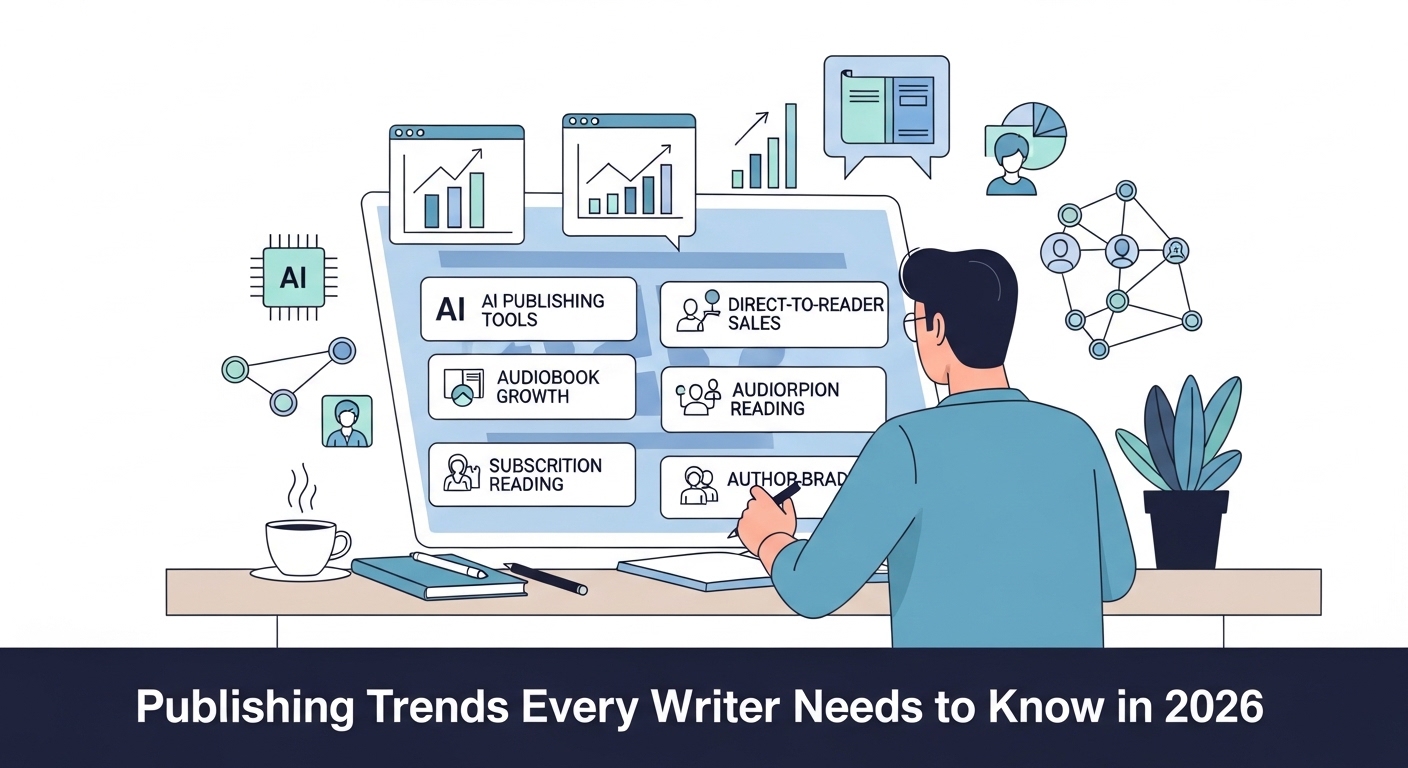
Below are five major publishing trends defining 2026, each explained in depth with practical insights and real-world context.
Why Writers Must Adapt to Modern Publishing Systems
The core challenge in 2026 is not lack of opportunity—it is saturation. Thousands of books are published daily, and platforms rely heavily on automated systems to decide what gets visibility. This creates a competitive landscape where discoverability is filtered through layers of algorithmic interpretation.
Writers who fail to adapt often face common issues:
- Low visibility despite strong writing quality
- Weak initial traction after publication
- Poor alignment with reader search behavior
- Inconsistent long-term discoverability
In contrast, writers who understand modern publishing dynamics can strategically position their work to align with how readers actually find and consume content today.
Adaptation is no longer optional. It is the difference between being discoverable and being invisible in a crowded marketplace.
Section Overview: The 5 Core Publishing Trends Shaping 2026
Modern publishing is being reshaped by five interconnected forces. Each one influences how stories are discovered, consumed, and evaluated by both readers and algorithmic systems. Below is a high-level overview of each trend, with deeper explorations available in dedicated articles.
1. Algorithm-Driven Discoverability Is Now the Primary Gatekeeper
In 2026, discoverability is increasingly controlled by recommendation systems rather than traditional browsing or editorial selection. Platforms now rely heavily on behavioral data—click-through rates, reading completion, engagement time, and purchase patterns—to decide which books are surfaced to readers. This shift means that writing a good book is no longer enough. The book must also perform well within algorithmic systems that prioritize reader behavior signals over subjective quality judgments.
Algorithms do not “understand” storytelling in a human sense. Instead, they interpret patterns. If readers engage deeply with a book, it is rewarded with increased visibility. If they abandon it early or fail to convert from impressions to purchases, visibility declines.
This creates a feedback loop where performance directly shapes exposure.
Key implications for writers:
- Metadata and keywords now influence visibility more than ever
- Reader engagement signals directly impact ranking
- Consistency in audience targeting improves algorithm trust
- Strong openings are critical for retention metrics
- Poor conversion rates can limit long-term reach
This trend also encourages writers to think beyond writing alone. Structure, pacing, and even cover design indirectly affect algorithmic performance because they influence reader behavior.
Example
A mystery novel with strong pacing and a clear hook in the first chapter gains higher completion rates. As a result, the algorithm increases its visibility in “also bought” recommendations, leading to sustained organic growth without additional marketing efforts.
2. Micro-Niche Storytelling Is Replacing Broad Genre Writing
Broad genres like “romance,” “thriller,” or “fantasy” are becoming increasingly saturated. In 2026, successful books are often positioned within highly specific micro-niches that target precise reader interests. Instead of writing for a general audience, writers are now expected to write for tightly defined reader segments. This includes blending genres or focusing on specific emotional or thematic angles. Micro-niche storytelling allows books to stand out in crowded marketplaces by reducing competition and increasing relevance. Readers are more likely to engage with content that feels specifically tailored to their interests rather than broadly generalized.
Key characteristics of this trend include:
- Highly specific themes (e.g., “small-town second chance romance with healing trauma arcs”)
- Hybrid genre structures (e.g., sci-fi romance, historical thriller with mystery elements)
- Emotionally targeted storytelling (healing, revenge, transformation, identity)
- Reader-specific hooks rather than genre-wide appeal
- Strong focus on relatability within niche communities
This trend also influences marketing indirectly. Books that clearly define their niche tend to perform better in search and recommendation systems because they match more precise reader queries.
Example
Instead of a general fantasy novel, a writer creates a “political fantasy centered on court intrigue and morally ambiguous queens.” This specificity attracts a dedicated readership and improves discoverability among readers searching for similar thematic experiences.
3. Serialized and Episodic Publishing Is Gaining Momentum
Serialized storytelling is becoming increasingly popular due to changes in reading habits and mobile-first consumption. Readers now prefer shorter, continuous content that can be consumed in smaller time blocks.
This trend mirrors broader digital media behavior, where audiences are accustomed to episodic content formats from streaming platforms and online storytelling communities.
In publishing, this means writers are increasingly structuring stories into installments rather than standalone large volumes. Serialization allows for continuous engagement, recurring reader interaction, and sustained visibility over time.
Key aspects of this trend include:
- Chapter-based or episode-based releases
- Faster publishing cycles
- Continuous reader engagement loops
- Feedback-driven story development
- Increased importance of cliffhangers and hooks
Serialized publishing also allows writers to test audience reactions and adjust narrative direction dynamically. This creates a more interactive relationship between writer and reader.
Example
A romance story is released in weekly installments, each ending with a cliffhanger that increases anticipation. Reader engagement builds over time, leading to higher retention and stronger long-term audience loyalty compared to a single-release novel.
4. Reader Experience Optimization Is Becoming a Core Skill
In 2026, writing quality alone is not enough—reader experience design has become a critical part of publishing success. This includes pacing, clarity, emotional flow, and even formatting choices that influence how easily a reader can engage with the text. Modern readers expect frictionless reading experiences. If a book feels dense, confusing, or poorly structured, readers are more likely to abandon it, which negatively affects performance signals in digital ecosystems.
Reader experience optimization focuses on how a story feels during consumption, not just how it is written.
Key elements include:
- Strong opening hooks within the first pages
- Consistent pacing to maintain engagement
- Clear paragraph structure and formatting
- Balanced emotional highs and lows
- Smooth transitions between scenes
Writers are increasingly thinking like UX designers, ensuring that every part of the reading journey feels intuitive and engaging.
Example
A thriller novel opens with immediate tension, uses short chapters to maintain pace, and alternates between action and emotional reflection. Readers report higher engagement and complete the book more frequently, improving its ranking and visibility.
5. AI-Assisted Writing and Hybrid Creativity Models
AI tools have become deeply integrated into the writing and publishing process in 2026. However, the trend is not about replacing writers—it is about enhancing productivity, structure, and creative exploration.
Writers now use AI for outlining, idea generation, pacing analysis, and even stylistic refinement. The most successful authors are those who treat AI as a collaborative tool rather than a replacement for creativity.
This shift has created a hybrid creative model where human storytelling intuition is combined with computational efficiency.
Key developments include:
- AI-assisted outlining and plotting
- Real-time editing and structural feedback
- Market trend analysis for niche targeting
- Language refinement and readability optimization
- Faster drafting and revision cycles
Despite these advancements, human creativity remains central. Emotional depth, originality, and thematic resonance still depend on the writer’s voice and vision.
Example
A writer uses AI to structure a complex multi-timeline novel, ensuring consistency across plotlines. The human writer then refines character emotion and thematic depth, resulting in a polished manuscript produced in significantly less time than traditional methods.
Conclusion: Adapting to the New Publishing Landscape
Publishing in 2026 is shaped by a combination of technology, reader behavior, and evolving storytelling formats. Writers who understand these trends can position themselves more effectively in a highly competitive environment. The key shift is clear: success is no longer based solely on writing quality, but on how well a book aligns with discovery systems, reader expectations, and consumption habits. By adapting to algorithmic discovery, micro-niche targeting, serialized storytelling, reader experience design, and hybrid creative workflows, writers can significantly improve their chances of long-term success.
FAQ
1. Are traditional publishing methods still relevant in 2026?
Yes, but they now operate alongside digital-first discovery systems that heavily influence visibility and reach.
2. Do writers need to follow all five trends?
Not necessarily, but understanding them helps improve positioning and long-term performance.
3. Is AI replacing writers?
No. AI supports structure and efficiency, but storytelling, emotion, and originality still depend on human creativity.
4. What is the most important trend for beginners?
Micro-niche storytelling and reader experience optimization are often the most impactful starting points.
5. Can serialized publishing work for all genres?
It works best for genres with strong narrative momentum, but it can be adapted creatively across formats.