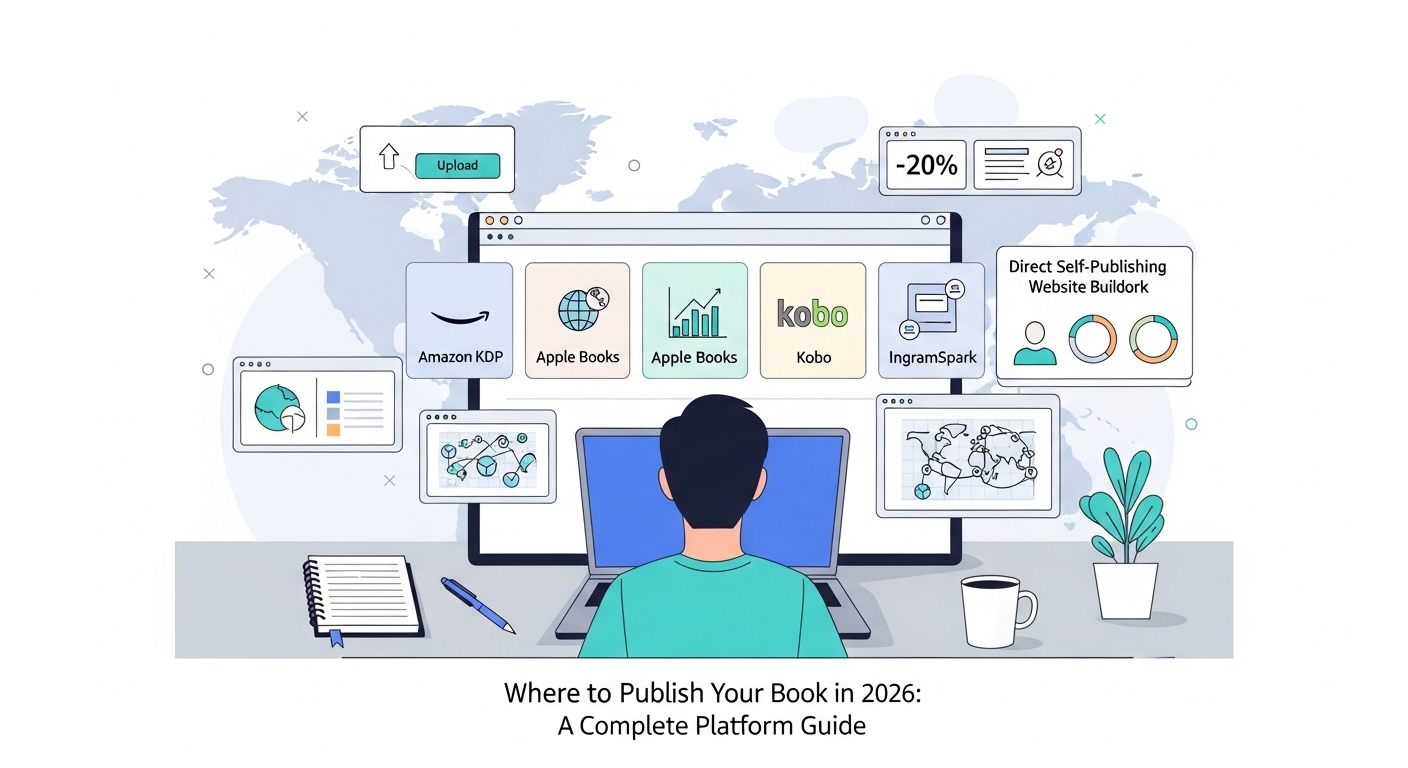
Publishing a book today is no longer a single-path journey controlled by traditional gatekeepers. In 2026, independent authors have access to a layered ecosystem of digital marketplaces, print-on-demand networks, subscription reading apps, and direct-to-reader storefronts that make it possible to reach global audiences without waiting years for approval cycles.
But this abundance creates a new challenge: choice overload.
Many writers finish a manuscript only to pause at the next critical question—where should the book actually go? The answer is not a single platform or a universal “best” option. It depends on format, genre, pricing strategy, and long-term goals such as visibility, income stability, or brand building.
This guide breaks down the modern publishing landscape for indie authors in a structured, practical way so you can understand not just where books are published, but how distribution strategies actually work in 2026.
The Modern Publishing Landscape for Indie Authors
Book publishing has evolved into a multi-channel ecosystem rather than a linear process. Instead of choosing one route, many successful authors now distribute across several channels simultaneously.
At a high level, publishing in 2026 typically falls into four major categories:
- Digital ebook marketplaces
- Print-on-demand book distribution networks
- Subscription-based reading ecosystems
- Direct-to-reader publishing systems
Each category serves a different purpose. Some prioritize reach, others focus on higher royalties or brand control. Understanding this structure is essential before deciding where your book should live. What matters most is not simply visibility, but control over distribution and reader access. The more channels you understand, the more strategic your publishing decisions become.
Ebook Marketplaces and Global Distribution Reach
Ebook distribution remains the foundation of independent publishing. The majority of first-time indie authors begin here because it provides immediate global access with minimal production cost.
Ebook marketplaces function as digital storefronts where readers can discover, purchase, and download books instantly across devices. These ecosystems typically handle payment processing, file hosting, and reader delivery, allowing authors to focus on writing and marketing.
What makes ebook publishing powerful in 2026 is its scalability. A single file can be distributed worldwide without inventory, shipping, or physical constraints.
However, competition is intense. Millions of titles compete for attention, making metadata, cover design, and category positioning critical for visibility.
Semantic discovery systems now rely heavily on:
- Keyword relevance within book metadata
- Reader engagement signals such as completion rates
- Algorithmic recommendation patterns
- Genre clustering and behavioral tagging
Authors who treat ebook publishing as a “set and forget” system often struggle. Those who optimize presentation and marketing see significantly better traction.
Print-on-Demand and Physical Book Availability
Even in a digital-first world, physical books continue to carry strong psychological and commercial value. Readers often perceive print editions as more credible, especially for nonfiction, educational content, and professional writing.
Print-on-demand systems have transformed physical publishing by removing the need for bulk printing or warehousing. Books are produced only when ordered, making it possible for indie authors to offer paperback and hardcover editions without upfront investment.
This model supports global distribution while minimizing financial risk. It also enables rapid updates to book interiors and covers, which is particularly useful for evolving topics.
Print versions are especially effective for:
- Professional or educational nonfiction
- Journals, workbooks, and guided material
- Giftable fiction titles
- Author branding and speaking credibility
However, print economics differ significantly from digital. Production costs reduce margins, meaning pricing strategy must account for fulfillment and distribution fees.
Subscription Reading Ecosystems and Reader Retention Models
One of the most influential shifts in modern publishing is the rise of subscription-based reading platforms. Instead of purchasing individual books, readers access libraries of content through monthly subscriptions. For authors, this introduces a different revenue model based on reading engagement rather than single-unit sales. Earnings are often tied to pages read or time spent engaging with a book. This model rewards storytelling techniques that sustain attention over time. Fast-paced narratives, structured nonfiction chapters, and serialized storytelling tend to perform well.
However, subscription ecosystems also change how discovery works. Algorithms prioritize reader retention and engagement signals over traditional ranking systems. Books that keep readers engaged longer are more likely to be recommended. This environment has led to a subtle shift in writing strategy: pacing, chapter structure, and hooks at the end of sections have become more important than ever.
Direct-to-Reader Publishing and Author Independence
A growing number of authors are moving toward direct distribution models where they sell books through personal websites or owned storefronts. This approach removes intermediaries and gives authors full control over pricing, audience data, and customer relationships. The primary advantage of direct publishing is ownership. Instead of relying on external algorithms, authors build their own traffic sources through email lists, content marketing, and social platforms.
This model is particularly powerful for authors who are building long-term brands rather than single-title success.
Direct publishing allows for:
- Higher profit margins per sale
- Full control over pricing and promotions
- Direct reader communication
- Bundled offers and premium content packages
However, it also requires stronger marketing capability. Without platform-driven discovery, authors must actively drive traffic and build audience trust.
This makes direct publishing less about distribution and more about ecosystem building.
Hybrid Publishing Strategy: The Real 2026 Standard
Most successful indie authors no longer rely on a single publishing route. Instead, they combine multiple channels into a hybrid system that maximizes both reach and revenue.
A typical hybrid strategy might include:
- Ebook distribution through major digital marketplaces
- Print-on-demand availability for physical copies
- Subscription platform inclusion for passive reading income
- Direct sales for high-margin products and bundles
Each channel plays a different role in the overall ecosystem. Ebook marketplaces provide visibility. Print builds credibility. Subscription platforms generate ongoing income. Direct sales increase profit and control.
The key insight is that publishing is no longer a one-time event. It is an ongoing distribution strategy that evolves with audience behavior.
Choosing the Right Publishing Path for Your Book
The best publishing approach depends heavily on your goals as an author.
If your priority is maximum reach, digital marketplaces remain essential because they provide global exposure and algorithm-driven discovery. If your focus is long-term income stability, subscription ecosystems can provide recurring revenue based on readership.For authors building authority or professional credibility, print editions add legitimacy and perceived value. Meanwhile, direct publishing is ideal for those who want independence and full ownership of their audience.
Rather than asking “which platform is best,” the more strategic question is:
What role should each publishing channel play in your overall author business?
Once you frame it this way, decisions become clearer and less overwhelming.
Common Mistakes Indie Authors Make When Publishing
Many first-time authors enter publishing with strong writing but weak distribution strategy. This leads to underperformance even when the book itself is high quality. One common mistake is limiting distribution to a single channel. While this may feel simpler, it drastically reduces visibility and income potential. Another issue is neglecting metadata and discoverability. In digital publishing environments, poor categorization can make a strong book nearly invisible.
Some authors also underestimate the importance of cover design and positioning. In crowded marketplaces, readers often judge books within seconds based on visual cues. Finally, many writers focus entirely on launch instead of long-term visibility. Publishing success in 2026 is not determined by a single release day but by sustained discoverability over time.
Strategic Approach to Long-Term Publishing Success
Successful indie authors treat publishing as an evolving system rather than a one-time decision. Over time, they refine distribution based on performance data, reader feedback, and market trends.
A strong long-term approach includes:
- Monitoring where readers discover the book most effectively
- Adjusting pricing strategies across channels
- Expanding formats based on demand
- Building a recognizable author brand across platforms
Publishing is no longer just about releasing a book—it is about managing its lifecycle across multiple ecosystems.
Authors who adapt to this model tend to outperform those who rely on static publishing strategies.
Frequently Asked Questions
Is it necessary to publish on multiple platforms?
Not mandatory, but multi-channel publishing significantly increases visibility and income potential. Most successful indie authors use at least two or three distribution routes.
Do print books still matter in 2026?
Yes, especially for nonfiction, professional content, and branding purposes. Physical books continue to carry strong credibility and perceived value.
Can a book succeed without marketing?
Rarely. Even strong books require visibility strategies such as metadata optimization, audience building, and external traffic sources.
What is the biggest advantage of independent publishing?
Control. Authors retain rights, pricing power, and full access to their audience data, allowing for long-term flexibility and scaling.
How long does it take for a book to gain traction?
It varies widely. Some books gain attention within weeks, while others grow gradually over months or years depending on niche and visibility strategy.
Publishing in 2026 is less about choosing a single destination and more about designing a distribution network that aligns with your goals. Once you understand how each channel functions, you move from guessing to building a structured, scalable author presence that can grow over time.