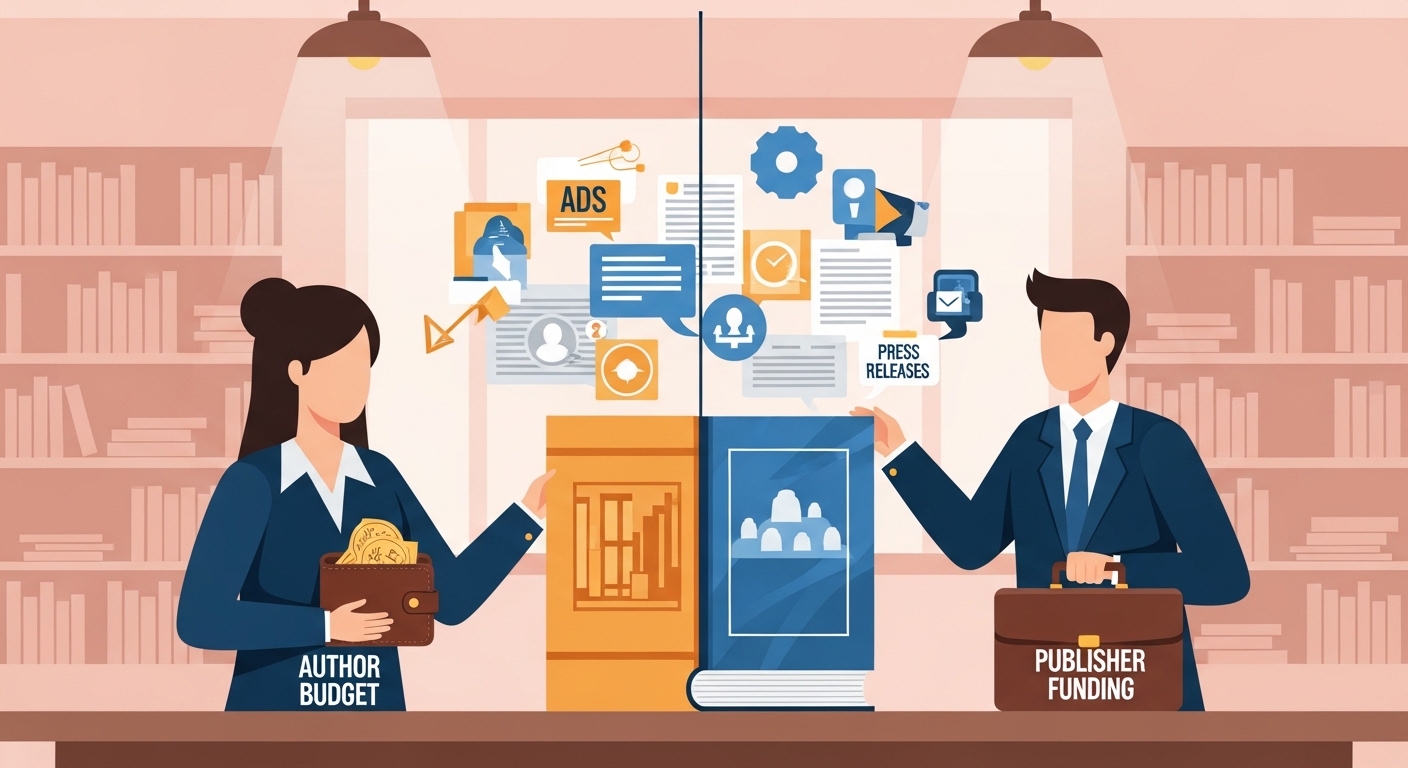
Publishing a book is often imagined as a creative milestone where everything important is already done once the manuscript is complete. In reality, the financial side of publishing introduces an entirely different layer of complexity—especially when it comes to marketing. One of the most common points of confusion among first-time authors is simple but critical: who actually pays for book marketing costs—the author or the publisher? The answer is not as straightforward as many expect. It depends heavily on the publishing model, contractual terms, and the level of marketing support promised. In some cases, publishers invest in promotion. In others, authors carry most of the financial responsibility. And in modern independent publishing, authors often manage both cost and strategy themselves.
Understanding how book marketing costs are distributed is essential for making informed publishing decisions, avoiding unexpected expenses, and setting realistic expectations about visibility and success.
Why Book Marketing Costs Matter More Than Most Authors Expect
Many first-time authors focus almost entirely on writing and publishing, assuming that once a book is released, marketing support will naturally follow. However, in today’s competitive publishing environment, visibility is not guaranteed by publication alone.
Marketing determines whether a book reaches readers or gets lost among thousands of new releases every day. This makes book marketing costs not just an optional consideration but a central part of a book’s success strategy. Marketing expenses often include more than advertising. They can involve branding, content creation, outreach efforts, launch planning, and long-term visibility campaigns. When these responsibilities are not clearly defined, confusion about who pays can lead to frustration and unmet expectations.
Understanding the Different Publishing Models
To understand who pays for marketing, it is important to first recognize that not all publishing arrangements work the same way. The distribution of book marketing costs depends heavily on the publishing structure. Traditional publishing typically involves a publisher investing in the book upfront. This includes editing, production, distribution, and sometimes marketing support. However, even in traditional setups, marketing budgets vary significantly depending on the perceived commercial potential of the book.
Independent publishing, on the other hand, places full financial and strategic responsibility on the author. While this gives full control, it also means authors must actively plan and fund their own marketing efforts. Between these two lies a hybrid model where responsibilities are shared, but not always equally. In such cases, authors may contribute to promotional expenses while publishers handle limited outreach.
Each model carries different implications for book marketing costs, and misunderstanding these differences is one of the most common reasons authors face unexpected financial pressure.
Who Pays for Book Marketing in Traditional Publishing?
In traditional publishing arrangements, it is generally assumed that publishers handle marketing. While this is partially true, the reality is more nuanced.
Publishers often allocate a fixed marketing budget for each book, but that budget is rarely large unless the author is already well-known or the book has strong commercial potential. For debut authors, marketing efforts are often selective and focused on minimal but strategic exposure. In many cases, publishers prioritize established authors because they represent lower risk and higher return. This means first-time authors may receive limited promotional support, even under traditional contracts.
The publisher typically covers:
- Basic catalog listing and distribution exposure
- Internal marketing coordination
- Limited promotional outreach
However, they may not fully cover broader book marketing costs such as extensive advertising campaigns, influencer outreach, or sustained post-launch promotion.
As a result, even traditionally published authors often find themselves participating in self-promotion to expand visibility beyond what the publisher provides.
Author Responsibility in Book Marketing Expenses
In most modern publishing environments, authors play a significant role in marketing their own books, regardless of the publishing model. This shift reflects how competitive the market has become and how essential direct audience engagement is for success.
When it comes to book marketing costs, authors may be responsible for:
- Social media promotion and content creation
- Paid advertising campaigns
- Personal branding efforts
- Event participation or book launches
- Email marketing tools or outreach systems
Even in traditional publishing scenarios, authors are often expected to contribute actively to visibility efforts. Publishers may provide guidance, but execution and additional spending frequently fall on the author. This does not necessarily indicate a lack of support—it reflects a broader industry trend where author involvement in marketing is now standard practice.
Independent Publishing and Full Cost Responsibility
In independent publishing models, the structure is significantly different. Authors not only own the rights to their work but also take full control of marketing decisions and expenses.
This means all book marketing costs are typically handled by the author, including strategy development, execution, and budget allocation.
While this may seem overwhelming, it also provides flexibility. Authors can choose how much to spend, which tools to use, and which marketing channels to prioritize.
Common expenses in independent book marketing include:
- Paid ads or promotional placements
- Cover design and branding enhancements
- Content creation tools or services
- Outreach campaigns to readers or reviewers
The key advantage here is control. Authors can scale efforts based on their budget and goals without relying on external approval.
Comparing Author vs Publisher Responsibilities
To understand the distribution of book marketing costs more clearly, it helps to compare responsibilities across publishing models.
| Area of Responsibility | Traditional Publisher | Author (Traditional) | Independent Author |
| Basic Promotion | Yes (limited) | Yes (expected) | Yes (full control) |
| Advertising Budget | Sometimes | Often shared | Fully responsible |
| Branding & Identity | Partial | Partial | Fully responsible |
| Long-term Marketing | Rarely | Yes | Fully responsible |
| Strategy Development | Publisher-led | Author-led support | Fully independent |
This comparison highlights a key reality: regardless of publishing model, authors are almost always involved in marketing to some degree. The difference lies in how much financial responsibility they carry.
Hidden Book Marketing Costs Authors Often Overlook
One of the biggest challenges in planning a marketing budget is identifying indirect or less obvious expenses. Many authors underestimate these costs, which can lead to incomplete financial planning.
Beyond advertising and promotion, book marketing costs may also include:
- Time investment for content creation
- Professional editing of promotional materials
- Visual design elements for branding
- Research tools for audience targeting
- Communication and outreach efforts
Even if some of these do not involve direct payments, they still represent significant resource allocation. Time, effort, and consistency are often as valuable as financial investment in long-term book promotion.
Why Publishers Limit Marketing Budgets
A common question among authors is why publishers do not invest heavily in marketing every book they release. The answer lies in risk management and resource allocation. Publishers operate with limited marketing budgets that must be distributed across multiple titles. As a result, they prioritize books with higher projected returns. For debut or niche authors, publishers often adopt a conservative approach. They may provide initial exposure but expect authors to contribute actively to expanding reach. This structure directly impacts how book marketing costs are shared and reinforces the importance of author involvement in promotional efforts.
The Growing Importance of Author-Led Marketing
Modern publishing trends show a clear shift toward author-driven marketing strategies. Readers increasingly connect with authors directly, rather than relying solely on publisher-driven campaigns.
This shift means that even when publishers contribute financially, authors are still expected to play an active role in promotion.
Author-led marketing includes:
- Building personal reader relationships
- Sharing behind-the-scenes writing content
- Engaging directly with audiences
- Developing long-term visibility strategies
In this environment, understanding book marketing costs is not just about budgeting—it is about understanding responsibility distribution in a changing industry.
How Authors Can Manage Book Marketing Costs Effectively
Managing marketing expenses does not require large financial investment. It requires strategic allocation and prioritization. Authors can reduce unnecessary spending by focusing on organic growth methods while reserving budget for high-impact activities.
Effective approaches include:
- Prioritizing consistent content over paid visibility
- Testing small-scale campaigns before scaling
- Focusing on targeted audiences instead of broad reach
- Reinvesting early returns into future marketing efforts
By taking a structured approach, authors can control book marketing costs without sacrificing visibility or long-term growth potential.
Frequently Asked Questions (FAQ)
Do publishers always pay for book marketing?
No. Publishers may contribute to marketing, but the level of investment varies widely depending on the book’s potential and contract terms.
Are authors expected to pay for marketing?
In many cases, yes. Especially in independent publishing and even in traditional publishing, authors often contribute to promotional efforts.
What are typical book marketing costs?
They can include advertising, branding, content creation, outreach, and promotional tools. Costs vary depending on strategy and scale.
Can a book succeed without spending money on marketing?
Yes, but it requires strong organic strategies such as content creation, reader engagement, and consistent visibility building.
Why do publishers limit marketing budgets?
Publishers allocate budgets based on expected return on investment and often prioritize established or high-potential titles.
Final Thoughts
The question of who pays for book marketing costs does not have a single answer. Instead, it depends on publishing structure, contractual agreements, and author involvement.
In traditional publishing, publishers may contribute, but authors are still expected to participate. In independent publishing, authors take full responsibility. In all cases, marketing is no longer optional—it is a shared necessity between visibility and investment.
Understanding this early allows authors to plan realistically, avoid surprises, and build a sustainable approach to promoting their work. Ultimately, the most successful authors are not those who rely solely on others for promotion, but those who understand how to actively shape their own visibility in the marketplace.