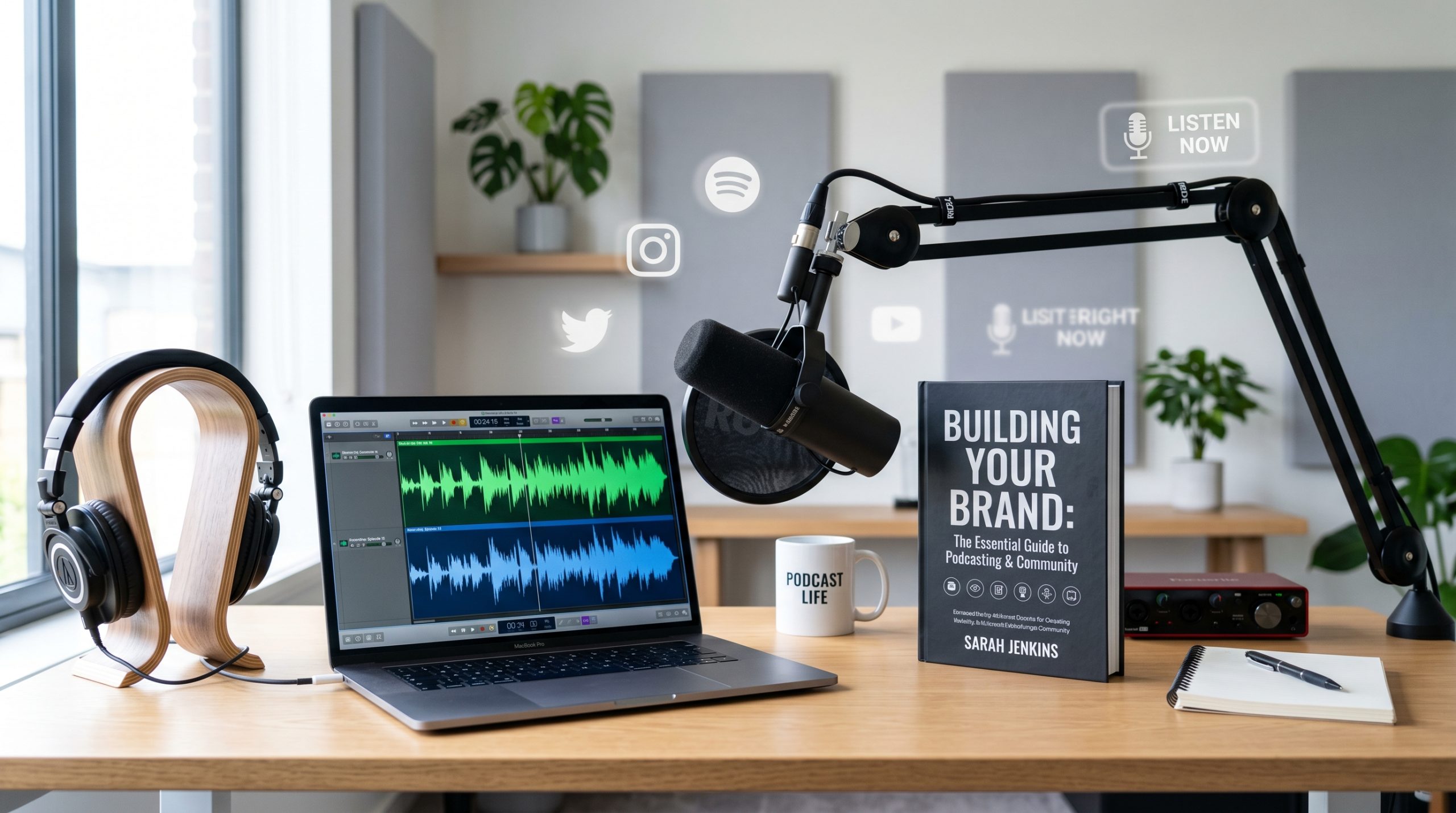
Book promotion has shifted dramatically in the digital publishing era. Traditional marketing methods such as bookstore signings, paid advertisements, and generic social media posting no longer guarantee meaningful visibility for authors trying to compete in saturated markets. Readers today discover books through trusted conversations, niche communities, and long-form content ecosystems where authority is built gradually rather than forced through interruption-based promotion. This is precisely why podcast marketing has become one of the most effective tools in modern author book promotion strategy.
Unlike short-form content that fights for seconds of fragmented attention, podcasts offer something uniquely valuable: sustained cognitive engagement. A podcast listener willingly commits thirty to sixty minutes to a focused conversation. That depth of attention creates a rare opportunity for authors to explain their ideas, reveal the deeper motivations behind their work, discuss their writing process, and establish genuine trust with audiences already predisposed toward long-form intellectual engagement.
This matters because books are not impulse purchases. Readers typically invest in books after developing confidence in the author’s perspective, expertise, or storytelling capability. Podcast appearances accelerate this trust-building process by allowing listeners to experience the author’s voice directly.
For writers developing a serious book marketing strategy, podcasts are not merely publicity opportunities—they are authority-building platforms capable of generating long-term discoverability, reader loyalty, and measurable sales.
Success depends on executing three strategic functions well:
- Finding podcasts with precise audience overlap
- Delivering memorable, value-driven interviews
- Repurposing each appearance into evergreen marketing assets
When approached systematically, podcast promotion becomes one of the most sustainable and cost-efficient forms of modern author visibility.
Why Podcasts Convert Better Than Traditional Book Marketing
The Psychology of Long-Form Trust
Most marketing channels fail because they prioritize interruption over relationships. Paid ads demand immediate action before trust has been established. Social media often rewards speed over depth, encouraging shallow engagement that rarely converts into serious readership. Podcast interviews function differently because they create familiarity through conversation rather than persuasion. When listeners spend forty minutes hearing an author discuss their ideas, process, struggles, and insights, they begin developing a parasocial familiarity that dramatically lowers purchasing resistance. This is one of the strongest principles in podcast writing and book promotion. Books require intellectual commitment. Readers need confidence that the author is worth their time. A listener who hears thoughtful discussion about storytelling craft, publishing challenges, or book themes experiences the author as credible before ever seeing a sales page. That psychological pre-selling is extraordinarily difficult to replicate through other channels.
This is why podcasts consistently outperform shorter promotional media in building meaningful reader relationships.
| Marketing Channel | Average Attention | Trust Development | Reader Conversion Potential |
|---|---|---|---|
| Social Media | 5–20 seconds | Low | Weak |
| Paid Ads | 2–8 seconds | Very Low | Transactional |
| Email Promotion | 30–90 seconds | Moderate | Medium |
| Podcasts | 30–60 minutes | High | Strong |
For authors, this means podcast appearances should not be treated as optional exposure opportunities. They should be integrated into the core architecture of author platform building.
Crafting Outreach That Gets Responses
Most podcast pitches fail for one simple reason: they are written from the author’s perspective rather than the host’s audience perspective. Authors often approach outreach as if the host is doing them a favor by offering exposure. In reality, podcast hosts evaluate pitches based on one question: Will this conversation create value for my listeners? If the answer is unclear, the pitch gets ignored.
Weak outreach tends to focus entirely on the book itself. It usually reads like a promotional request, emphasizing publication details, launch dates, and sales objectives. This framing signals self-interest rather than audience contribution. Hosts are not looking for guests who simply want visibility—they want guests capable of delivering thoughtful, engaging conversations that strengthen their show.
A strong podcast pitch strategy begins with specificity. This means demonstrating clear familiarity with the podcast. Referencing a recent episode, mentioning a topic the host covered particularly well, or highlighting a conversation angle that fits naturally within their established format shows professionalism and preparation. It signals that the outreach is intentional rather than mass-distributed.
Effective outreach also reframes the book as a conversation catalyst rather than the focal point. The strongest pitches focus on the ideas surrounding the book: the writing process, the challenges behind the work, industry insights, unique research discoveries, or broader themes that resonate with the show’s audience.
A successful pitch should establish four things clearly. First, who you are and why your perspective matters. Second, why their listeners would benefit from hearing from you. Third, what unique insight or discussion angle can you bring. Fourth, why the timing is relevant.
The difference between weak and strong outreach is substantial.
A weak pitch says:
“I wrote a book and would love to promote it on your show.”
A strong pitch says:
“I can offer your audience an insightful conversation about modern storytelling trends and how authors can use long-form interviews to build readership.”
That distinction changes response rates dramatically because it shifts the conversation from self-promotion to listener value.
Delivering an Interview That Sells Books
Many authors misunderstand what makes podcast appearances effective. They assume the goal is to mention the book as often as possible, subtly steering every answer back toward promotion. This approach usually backfires because listeners can immediately sense forced marketing. Instead of building trust, it creates resistance.
The most successful podcast interviews rarely “sell” directly. They create value first. Listeners decide to buy books because the conversation itself demonstrates insight, expertise, authenticity, or compelling storytelling. In other words, the interview earns reader interest through substance rather than persuasion.
This is why preparation matters. Authors should enter every interview with a clear framework of ideas they want to explore. This includes compelling stories behind the book, practical insights relevant to the audience, examples that illustrate broader themes, and memorable anecdotes that create connection.
Preparation, however, should never become rigid scripting. Over-rehearsed interviews sound mechanical and unnatural. Podcast audiences respond best to conversational authenticity. The strongest interviews balance structure with spontaneity, allowing natural discussion while ensuring key insights are delivered.
An effective interview also prioritizes audience transformation. By the end of the conversation, listeners should feel they gained something valuable independent of whether they purchase the book. This might be a new perspective on writing, publishing, creativity, resilience, or the thematic ideas explored in the manuscript. This is the hidden mechanics of podcast book promotion. The interview itself is not the sales mechanism—it is the trust-building environment that makes later book purchases feel natural rather than pressured.
The objective is not to leave listeners thinking, “That author promoted their book well.”
The objective is to leave them thinking, “I need to read what that person wrote.”
That subtle shift is what turns interviews into measurable sales.
Turning Podcast Appearances Into Long-Term Book Sales
Repurposing for Maximum Reach
The interview itself is only phase one. Its true value emerges through repurposing. Every appearance should become a multi-channel content asset capable of generating visibility long after the original episode is published. A single podcast conversation can create weeks of supporting material that strengthens a broader book marketing strategy and keeps your message circulating across different platforms.
Repurpose podcast interviews into SEO blog articles that target relevant search queries and attract new organic traffic. Extract strong moments from the conversation into short-form social clips for platforms where quick engagement matters most. Use key insights, behind-the-scenes stories, or memorable discussion points as newsletter features to maintain audience connection and encourage repeat engagement.
This extends discoverability well beyond the initial release. Instead of allowing the interview to disappear into podcast archives, repurposing transforms it into a long-term promotional resource that continuously introduces your book to new audiences.
A dedicated podcast landing page should also centralize all appearances. This page should include direct episode links, a clear book purchase CTA, bonus resources or lead magnets related to your book, and an email signup form that captures interested listeners for future communication. This creates a structured conversion pathway that turns passive listeners into active readers.
Tracking which episodes generate the strongest engagement is equally important. Monitoring referral traffic, book purchases, and subscriber growth helps identify which podcast audiences align most effectively with your work. Over time, this allows authors to refine their outreach strategy and prioritize appearances that consistently deliver results.
Without repurposing, podcast exposure fades quickly. With a structured system, every appearance compounds over time, building authority, expanding reach, and creating consistent long-term book sales.
FAQs
Why is repurposing podcast content important for book promotion?
Repurposing extends the lifespan of a single podcast appearance. Instead of relying on one-time exposure, authors can distribute interview insights across blogs, social media, and newsletters for ongoing visibility.
What should a podcast landing page include?
A podcast landing page should include episode links, book purchase options, bonus resources, lead magnets, and an email signup form to convert listeners into long-term readers.
How many podcast appearances should an author repurpose?
Every appearance should be repurposed. Even smaller niche podcast interviews can generate valuable content and reach highly engaged audiences.
How do authors measure podcast ROI?
Track referral traffic, subscriber growth, book sales, and audience engagement using dedicated landing pages and tracking links.
Can fiction authors benefit from podcast repurposing?
Yes. Fiction authors can repurpose interviews into storytelling insights, writing process discussions, and thematic content that attracts readers interested in their genre.
Conclusion
Podcast promotion becomes most effective when treated as an ongoing content system rather than a single exposure opportunity. The interview itself introduces your voice to a new audience, but its real marketing power comes from how strategically it is repurposed afterward. Authors who convert each appearance into searchable, shareable, and trackable content create long-term visibility that continues driving discovery well beyond the original release. With the right repurposing framework, podcast appearances stop being temporary promotional wins and become sustainable assets that strengthen author authority, expand reader reach, and generate consistent book sales over time.