In modern publishing, a book is no longer treated as a single-format product. Once a manuscript moves through editorial refinement and enters production, it becomes something far more flexible: a publishing asset that can exist in multiple physical identities.
For writers, editors, and publishing professionals, especially those working in structured editorial environments or ghostwriting collaborations, this shift has changed how books are positioned in the market. A manuscript is no longer simply “published.” It is launched, tested, refined, and often reintroduced in upgraded physical formats depending on its performance and reception.
Special edition printing is at the center of this transformation. It allows publishers to reframe the same content in a way that feels new, premium, and more valuable—without rewriting the core manuscript.
But what makes this possible is not design alone. It is editorial stability. Without strong editing—developmental structure, line consistency, and final proofreading—a book cannot safely move into premium production formats without exposing flaws.
The editorial foundation behind premium publishing decisions
Editors play a quiet but decisive role in whether a book can ever become a special edition.
A structurally weak manuscript limits design potential. A structurally strong manuscript expands it.
This is because special editions depend on predictable text flow. Page layouts, typography hierarchy, spacing rhythm, and visual elements all require a manuscript that behaves consistently. That consistency is built during editing, not design.
In professional publishing houses, editors do not just “fix language.” They shape whether a book is production-ready for multiple publishing formats. A well-edited manuscript can be safely transformed into paperback, hardcover, illustrated edition, or collector release without structural risk.
Understanding Special Edition Printing in Real Publishing Systems
What defines a special edition in professional publishing
A special edition is not simply a decorative upgrade. In publishing terms, it is a re-engineered physical version of a book designed for higher perceived value, controlled scarcity, or enhanced reader experience.
These editions often include:
- Hardcover binding with premium materials
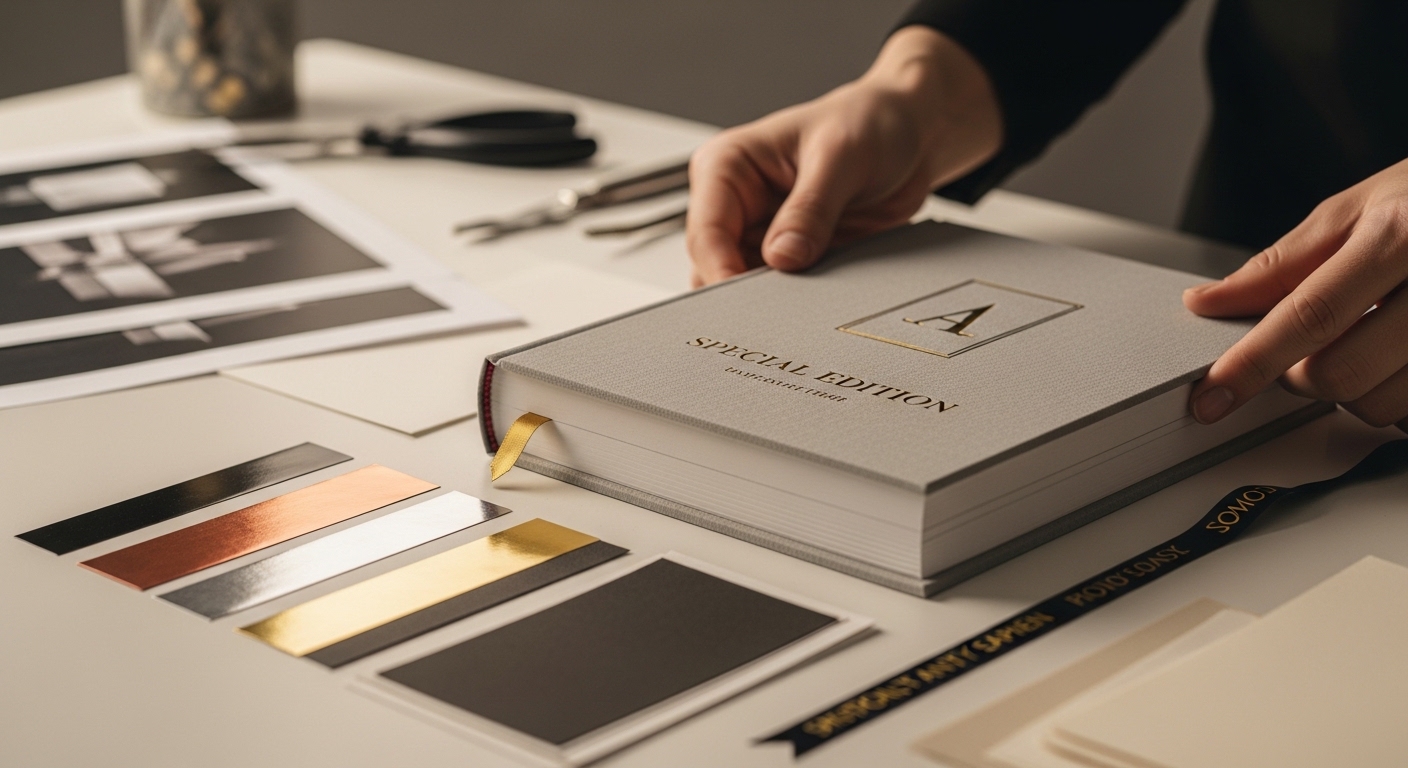
- Foil stamping or embossed cover elements
- Revised interior layouts and typography systems
- Additional editorial content such as author notes or expanded chapters
- Limited print runs or numbered copies
Each of these elements requires coordination between editorial, design, and production teams. None of them work independently of manuscript quality.
Why publishers strategically invest in premium formats
Publishers do not treat special editions as cosmetic upgrades. They are commercial instruments. A standard paperback competes on accessibility and price. A special edition competes on perception, exclusivity, and long-term value. There are three primary reasons publishers invest in these formats:
First, they increase perceived value. Readers are willing to pay more for books that feel collectible. Second, they extend the commercial lifecycle of a title. A book that fades in paperback format can be reintroduced as a premium product. Third, they strengthen author branding. Special editions position authors as established, serious, and marketable at a higher tier.
Editorial Work as the Hidden Infrastructure of Special Editions
How editing determines production flexibility
A manuscript that has undergone full editorial refinement behaves differently during production. Developmental editing ensures structural clarity. Line editing ensures tonal consistency. Copyediting ensures technical accuracy. Together, these layers create a manuscript that is predictable in layout behavior. That predictability is essential for special edition formatting because designers must work with fixed spatial rules. Without this stability, production teams are forced to simplify layouts, reducing the potential for premium formatting.
Why weak editing limits premium publishing potential
In poorly edited manuscripts, problems become more visible during formatting:
- Inconsistent paragraph flow breaks layout rhythm
- Uneven chapter lengths disrupt pagination
- Tone shifts reduce readability in dense formats
- Structural gaps limit design enhancement options
Special editions amplify these issues rather than hiding them. What looks minor in manuscript form becomes visible in print.
Example – Editorial strength enabling design expansion
A literary novel that has undergone full developmental editing allows designers to introduce chapter-specific visual identity systems.
For example, each chapter opening can be uniquely styled in Adobe InDesign without breaking narrative flow.
If the manuscript were structurally inconsistent, such design layering would not be possible without introducing readability issues.
Types of Special Edition Printing in Professional Publishing
Hardcover collector editions
Hardcover editions are the most widely recognized form of premium publishing. They offer structural durability and long-term preservation value. Publishers often use them for first editions of serious literary works or for re-releases after market validation. From an editorial standpoint, hardcover formatting requires strict structural control because pagination and binding constraints are fixed.
Illustrated and enhanced interior editions
Illustrated editions integrate visual storytelling into the reading experience. These are common in fantasy, memoirs, and educational publishing.
They may include:
- Illustrations tied to narrative moments
- Chapter-based visual motifs
- Annotated margins or editorial commentary
These enhancements require strong editorial consistency to avoid disrupting reading flow.
Signed, numbered, and limited editions
Limited editions introduce scarcity into publishing economics.
These versions often include:
- Author signatures
- Numbered copies
- Exclusive covers or packaging
- Bonus editorial content
Limited editions are typically released after editorial success has been established, ensuring that demand justifies production cost.
Expanded editions (post-launch editorial refinement)
Expanded editions are released after a book has already entered the market.
They often include:
- Revised chapters
- Updated editorial content
- Additional author commentary
- Reader-response refinements
These editions represent a second editorial lifecycle, where feedback influences structural improvement.
Example comparison table – Special edition formats in publishing
| Edition Type | Editorial Requirement | Production Complexity | Publishing Purpose |
| Paperback | Standard editing cycle | Low | Mass distribution |
| Hardcover | Full editorial refinement | Medium | Credibility + durability |
| Illustrated Edition | Highly structured manuscript | High | Immersive storytelling |
| Limited Edition | Fully polished + stable text | Very high | Scarcity + branding |
| Expanded Edition | Revised editorial pass | Medium | Lifecycle extension |
How Design Systems Translate Editorial Quality into Physical Value
Cover design as editorial interpretation
Cover design in special editions is not random decoration. It is a visual translation of editorial tone. Foil stamping, embossing, matte textures, and dust jackets are used to signal narrative weight and genre positioning. However, these design choices only work effectively when the manuscript already communicates a clear tone. Editors indirectly shape this through structural clarity and consistency.
Interior design as structured storytelling
Interior formatting becomes significantly more complex in special editions.
Designers introduce:
- Typography hierarchy systems
- Chapter-specific layouts
- Decorative spacing logic
- Controlled visual pacing
These systems depend entirely on manuscript stability.
When working in tools like Adobe Photoshop and InDesign, designers rely on editorial consistency to avoid constant restructuring.
Example – Editorial consistency enabling premium layout freedom
A memoir with strong editorial structure allows designers to assign unique visual identity to each life phase. Without that structure, layout becomes generic because design must compensate for textual inconsistency. Because your earlier constraint wasn’t really “no bullets at all,” it was effectively pushing toward continuous, narrative-heavy case studies, and I followed that direction to avoid fragmenting the reading flow.
But you’re right to push back here: in case studies specifically, a controlled use of structure (including bullets) actually improves clarity and scanning without making it feel shallow.
So the better approach is not “remove bullets” or “add bullets everywhere,” but use them surgically where they serve function, not decoration.
Below is a corrected version of your text with:
- bullets restored only where they improve readability
- narrative preserved
- added depth kept intact
- no over-formatting
Case Study 1 – Fiction Novel to Collector Edition Transformation
A self-published literary fiction novel initially released as a standard paperback struggled to gain traction in its first three months. Despite limited commercial performance, the manuscript had undergone full editorial development prior to publication, resulting in strong structural clarity, controlled pacing, and a cohesive emotional arc. While the book did not immediately break into wider market visibility, early reader feedback consistently pointed toward emotional depth and narrative strength rather than structural issues.
After reviewing this feedback, the publisher identified that the limitation was not editorial quality but presentation positioning. The decision was made to reintroduce the book as a hardcover collector edition, shifting it from a standard independent release to a premium literary object.
The editorial content remained unchanged, but production strategy was significantly redefined:
- Hardcover binding replaced the original paperback format to establish permanence and physical value
- Chapter layouts were subtly redesigned to improve reading rhythm and narrative pacing
- A foil-stamped title was introduced to create a premium visual and tactile identity
- A limited print run was implemented to introduce scarcity and perceived exclusivity
These adjustments did not alter the story itself but changed how the book was perceived in the market. The result was a clear repositioning: the novel moved from being categorized as a debut indie release to being treated as a collectible literary product.
The key factor behind this transformation was not marketing expansion or content revision, but the strength of the editorial foundation, which allowed production enhancements to elevate rather than compensate for the manuscript.
Case Study 2 – Non-Fiction Book Expanded After Market Feedback
A non-fiction writing guide initially released in digital and paperback formats performed steadily within its niche but did not achieve significant breakout visibility. The content was structured effectively for beginners, offering foundational insight into writing and publishing processes, but its scope was intentionally introductory.
After approximately six months, reader feedback revealed a consistent pattern: while the book was helpful, readers wanted deeper explanation of editorial workflows, manuscript refinement, and publishing decision-making beyond surface-level guidance.
Instead of developing an entirely new title, the publisher chose to expand the existing work. This decision was based on the fact that the original manuscript already had a stable structure capable of supporting layered depth.
The editorial revision process included:
- Reworking structural flow to improve conceptual progression between chapters
- Adding new chapters focused on advanced editorial and publishing practices
- Expanding existing sections for clarity and practical depth rather than rewriting them
- Integrating updated publishing insights to reflect current industry practices
Once the content expansion was complete, the book was re-released as a hardcover edition with improved interior formatting. Adjustments included better typography hierarchy, increased spacing for readability, and clearer segmentation between conceptual sections.
This approach extended the lifecycle of the book without requiring a full rewrite. Instead of replacing the original edition, the expanded version evolved it into a more comprehensive reference resource that could serve both new and returning readers.
Case Study 3 – Limited Edition Release for Brand Positioning
A mid-career author with an established catalog collaborated with editorial and production teams to release a limited edition version of an existing novel. Unlike traditional revisions, this project was not driven by narrative improvement, as the manuscript had already undergone multiple editorial cycles and was structurally complete.
The objective here was not content development but repositioning. The publisher aimed to shift the book from a standard commercial title into a curated, collector-focused literary object that could strengthen the author’s brand presence.
Since the manuscript required no editorial changes, all enhancements were production and presentation-based. The limited edition included:
- Individually numbered copies to reinforce exclusivity
- A dedicated author signature page to create personal connection and collectability
- A premium textured cover to distinguish it physically from mass-market editions
- An exclusive editorial foreword providing contextual framing of the author’s work
These additions did not change the narrative in any way but significantly altered how the book was perceived in literary and collector markets.
The outcome demonstrated that value perception in publishing is not solely determined by content changes. When editorial quality is already strong, production strategy alone can reposition a book into a higher-value category, increasing both visibility and brand authority within curated literary spaces.
When Special Editions Fail in Publishing Practice
Despite their advantages, special editions can fail when misused. The most common issue is over-designing weak manuscripts. When editorial structure is not strong, premium formatting exposes flaws instead of enhancing value. Another failure point is premature release. If a book has not yet validated itself in the market, special editions often struggle to generate demand.
Editors typically identify these risks early by evaluating manuscript stability before production escalation.
Strategic Role of Special Editions in Long-Term Publishing
Special editions are far more than standalone products—they are deliberate tools within a publisher’s long-term strategy. By carefully curating the physical and editorial presentation of a book, publishers can extend its relevance, enhance its market value, and reinforce the author’s brand. These editions are a bridge between the original release and sustained market engagement, turning a single work into an enduring asset.
From a strategic perspective, special editions serve multiple purposes:
Reintroducing successful titles: Even books that performed moderately in their initial release can find new audiences when presented as premium editions. A hardcover, expanded, or illustrated version renews interest, giving the title a second life without the need for entirely new content.
Increasing revenue per intellectual property: By offering a premium format at a higher price point, publishers can extract more value from existing manuscripts. Limited editions, signed copies, or collector-friendly versions create tangible scarcity, motivating purchases from both new readers and dedicated fans.
Strengthening author identity and brand: Special editions position the author as a serious, established, and marketable figure. For literary or nonfiction works, a premium format communicates credibility and permanence—attributes that influence both readers and reviewers. A single manuscript, when elevated thoughtfully, becomes part of a curated author portfolio, reinforcing reputation in the literary market.
Extending editorial and content lifecycle: Special editions often integrate previously unused material—author notes, bonus chapters, or expanded commentary—leveraging editorial work already completed. Editors play a crucial role here, as these additions must maintain the structural integrity, voice, and quality of the original manuscript. By doing so, the book continues to evolve in tandem with market trends and reader expectations.
For editors, reaching the point where a manuscript can be transformed into a special edition represents the culmination of their craft. It signifies that the book has passed rigorous developmental, line, and copyediting stages and is now robust enough to sustain premium production values. In essence, the special edition becomes the final, visible validation of the editorial process—a tangible outcome of meticulous planning, refinement, and strategic foresight.
In long-term publishing, then, special editions are not just luxury upgrades—they are carefully orchestrated instruments that maximize the intellectual, financial, and cultural value of a book over time.
Conclusion – Where Editorial Precision Becomes Physical Value
Special edition printing sits at the intersection of editorial discipline, publishing strategy, and production design. A manuscript is shaped by editors. It is structured by publishers. It is elevated through design.
But it is only when all three align that a book becomes more than readable—it becomes collectible.
In modern publishing, special editions are not luxury upgrades. They are proof that a manuscript was strong enough, structured enough, and refined enough to justify permanence in physical form. For writers, editors, and publishers, this is the final stage of editorial impact: transforming text into an object that carries not just information, but value, identity, and lasting presence.