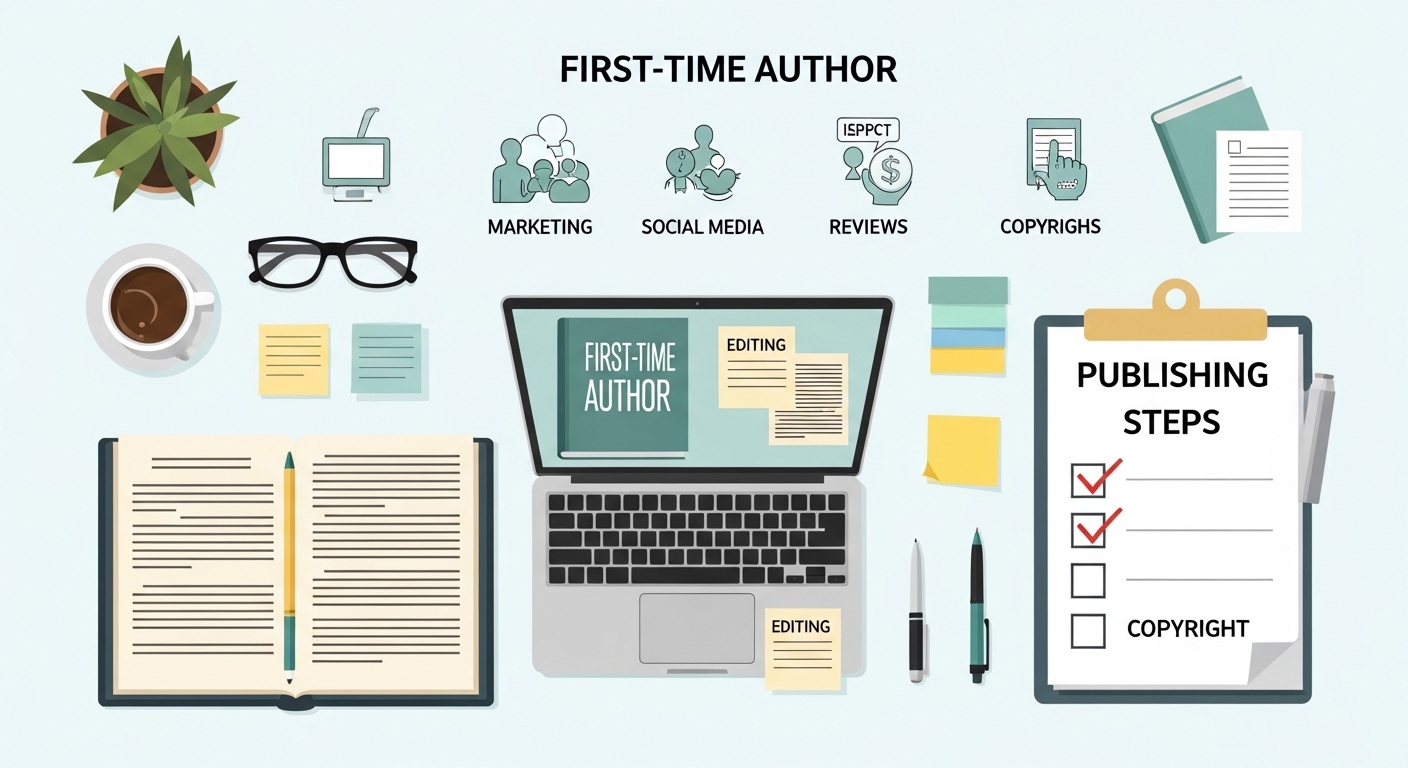
Publishing your first book is an incredible milestone. The thrill of seeing your ideas in print or digital form is unmatched, yet the path to publication is often strewn with challenges. Many first-time authors focus solely on writing the manuscript and underestimate the preparation needed to launch a professional, market-ready book.
This guide serves as a complete, step-by-step checklist, covering everything from refining your manuscript to designing your book, protecting your rights, building a marketing plan, and managing post-launch growth. By following these steps, first-time authors can reduce mistakes, save time, and increase the chances that their debut will succeed.
Whether you aim to self-publish or pursue a traditional route, this resource is your roadmap for a smooth, successful launch.
Why First-Time Authors Often Struggle — and How to Avoid It
Writing a book is only half the battle. Many first-time authors pour their heart into the manuscript but then hit obstacles in areas they didn’t anticipate. Understanding these challenges early can save months of frustration and ensure your debut is as polished and impactful as possible.
Overwhelm from Too Many Tasks
It’s easy to underestimate how much goes into publishing beyond writing. Editing, formatting, cover design, legalities, marketing, and distribution all require planning. Without a structured approach, authors often feel paralyzed or make rushed decisions that compromise quality.
Solution: Break the process into stages. Treat each step—writing, editing, design, marketing—as a mini-project with clear goals and deadlines. Use checklists or project management tools to track progress.
Lack of Industry Knowledge
Many first-time authors assume publishing is just about writing a good manuscript. In reality, understanding copyrights, ISBNs, distribution channels, and formatting standards is essential. Ignorance in these areas can cause delays, errors, or even lost revenue.
Solution: Invest time in learning the basics of publishing. Read guides, attend webinars, or consult experienced authors. Knowledge early on reduces mistakes later.
Underestimating Editing
A raw manuscript is rarely ready for publication. First-time authors sometimes skip professional editing to save money, but even small errors can undermine credibility and reader experience.
Solution: Allocate a realistic budget and timeline for developmental, copyediting, and proofreading. Editing is an investment in quality and reputation.
Poor Planning for Launch and Marketing
Many authors think marketing starts after the book is finished. By the time they launch, it’s too late to build anticipation, collect early reviews, or grow a mailing list.
Solution: Start marketing months before publishing. Build an author platform, prepare teasers, and engage with your target audience. Pre-launch activity sets the stage for a successful debut.
Unrealistic Expectations
It’s common to assume that writing a great book guarantees instant success. Publishing is competitive, and visibility requires consistent effort across multiple fronts.
Solution: Approach publishing with realistic goals. Measure success not just by sales, but by audience engagement, feedback, and growth as a writer.
Why This Matters
By addressing these common pitfalls upfront, first-time authors can approach their debut with clarity, focus, and confidence. Instead of reacting to challenges as they arise, you’ll be proactive, strategic, and well-prepared, which sets the tone for the rest of the checklist.
Adding this section:
- Makes the blog more relatable and engaging.
- Bridges the intro to the checklist by explaining why the checklist is needed.
- Increases depth and word count naturally (~450–500 words).
Step 1: Clarify Your Book’s Purpose and Audience
Before you even think about formatting, marketing, or distribution, it’s crucial to define why your book exists and who it’s for.
Why Purpose Matters
A clear purpose ensures that your writing has direction. Ask yourself:
- Do you want to educate, entertain, inspire, or build authority?
- Is your goal long-term branding, immediate sales, or a mix?
Without a clear purpose, your manuscript may lack focus, making editing, marketing, and promotion more challenging later.
Identifying Your Target Audience
Knowing your readers is just as important as knowing your purpose. Start by creating a reader persona:
| Attribute | Example |
| Name | Sarah |
| Age | 32 |
| Occupation | Corporate professional |
| Goal | Wants practical tips to improve productivity |
| Challenge | Limited time, needs concise advice |
| Preferred Format | eBook, audiobook |
Your persona helps determine writing style, tone, examples, and even marketing channels. A well-targeted book resonates more and is easier to promote.
Practical Tip:
Keep your persona visible while writing. Ask yourself: “Would Sarah enjoy and understand this section?” This ensures your book stays reader-focused.
Step 2: Perfect Your Manuscript
Editing transforms a rough draft into a professional manuscript. Even experienced writers benefit from multiple revisions.
Self-Editing Tips
Reading your manuscript aloud helps identify awkward phrasing and unnatural rhythms, while breaking long paragraphs into shorter, digestible sections improves readability. Eliminating redundancies and filler words further sharpens your writing, making it clear and engaging for readers.
Professional Editing Layers
- Developmental Editing: Focuses on structure, flow, and clarity.
- Copy Editing: Corrects grammar, punctuation, and style inconsistencies.
- Proofreading: Ensures formatting, typos, and minor errors are resolved.
Mini Example:
Original:
“The comprehensive system that we’ve developed provides numerous solutions for productivity inefficiencies within corporate workflows.”
Refined:
“Our system helps teams work smarter, solve productivity issues, and get results faster.”
Tip: Editing is iterative. Don’t rush—multiple passes create clarity and a polished feel.
Step 3: Design and Format Like a Pro
First impressions matter. A visually appealing book attracts readers and conveys professionalism.
Cover Design Essentials
- Should reflect genre and audience expectations.
- Avoid overly busy designs or stock images that look generic.
- Test how the cover looks as a thumbnail for online stores.
Interior Formatting
- Consistent fonts, headings, and line spacing.
- Clear chapter breaks and page numbers.
- eBook vs. print considerations: eBooks need responsive formatting, while print requires exact layout and margin control.
| Aspect | eBook | |
| Font Size | 11–12 pt | Adjustable by reader |
| Layout | Fixed margins | Reflowable text |
| Images | High-res images required | Optimize for file size |
Tip: Formatting early prevents costly revisions before publishing.
Step 4: Legal, Rights, and ISBN Essentials
Legal preparation ensures your work is protected and distributable.
Copyright Registration
- Provides legal proof of ownership.
- Protects against unauthorized copying or adaptation.
ISBN & Barcodes
- Required for retail tracking and sales.
- One ISBN per format (print, eBook, audiobook).
Publishing Rights
- Understand the difference between full rights, licensing, and distribution rights.
- Carefully review contracts to retain ownership where possible.
Tip: Protecting your intellectual property early avoids legal headaches post-launch.
Step 5: Build Your Pre-Publishing Marketing Plan
Marketing starts before your book hits the shelves.
Author Platform
- Website and email list.
- Social media tailored to your audience (Instagram, LinkedIn, TikTok).
- Share teasers, behind-the-scenes content, and insights related to your book.
Pre-Launch Strategies
- Offer early access or ARCs to generate buzz.
- Collaborate with influencers or book reviewers.
- Prepare press releases and media kits.
| Campaign Type | Purpose | Timing |
| Email Newsletter | Build anticipation | 1–2 months pre-launch |
| Social Media Teasers | Audience engagement | 3–4 weeks pre-launch |
| Influencer Outreach | Reviews & visibility | 2–4 weeks pre-launch |
Tip: A well-planned marketing strategy ensures your book reaches the right readers and gains traction immediately.
Step 6: Prepare for Launch Logistics
Publishing is not just writing—it’s a full-scale project launch.
Distribution Options
- Self-publishing platforms: Amazon KDP, IngramSpark.
- Traditional publishing: Offers wider retail access, but longer timelines.
Pricing Strategy
- Research competitors in your genre.
- Consider book length, format, and target audience.
Launch Events
- Virtual webinars, Q&A sessions, or local readings.
- Coordinate timing with pre-order promotions to maximize sales impact.
Step 7: Post-Launch Engagement and Growth
Your work continues after the book is published.
- Monitor reviews and respond where appropriate.
- Engage with readers through social media, newsletters, and author events.
- Plan follow-up projects: sequels, guides, or courses related to your book.
Tip: Early engagement builds your brand and encourages word-of-mouth promotion.
Step 8: Sample Timeline for First-Time Authors
| Month | Key Activities |
| 1–3 | Draft manuscript, develop reader persona |
| 4–5 | Self-editing & initial revisions |
| 6–7 | Hire professional editors |
| 8 | Design cover & format book |
| 9 | Legal, ISBN, copyright registration |
| 10–11 | Pre-launch marketing, platform building |
| 12 | Launch & post-launch engagement |
Step 9: First-Time Author’s Checklist Table
| Step | Action Item | Notes & Tips |
| Purpose & Audience | Define book’s purpose & reader persona | Guides tone, content, marketing |
| Manuscript | Self-edit & hire editors | Multiple drafts improve quality |
| Design | Cover & interior formatting | Align with genre & professional standards |
| Legal | Copyright, ISBN, publishing rights | Protect your intellectual property |
| Marketing | Pre-launch campaigns & press kit | Early engagement builds momentum |
| Launch | Distribution, pricing, events | Organized plan avoids chaos |
| Post-Launch | Reviews, engagement, follow-ups | Sustains success and credibility |
Additional Resources for First-Time Authors
Even with a comprehensive checklist, having the right tools and resources can make the publishing process smoother, faster, and more professional. Below is a curated list of essential platforms, software, and guides to support every stage of your first-time author journey.
Editing Tools
Polished writing is non-negotiable. These tools help you catch errors, refine style, and improve readability:
- Grammarly: AI-powered grammar, punctuation, and style suggestions for clean, professional writing.
- ProWritingAid: Advanced stylistic and structural editing, ideal for long manuscripts.
- Hemingway Editor: Highlights readability issues, long sentences, and passive voice for more engaging prose.
- Beta Readers & Writing Communities: Platforms like Scribophile or Wattpad allow peer review and constructive feedback.
Pro Tip: Use these tools in combination—Grammarly or ProWritingAid for technical accuracy, Hemingway for flow and readability.
Cover Design and Layout Tools
Your book’s visual appeal is its first impression. These platforms help create professional-quality covers and interior layouts:
- Canva: Beginner-friendly design tool with templates for book covers, social media graphics, and promotional materials.
- Adobe InDesign: Industry-standard software for detailed print and digital formatting.
- BookBrush: Specialized for authors, allows easy creation of book mockups, ads, and social media visuals.
Pro Tip: Even if you hire a designer, using these tools for mockups or marketing visuals can save time and improve communication with professionals.
Distribution Platforms
Choosing the right distribution channels ensures your book reaches the right audience efficiently:
- Amazon Kindle Direct Publishing (KDP): Ideal for both eBooks and print-on-demand paperback distribution.
- IngramSpark: Offers wide retail and library distribution for both print and digital formats.
- Draft2Digital: Converts manuscripts into multiple eBook formats and distributes to global retailers.
Pro Tip: Research which platform best matches your target audience—Amazon dominates eBooks, while IngramSpark expands physical bookstore access.
Marketing and Promotion Tools Every First-Time Author Needs
A strong marketing strategy amplifies your reach and boosts sales:
- Mailchimp or ConvertKit: For building and automating email campaigns to keep readers engaged.
- Hootsuite or Buffer: Schedule and manage social media content across multiple platforms.
- BookFunnel: Distribute ARCs (Advanced Reader Copies) easily and collect email subscribers.
- Canva or BookBrush: For promotional banners, social media ads, and launch graphics.
Pro Tip: Combine email campaigns with social media teasers to create a cohesive pre-launch strategy that builds anticipation.
Guides, Templates, and Educational Resources
Books and templates can provide extra structure, inspiration, and step-by-step instructions:
- The Essential Guide to Getting Your Book Published – Offers detailed insights into self-publishing and traditional publishing workflows.
- Book Marketing Templates – Pre-made spreadsheets, launch planners, and content calendars for organizing your pre- and post-launch efforts.
- Writing & Publishing Communities: Join groups on Facebook, Reddit, or LinkedIn to ask questions, get support, and learn from other first-time authors.
- Style Guides: Chicago Manual of Style or AP Stylebook for formatting and editorial consistency.
Pro Tip: Leverage free and paid templates for project management and marketing. They save time and reduce decision fatigue.
Why This Matters
By using these tools and resources, first-time authors can:
- Ensure polished writing and professional presentation.
- Streamline design, formatting, and distribution workflows.
- Launch and promote their books efficiently, maximizing impact.
- Avoid common mistakes that cost time, money, and credibility.
FAQs for First-Time Authors
How long does it take to publish a book?
Self-publishing: 3–6 months; Traditional publishing: 12–24 months.
Do I need an editor?
Yes. Editors enhance clarity, flow, and overall professionalism.
How do I get an ISBN?
Through national ISBN agencies or some self-publishing platforms.
How should I price my debut book?
Research competitors, consider length, format, and perceived value.
Conclusion: Launch Your Book with Confidence
Publishing your first book is both thrilling and complex. By following this First-Time Author’s Checklist, you can ensure every step—from writing, editing, and design to marketing, launch, and post-launch engagement—is carefully planned. Preparation is the key to success. With a structured approach, first-time authors can confidently navigate the publishing process, deliver a professional product, and maximize the potential of their debut book.
Remember: writing your book is just the beginning—launching it right is what makes it successful.