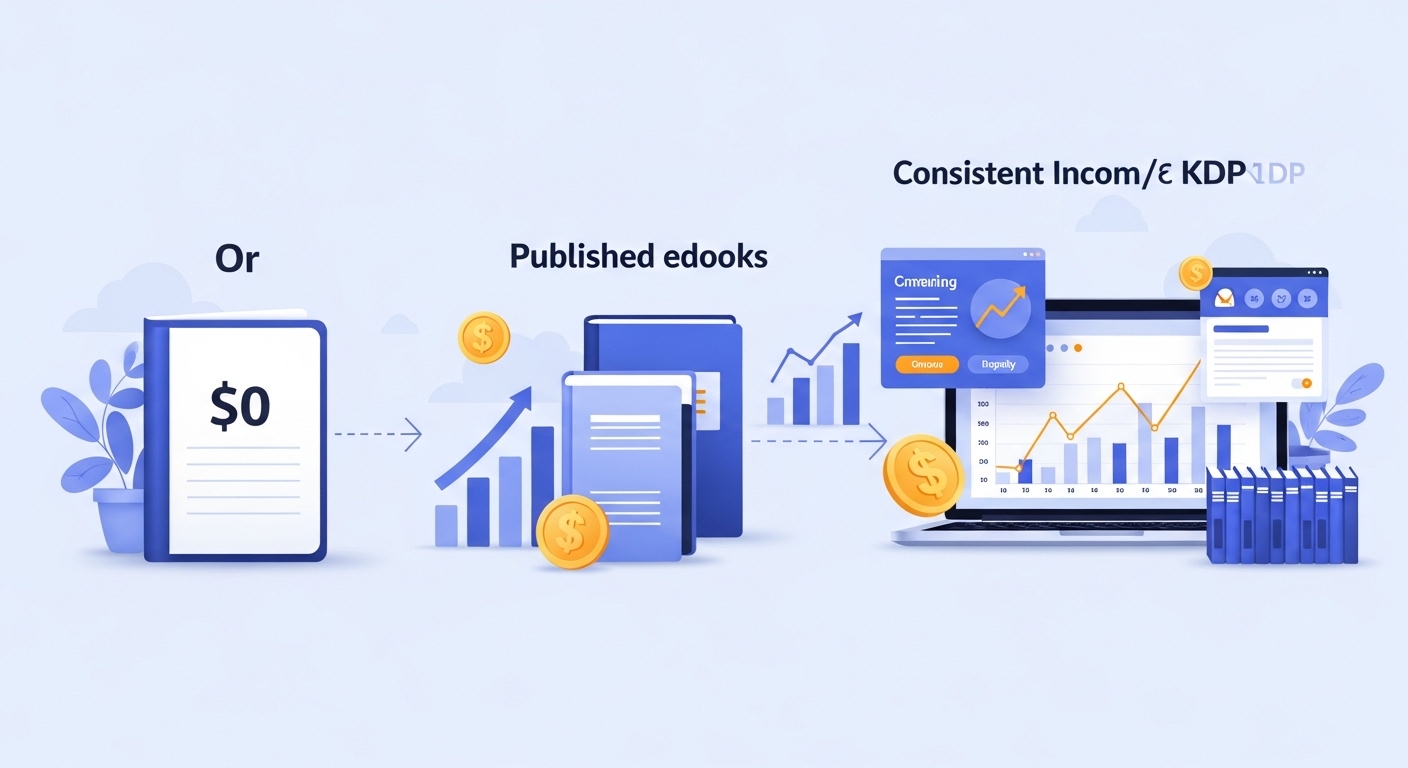
.Building consistent monthly royalties through Kindle Direct Publishing is not a matter of luck, nor is it something that happens overnight after publishing a single book. It is a process that evolves through deliberate strategy, careful positioning, and sustained effort. Many beginners enter KDP with the expectation that writing a book is enough. When results don’t follow, they assume the platform is saturated or that success is reserved for a select few.
The reality is far more practical. Authors who earn consistently are not necessarily more talented—they are more systematic. They understand how the platform works, how readers behave, and how to turn each book into part of a larger income system rather than treating it as a one-off project.
This blueprint walks through that entire journey, from having zero presence on KDP to building a catalog that generates reliable monthly royalties. The focus is not just on publishing, but on building something sustainable.
Understanding the KDP Marketplace
Before writing or publishing anything, it is essential to understand what kind of environment KDP actually is. It is not a traditional bookstore where readers casually browse shelves. Instead, it operates like a search-driven marketplace where visibility is determined by relevance, engagement, and performance signals.
How Readers Actually Discover Books
Most readers don’t stumble upon books randomly. They search with intent. That intent may be to solve a problem, learn something new, or find entertainment within a specific genre. This means your book must align with something people are already looking for.
If your book is not discoverable through search, it effectively does not exist in the marketplace. This is why keyword targeting, category placement, and positioning matter as much as the content itself.
Revenue Streams Within KDP
Income on KDP is not limited to direct sales. There are multiple streams contributing to your overall royalties. Ebook sales provide either a 35% or 70% royalty depending on pricing and region, while paperbacks generate earnings after printing costs are deducted. Beyond that, Kindle Unlimited introduces a system where you earn based on pages read rather than purchases.
This creates a layered income structure where both visibility and engagement play critical roles. A book that is frequently read can sometimes outperform one that sells more copies but fails to retain readers.
Shifting Your Mindset: From Author to Publisher
One of the biggest barriers to consistent income is mindset. Many people approach KDP as writers who happen to publish, rather than publishers who create products.
Why Writing Alone Is Not Enough
Writing is only one component of the system. A well-written book that lacks proper positioning, packaging, or visibility will struggle to generate income. On the other hand, a strategically positioned book with clear value can perform well even if the writing is not extraordinary.
The goal is not just to write—it is to create something that functions effectively within a marketplace.
Thinking in Terms of Assets
Each book you publish should be viewed as an asset. An asset is something that continues to generate value over time. When multiple assets work together, they create a system that produces consistent results.
Instead of focusing on one book at a time, think in terms of building a catalog. This shift changes how you approach every stage, from niche selection to marketing.
Choosing a Niche That Supports Consistent Income
Your niche determines your ceiling. It influences how easily readers can find you, how competitive your space is, and how likely people are to buy your book.
The Problem With Broad Categories
Broad niches often appear attractive because they seem to have large audiences. However, they are also highly competitive and difficult to penetrate. A vague topic makes it harder for your book to stand out or connect with a specific group of readers.
The Advantage of Specificity
Specific niches allow for clearer targeting. When your book speaks directly to a defined audience, it becomes easier to position and market. Readers feel that the book was created for them, which increases the likelihood of conversion.
For example, instead of writing about general productivity, focusing on productivity for remote workers or students creates a stronger connection. The more precisely you define your audience, the easier it becomes to meet their expectations.
Identifying Demand Without Guesswork
Demand is not something you assume—it is something you observe. By analyzing existing books, their rankings, and reader feedback, you can identify whether a niche has consistent buyer interest. A niche with active readers and ongoing engagement is far more valuable than one driven by temporary trends.
Deep Market Research That Shapes Your Book
Once a niche is selected, research becomes the foundation of your strategy. This stage transforms your idea into something aligned with market expectations.
Analyzing Top-Performing Books
High-ranking books provide insight into what works. Their titles reveal how they position themselves, while their covers indicate what appeals visually to readers. Their descriptions show how they communicate value and persuade potential buyers.
This is not about copying but about understanding patterns. When multiple successful books share certain characteristics, it is usually because those elements resonate with readers.
Learning From Reader Reviews
Reviews are one of the most valuable sources of information. Positive reviews tell you what readers appreciate, while negative ones highlight gaps. Those gaps represent opportunities. If readers repeatedly mention missing details or unclear explanations, you can address those issues in your own book.
This allows you to create something that not only competes but improves upon what already exists.
Writing Content That Retains and Satisfies Readers
Once you begin writing, the focus should shift from expression to effectiveness. Your goal is to deliver an experience that keeps readers engaged from start to finish.
Structuring Content for Clarity
A well-structured book is easier to read and more likely to receive positive feedback. Each section should build on the previous one, guiding the reader logically through the content. Confusion or unnecessary complexity can quickly reduce engagement.
Maintaining Reader Interest
Retention is especially important for Kindle Unlimited. If readers stop halfway, your earnings are directly affected. This makes pacing, clarity, and relevance critical components of your writing.
In nonfiction, this means delivering actionable insights without filler. In fiction, it means maintaining narrative momentum and emotional engagement.
The Long-Term Impact of Reader Satisfaction
Satisfied readers are more likely to leave reviews, recommend your book, and purchase future titles. Over time, this creates a cycle where each book supports the performance of the others.
Crafting a Professional Presentation That Converts
Your book’s presentation determines whether readers click, explore, and ultimately buy. It is the bridge between visibility and conversion.
Designing a Cover That Aligns With Expectations
A cover should immediately signal the genre and tone of your book. Readers make quick judgments based on visual cues. If your cover does not match what they expect, they may not even read the title.
Writing Titles and Subtitles That Sell
Your title should capture attention, but clarity is equally important. The subtitle provides an opportunity to explain the value of your book and who it is for. Together, they should create a compelling reason to explore further.
Creating Descriptions That Drive Action
The description is your sales page. It should hook the reader, highlight benefits, and create a sense of urgency or curiosity. Instead of simply describing the content, focus on what the reader will gain.
Strategic Pricing for Visibility and Growth
Pricing influences how your book is perceived and how easily readers are willing to purchase it.
Using Pricing to Build Momentum
Lower pricing in the early stages can help generate initial traction. It reduces resistance and encourages more readers to take a chance on your book. This can lead to increased downloads and improved rankings.
Adjusting for Long-Term Profitability
As your book gains visibility and reviews, you can adjust pricing to optimize earnings. The goal is to find a balance where the book remains accessible while generating meaningful revenue.
Pricing should always support your broader strategy rather than being treated as an isolated decision.
Launching With a Focus on Sustained Activity
A strong launch can significantly influence your book’s trajectory. It is not about a single day of activity but about creating consistent engagement over time.
Building Early Momentum
Initial sales and reads signal relevance to the platform. When your book shows activity, it is more likely to be recommended to other readers. This creates a snowball effect where visibility leads to more engagement.
Maintaining Consistency After Launch
Many authors lose momentum after the initial launch phase. Sustained effort is what keeps your book visible. Regular activity, even at a smaller scale, is more effective than short bursts followed by inactivity.
Scaling Income Through Multiple Books
Consistency in royalties rarely comes from a single title. It emerges from a collection of books working together.
How a Catalog Creates Stability
Each additional book increases your reach and provides another entry point for readers. When readers discover one book, they are likely to explore others, especially if they are connected by theme or series.
The Compounding Effect of Publishing
As your catalog grows, your income becomes less dependent on the performance of any single book. This reduces volatility and creates a more predictable revenue stream.
Leveraging Kindle Unlimited for Recurring Earnings
Kindle Unlimited changes the way you earn by focusing on engagement rather than just purchases.
Why Reader Retention Matters More
Books that keep readers engaged generate more page reads, which translates directly into income. This makes content quality and pacing critical factors in your earnings.
Building a System Around Engagement
When multiple books are available, readers who enjoy one are likely to continue reading others. This increases total page reads and strengthens your overall income.
Building a Recognizable Author Brand
Over time, your identity as an author becomes an asset in itself.
Creating Consistency Across Your Work
Consistency in style, tone, and subject matter helps readers understand what to expect. This familiarity builds trust and encourages repeat purchases.
Reducing Dependence on Marketing
A strong brand makes marketing more efficient. Readers who recognize your name are more likely to choose your books without extensive promotion.
Marketing That Supports Long-Term Growth
Marketing on KDP is most effective when it is approached as a continuous system rather than a series of short-term promotional efforts. Many authors focus on generating quick spikes in sales through limited campaigns, but these bursts rarely translate into sustainable income. What actually builds long-term royalties is steady visibility—ensuring that your book continues to appear in front of the right audience over time.
This type of marketing is rooted in consistency. Instead of chasing trends or relying on occasional promotions, the goal is to create a stable presence within your niche. When your book remains discoverable day after day, it accumulates traction gradually. This slow build often leads to stronger rankings, more reviews, and a higher level of trust among readers. Over time, this compounds into predictable performance, which is the foundation of consistent monthly royalties.
Optimizing for Search and Discovery
Search optimization plays a central role in maintaining long-term visibility. On KDP, readers actively search for books using specific terms, which means your book must be aligned with those search queries to appear in results. This is where keywords and categories become critical.
Choosing the right keywords is not about guessing what sounds relevant—it requires understanding how readers phrase their searches. When your keywords closely match user intent, your book becomes easier to find. Similarly, selecting appropriate categories ensures that your book is placed in sections where your target audience is already browsing.
Effective optimization creates a continuous flow of organic traffic. Unlike paid promotions that stop generating results once the campaign ends, well-optimized books can attract readers consistently without ongoing investment. This makes search visibility one of the most valuable long-term marketing assets you can build.
Expanding Beyond the Platform
While KDP provides internal discoverability, relying solely on the platform can limit your growth. Expanding beyond it allows you to tap into additional sources of traffic and build a more direct relationship with your audience.
Platforms such as blogs or email lists serve this purpose effectively. A blog allows you to create content related to your niche, attracting readers who are already interested in your subject matter. Over time, this content can rank in search engines, bringing in a steady stream of visitors who can be directed toward your books.
Email lists, on the other hand, offer a more direct connection. When readers choose to subscribe, they are signaling interest in your work. This gives you the ability to promote new releases, share updates, and maintain engagement without relying on algorithms. The more connected your audience feels, the more likely they are to support your future books.
Navigating the Plateau Phase
At some stage, most authors experience a plateau where growth slows or stabilizes. This phase can feel discouraging, especially after initial progress, but it is a natural part of building a long-term system. Instead of viewing it as failure, it should be treated as a signal to refine your approach.
Identifying Areas for Improvement
When performance stalls, small adjustments can make a meaningful difference. Revisiting your book’s presentation—such as improving the cover design or rewriting the description—can increase conversion rates. Similarly, refining your keywords or categories can improve discoverability.
These changes do not require starting from scratch. Often, your book already has potential, but it needs better positioning to reach the right audience.
Continuing With Patience and Strategy
Progress on KDP is rarely linear. There are periods of growth followed by periods of stability or decline. What separates successful authors from those who give up is persistence combined with strategic thinking.
By continuing to publish, optimize, and learn from your results, you gradually build momentum. Over time, this consistent effort leads to renewed growth and stronger stability, turning temporary slowdowns into long-term gains.
Building a Sustainable Income System
Long-term success on KDP is not driven by isolated wins or one high-performing book. It comes from developing a system that produces results consistently, regardless of short-term fluctuations. A sustainable income system is built on repeatable processes—ones that can be applied across multiple books and scaled over time. Instead of relying on guesswork or occasional breakthroughs, you operate with a structured approach where each step contributes to a predictable outcome.
Connecting All the Elements
At the core of this system is alignment. Niche selection, market research, writing quality, presentation, and marketing are not separate tasks—they are interconnected components of a single workflow. When one element is weak, it affects the entire system. For example, strong writing cannot compensate for poor discoverability, and effective marketing cannot sustain a book that fails to satisfy readers.
When these elements are aligned, however, the impact is significantly amplified. A well-researched niche ensures demand, clear positioning improves visibility, engaging content increases retention, and professional presentation boosts conversions. Together, they create a cohesive structure where each part reinforces the others. This alignment is what transforms individual books into reliable income-generating assets.
Turning Effort Into Long-Term Results
One of the most powerful aspects of KDP is its ability to compound effort over time. Unlike traditional work models where income is tied directly to ongoing effort, books continue to generate revenue long after they are published. As your catalog grows, each new release adds another layer to your income stream.
This cumulative effect reduces dependence on constant output. Instead of starting from zero with every project, you build on an existing foundation. Over time, your earlier books continue to contribute to your earnings while you focus on expanding your catalog or improving your strategy. This is what turns short-term effort into long-term, sustainable results.
Final Thoughts
Moving from zero to consistent monthly royalties is not about a single breakthrough. It is about building momentum through structured, deliberate action. Each book contributes to a larger system that becomes stronger over time.
When you approach KDP with patience, clarity, and a focus on long-term growth, the results begin to compound. What starts as a single step gradually turns into a stable and scalable income stream. Consistency is not achieved through shortcuts. It is built through understanding, execution, and persistence.