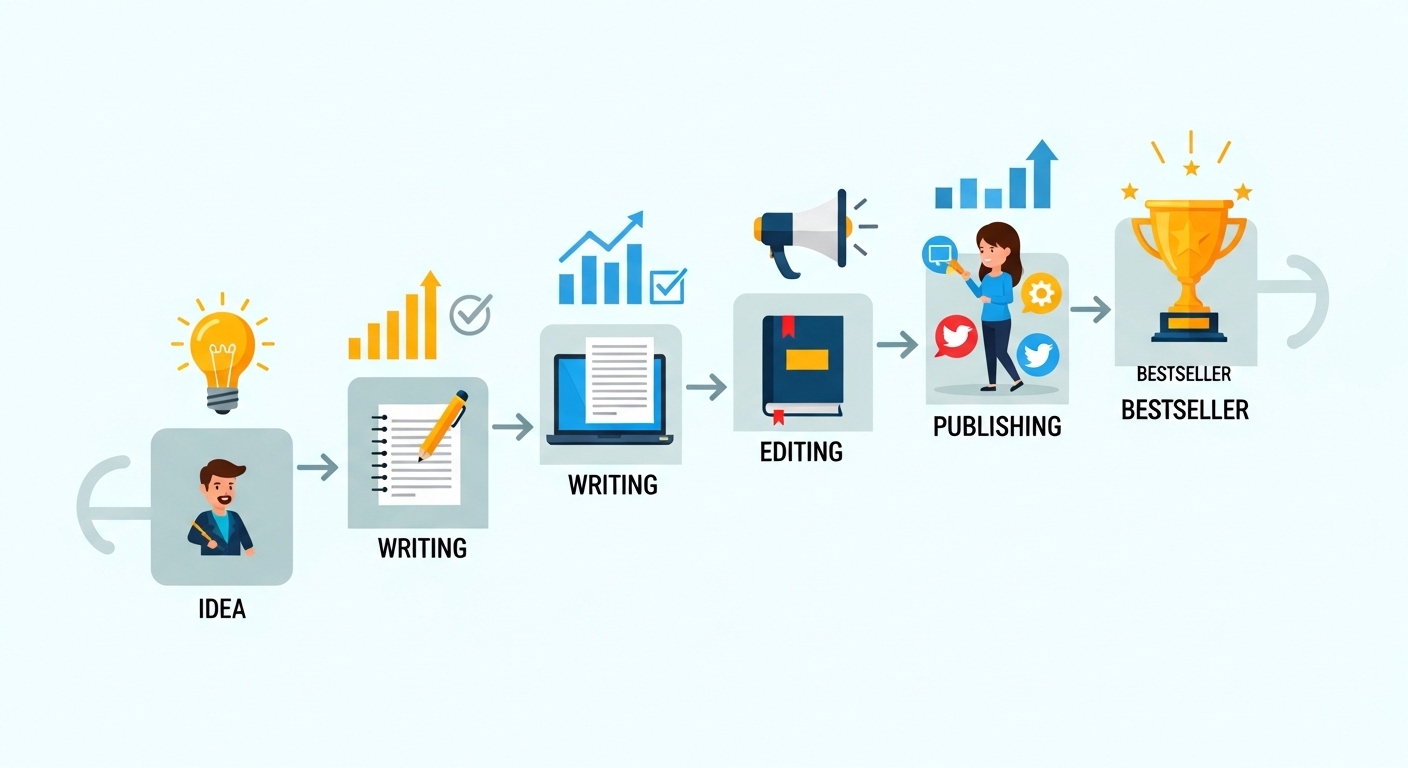
Every bestselling book starts with a spark—an idea that refuses to leave your mind. It could be a personal experience that changed you, a question you’ve been pondering for years, or a story that simply demands to be told. But having an idea is just the beginning. Transforming that spark into a polished, market-ready book requires vision, strategy, and persistence.
The author journey is as much about discovery and growth as it is about writing. Each step—planning, drafting, editing, publishing, and marketing—shapes not only your book but also your identity as a writer. By understanding the complete journey, you can move from inspiration to impact, creating a story that resonates with readers and stands out in the marketplace.
In this guide, we’ll break down every stage, share actionable insights, and help you approach your writing journey with confidence and clarity.
Next Section – Finding Your Big Idea: The Heart of Your Book
Before any words hit the page, the foundation of your book must be solid: a clear, compelling idea. This isn’t just about what you write—it’s about why you’re writing it and who will benefit from it. A strong idea guides your structure, your tone, and your marketing, creating a cohesive book from start to finish.
Discover Your Passion and Perspective
The most memorable books come from writers who bring authenticity to the page. Think about topics you’re passionate about or experiences that give you unique insights. Maybe you’ve faced challenges others haven’t, or developed a skill that could help readers transform their lives. Your perspective is what will set your book apart.
Research Reader Needs and Market Opportunities
Even the best ideas need an audience. Look at trends in your genre, identify gaps in existing books, and consider what readers are searching for. This research ensures your book addresses real needs and positions you as a trusted voice in your niche.
Refine Your Idea Into a Clear Core Message
A focused idea is easier to write, market, and sell. Ask yourself: What is the central takeaway I want readers to leave with? Narrowing your idea into a single, compelling message will serve as the guiding star throughout your author journey. For example, instead of writing a broad self-help book, focus on a specific outcome like “how busy professionals can reclaim creativity without burning out.”
Stage 1: Discovering Your Big Idea
Pinpoint Your Passion and Expertise
Your best ideas often lie where your interests intersect with your knowledge. Whether it’s a personal journey, a professional skill, or a topic you’ve explored deeply, these foundations make your book unique and relatable.
Research Reader Needs and Market Gaps
A brilliant idea still needs an audience. Investigate what’s popular in your genre and look for opportunities to offer a fresh perspective. This ensures your book fills a real need while staying authentic.
Refine Your Concept into a Clear Message
Focus your idea into a single, compelling premise. For example, instead of a general self-help book, zero in on “How creatives can boost productivity without stifling imagination.” A strong core idea guides your writing and marketing.
Stage 2: Mapping Out Your Book
Choose the Right Format and Structure
Decide whether your book will be fiction or nonfiction, short or long, standalone or part of a series. The structure sets the stage for pacing, engagement, and overall readability.
Outline Chapters and Key Points
A detailed outline gives you a roadmap. Fiction writers can plan scenes and character arcs; nonfiction authors can organize chapters around actionable lessons.
Set Achievable Writing Goals
Breaking the project into manageable milestones keeps momentum going. Daily word counts or weekly chapter targets prevent overwhelm while keeping you accountable.
Stage 3: Writing the Manuscript
Overcome Writer’s Block and Sustain Momentum
Writer’s block is normal. Freewriting, timed sprints, or even AI brainstorming tools can spark ideas. Remember: quantity comes first; polishing comes later.
Balance Creativity with Discipline
Writing a book is a mix of inspiration and consistency. Allow space for creative exploration but adhere to your schedule to ensure steady progress.
Infuse Your Unique Voice
Your voice is your signature. Whether witty, reflective, or authoritative, it should be present in tone, pacing, and storytelling throughout your manuscript.
Stage 4: Editing and Feedback
Self-Editing Techniques
Focus first on structure, clarity, and coherence. Reading aloud, revising in multiple passes, and using grammar tools help prepare the manuscript for professional review.
Leverage Professional Editors
Editors enhance structure, pacing, and readability while keeping your voice intact. Their guidance ensures your book meets industry standards.
Use Beta Readers for Real Feedback
Select a group of readers in your target audience. Their insights highlight confusing passages, plot holes, or particularly resonant sections, allowing you to refine the manuscript.
Stage 5: Publishing Smartly
Traditional vs Self-Publishing
Traditional publishing offers support, credibility, and wider distribution but can be slow. Self-publishing is faster and more flexible, though it requires self-marketing and project management.
Preparing Your Book for Publication
Regardless of the route, focus on professional formatting, cover design, and platform optimization. Attention to detail ensures your book looks polished and readable.
Submission and Release Strategies
Craft compelling query letters or proposals if pursuing traditional publishing. For self-publishing, plan a structured launch with pre-release buzz, early reviews, and promotional campaigns.
Stage 6: Marketing and Building Your Author Brand
Create a Strong Author Platform
Your platform is your bridge to readers. Websites, newsletters, and social media establish credibility and maintain long-term engagement.
Pre-Launch Buzz and Teasers
Generate anticipation with sample chapters, cover reveals, and early-reader access. Strategic pre-launch campaigns help your book stand out on release day.
Sustaining Momentum Post-Launch
Keep your book relevant through interviews, promotions, social media engagement, and events. Continuous interaction with readers strengthens loyalty and boosts visibility.
Stage 7: From Launch to Bestseller Status
Track Sales and Audience Metrics
Monitor sales trends, rankings, and engagement metrics to refine marketing strategies and gauge your book’s impact.
Ongoing Marketing and Growth
A bestseller isn’t built overnight. Long-term promotion, collaborations, and strategic campaigns maintain your book’s visibility and reach.
Leverage Lessons for Your Next Book
Every book informs the next. Insights gained during writing, publishing, and marketing improve future projects, creating a cumulative growth path for your author career.
Visual Guide: Author Journey Stages, Key Tasks, and Tips
| Stage | Key Tasks | Tips for Success |
| Discovering Your Idea | Brainstorm ideas, research trends, define core message | Align ideas with your passion and market demand |
| Mapping Out Your Book | Outline chapters, structure story, set goals | Use mind maps or bullet outlines for clarity |
| Writing the Manuscript | Draft chapters, maintain voice, overcome blocks | Schedule writing sessions and freewrite for creativity |
| Editing and Feedback | Self-edit, work with editors, beta readers | Read aloud and track revisions for consistency |
| Publishing Smartly | Choose publishing path, format, launch prep | Plan pre-release campaigns and professional design |
| Marketing & Author Branding | Build platform, pre-launch teasers, post-launch promotion | Engage readers, share your story, and maintain momentum |
| From Launch to Bestseller | Track sales, grow audience, plan next book | Learn from feedback and refine strategies continuously |
Conclusion – Your Bestseller Journey is Achievable
Turning an idea into a bestseller is a marathon, not a sprint. By following these stages—concept, planning, writing, editing, publishing, marketing, and growth—you create a structured path that increases your chances of success. Every step shapes your author identity, hones your skills, and brings you closer to readers who will value your work.
Start with your idea today, take one intentional step at a time, and your book could be the next bestseller.
FAQ Section
How long does it take to go from idea to published book?
Varies by project; nonfiction can take 6–12 months, fiction 1–2 years.
Can a first-time author reach bestseller status?
Yes, with a compelling idea, strong voice, and strategic marketing.
Should I self-publish or pursue traditional publishing?
It depends on your priorities: speed and control vs support and credibility.
How important is marketing in achieving bestseller status?
Marketing is crucial. A strong platform and pre-launch buzz significantly impact visibility.
How can I stay motivated throughout the process?
Set milestones, celebrate progress, and connect with writing communities for support.