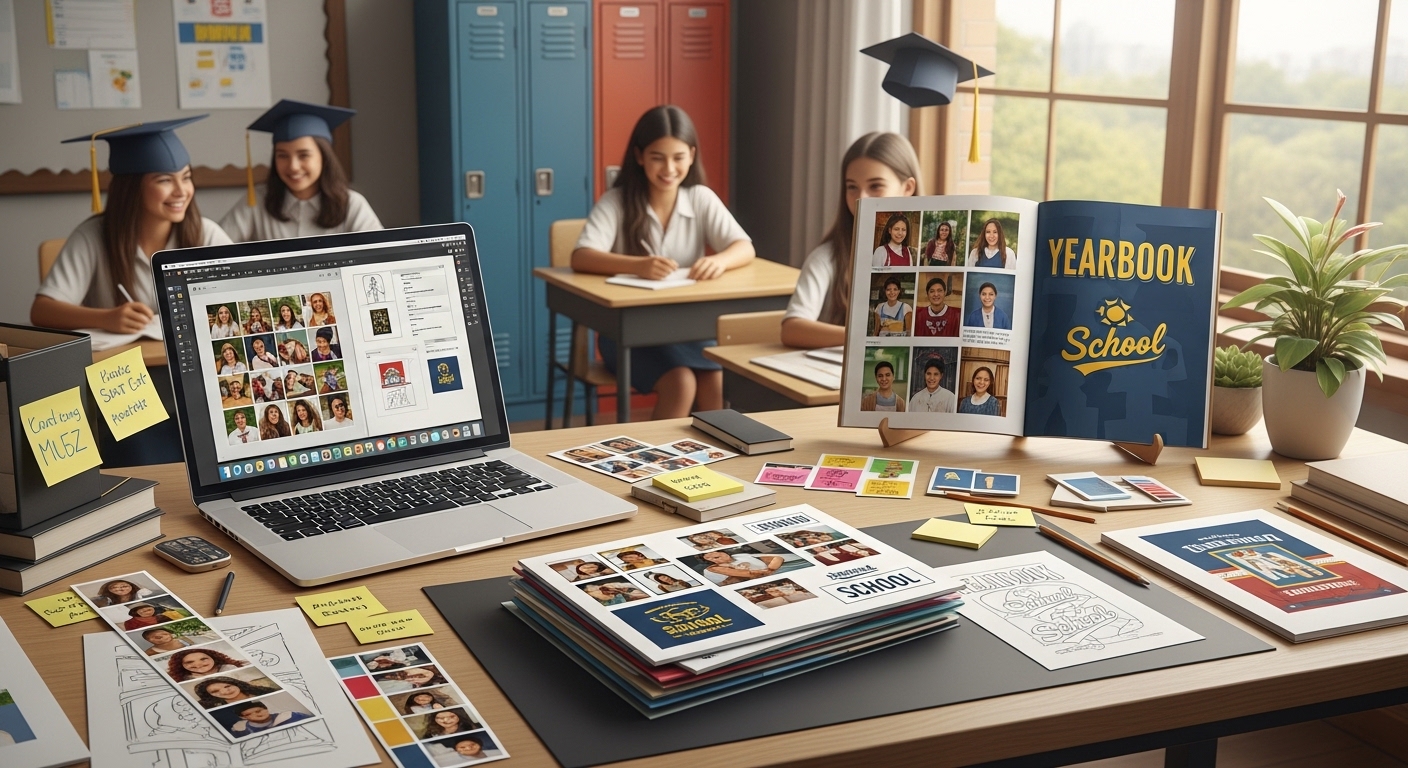
A school yearbook is more than a printed collection of photos—it is a structured archive of identity, memory, and shared experience. When done well, it becomes something students revisit long after graduation, not just to remember faces, but to relive moments that shaped an entire year. Building a custom school yearbook from scratch is therefore not just a design task; it is an editorial, organizational, and storytelling project that blends creativity with planning discipline.
In 2026, yearbooks have also evolved. They are no longer limited to traditional layouts and static formats. Schools increasingly expect hybrid approaches, improved visual storytelling, digital integration, and stronger personalization. This makes the process more complex, but also far more flexible and rewarding.
Creating a yearbook from scratch requires clarity in structure, consistency in design, and a strong understanding of how students emotionally engage with memory-based content. The goal is not just to document the year, but to present it in a way that feels alive, organized, and meaningful across time.
Planning the Foundation: Defining the Yearbook Vision
Every successful yearbook begins long before any design work starts. The planning stage determines how cohesive, visually consistent, and emotionally impactful the final product will be. A clear vision ensures that every page feels part of the same story instead of a disconnected collection of sections. This is where decisions about tone, style, and structure are made. Schools often underestimate this stage, rushing into design without defining direction. That usually results in inconsistent layouts and a lack of narrative flow across sections and pages.
At this stage, the most important decisions include:
- The overall theme of the yearbook
- The tone (formal, playful, nostalgic, modern)
- The level of personalization per student or class
- Print vs digital hybrid format
- Visual identity guidelines for consistency
A well-defined vision acts like a blueprint. Without it, even strong design work becomes fragmented and harder to align later during production.
Collecting Content: The Real Backbone of a Yearbook
Content collection is often the most time-consuming part of building a yearbook. It involves gathering photographs, written contributions, event documentation, and personal memories from across the school community.
The challenge is not just gathering material, but organizing it in a way that can later be structured into coherent sections that tell a meaningful story.
Typical content sources include:
- Classroom and group photographs
- Sports and extracurricular activity coverage
- Event documentation (festivals, trips, ceremonies)
- Student quotes and memories
- Teacher messages and highlights
- Candid moments from daily school life
The key to effective content collection is consistency. If one section is heavily detailed while another is underdeveloped, the final yearbook feels uneven and incomplete. A structured submission process helps maintain balance. Schools that use deadlines, categorized submission forms, and designated coordinators usually produce more cohesive and visually balanced yearbooks overall.
Structuring the Yearbook: Turning Raw Content into Flow
Once content is collected, the next step is structuring it into a logical narrative. A yearbook is not random pages—it follows an intentional flow that guides the reader through the school year in sequence.
A common structure includes:
- Opening section (school identity, welcome message)
- Academic life (classes, teachers, achievements)
- Student life (clubs, activities, friendships)
- Events and celebrations (sports days, trips, ceremonies)
- Individual profiles and memories
- Closing section (farewell messages, highlights)
The goal is to move from general shared experiences to more personal reflections in a natural progression.
This structure helps readers relive the year in a chronological and emotional way, rather than jumping between unrelated or disconnected moments that reduce narrative impact.
Designing the Layout: Where Creativity Meets Structure
Yearbook design is where storytelling becomes visual communication. However, strong design is not about decoration—it is about readability, balance, and emotional clarity across pages.
A good layout ensures that:
- Text remains easy to read without strain
- Images support the narrative instead of overwhelming it
- Pages maintain consistency across different sections
- White space is used to improve visual breathing room
Consistency is especially important. When each section looks visually unrelated, the yearbook loses its identity and feels like separate fragments instead of one unified document.
Typography plays a major role here. Most professional yearbooks rely on a limited font system to maintain cohesion. Too many fonts create visual noise, while too few can reduce personality if not balanced correctly. Color systems also matter. Most yearbooks use a controlled palette tied to school identity or theme. This creates recognition and ensures visual harmony across every section.
Using Photos Effectively: More Than Just Placement
Photos are the emotional core of any yearbook. But their impact depends not just on inclusion, but on how carefully they are selected, edited, and placed within layouts.
A strong yearbook avoids simply filling pages with images. Instead, it uses photos to tell structured visual stories that reflect real experiences and emotions.
Effective photo usage includes:
- Group shots that capture interaction and community
- Candid images that reflect authentic school life
- Event highlights that show progression and atmosphere
- Close-up emotional moments that build personal connection
- Balanced image distribution across sections
The difference between a good yearbook and a great one often lies in curation quality rather than quantity of images.
Image resolution and lighting consistency are also important. Even strong moments lose impact if the visual quality appears unprofessional or inconsistent across pages.
Writing Content That Adds Meaning
While visuals dominate, written content gives the yearbook depth and emotional grounding. Captions, messages, and reflections turn images into meaningful memories with context and narrative value.
However, writing should not feel overly formal or artificial. The most effective yearbook writing is simple, natural, and emotionally relatable to students.
This includes:
- Short event summaries explaining significance
- Student quotes reflecting real experiences
- Teacher messages adding personal connection
- Section introductions guiding readers through flow
- Light commentary that enhances memory recall
The goal is emotional authenticity rather than polished language. Readers should feel the content reflects lived experience, not overly edited storytelling.
Print vs Digital Yearbooks: Choosing the Right Format
Modern yearbook creation often includes deciding between print, digital, or hybrid formats depending on budget, accessibility, and engagement goals.
Each format has different strengths:
| Format | Strength | Limitation |
| Physical memory value, emotional permanence | Higher cost, limited updates | |
| Digital | Interactive features, multimedia support | Less tactile emotional impact |
| Hybrid | Combines both benefits | Requires more planning effort |
Print versions remain emotionally powerful because they create physical memory artifacts that students can keep for years. Digital versions allow expanded storytelling through video and interactive content.
Many schools now use both to balance emotional value with modern accessibility.
Editing and Review: Where Quality Is Refined
Editing is the stage where the yearbook transforms from draft to final product. It ensures consistency across text, images, and layout design while eliminating errors that reduce professionalism.
This process includes:
- Proofreading all written content
- Checking layout alignment across sections
- Ensuring image quality consistency
- Reviewing page balance and spacing
- Confirming design continuity across chapters
This stage often determines final quality more than initial design. Even strong concepts can fail if editing is rushed or inconsistent.
Printing and Production: Turning Design into Reality
Once the yearbook design is finalized, the project enters a stage where creative decisions are no longer theoretical—they become physical. Printing and production determine how the yearbook will actually feel in the hands of students, teachers, and families. This is where design intent is either preserved or weakened, depending on execution quality.
A strong design can lose its impact instantly if production quality is inconsistent. Colors may shift, images may appear dull, and layout precision can be compromised. That is why production is not a technical afterthought—it is a direct extension of the design process.
At this stage, the focus shifts from visual planning to material performance. Every choice affects durability, readability, and long-term preservation.
Key Production Factors that Define Final Quality
Several technical elements directly influence how professional and lasting a yearbook feels:
- Paper thickness and texture: Heavier paper improves durability and prevents image bleed-through, while texture influences how premium the book feels when handled
- Binding style and durability: Strong binding ensures pages remain intact over years of use, especially in frequently opened sections
- Color accuracy during printing: Proper calibration ensures that digital designs translate correctly into print without dullness or distortion
- Cover material and finishing quality: Hardcover, matte, or gloss finishes significantly affect first impressions and perceived value
- Long-term durability for storage: Resistance to wear, fading, and spine damage determines whether the yearbook remains intact decades later
Each of these factors contributes to how “permanent” the yearbook feels, not just how it looks at the moment of distribution.
Why Production Quality Directly Affects Emotional Value
A yearbook is not judged like a regular printed book. It carries emotional weight, which means physical quality has a psychological impact.
When printing is sharp, colors are accurate, and materials feel solid, the yearbook feels valuable and worth keeping. Students are more likely to preserve it, revisit it, and treat it as a meaningful artifact.
When production quality is poor, even strong design loses credibility. Faded images, weak binding, or inconsistent printing creates a sense of impermanence, which reduces emotional attachment to the content inside.
Choosing the Right Production Partner
Selecting a printing partner is one of the most important decisions in the entire yearbook process. It determines whether design consistency is maintained or compromised during production.
A reliable partner ensures:
- Accurate color reproduction across all pages
- Consistent alignment with the original design files
- High-quality binding that withstands frequent handling
- Proper handling of large-volume printing without quality loss
In many cases, schools that prioritize cost over quality face issues such as misaligned pages, inconsistent color tones, or early physical deterioration. A well-produced yearbook, however, reflects professionalism and protects the integrity of the entire project.
Printing and production are where the yearbook stops being a digital concept and becomes a lasting physical record. At this stage, precision matters as much as creativity. The goal is not only to produce a book that looks good on release day, but one that still feels intact, meaningful, and visually strong years after it is first opened.
Distribution and Final Experience
Distribution is the final stage, but also one of the most emotionally important. It is the moment where months of work become a tangible experience for students.
How the yearbook is delivered influences its emotional reception. Structured handover events, presentations, or celebrations can enhance the perceived value of the book significantly.
At this stage, the yearbook transitions from a project into a memory artifact. It is no longer just a school document—it becomes part of personal history for every student who receives it.
FAQ: Building a Custom School Yearbook
How long does it take to build a school yearbook from scratch?
It typically takes several months depending on school size, content volume, and design complexity. Larger schools often require planning across an entire academic year.
What software is commonly used for yearbook design?
Popular tools include Adobe InDesign, Canva, and other multi-page layout design platforms that support structured publishing workflows.
How many pages should a yearbook have?
Most school yearbooks range from 80 to 200 pages depending on student population, event coverage, and design depth.
Who is responsible for creating the yearbook?
Usually a yearbook committee made up of students, teachers, and a design coordinator who manages structure, content, and production.
Can a yearbook be fully digital?
Yes, digital yearbooks are increasingly common and allow multimedia integration, but printed versions still carry stronger emotional and archival value.
Final Thoughts
Building a custom school yearbook from scratch is a structured creative process that combines planning, storytelling, design discipline, and emotional understanding.
It is not simply about documenting a school year—it is about shaping how that year is remembered. A well-executed yearbook becomes a lasting archive of shared experience, preserving not just events, but the emotional identity of an entire student community.