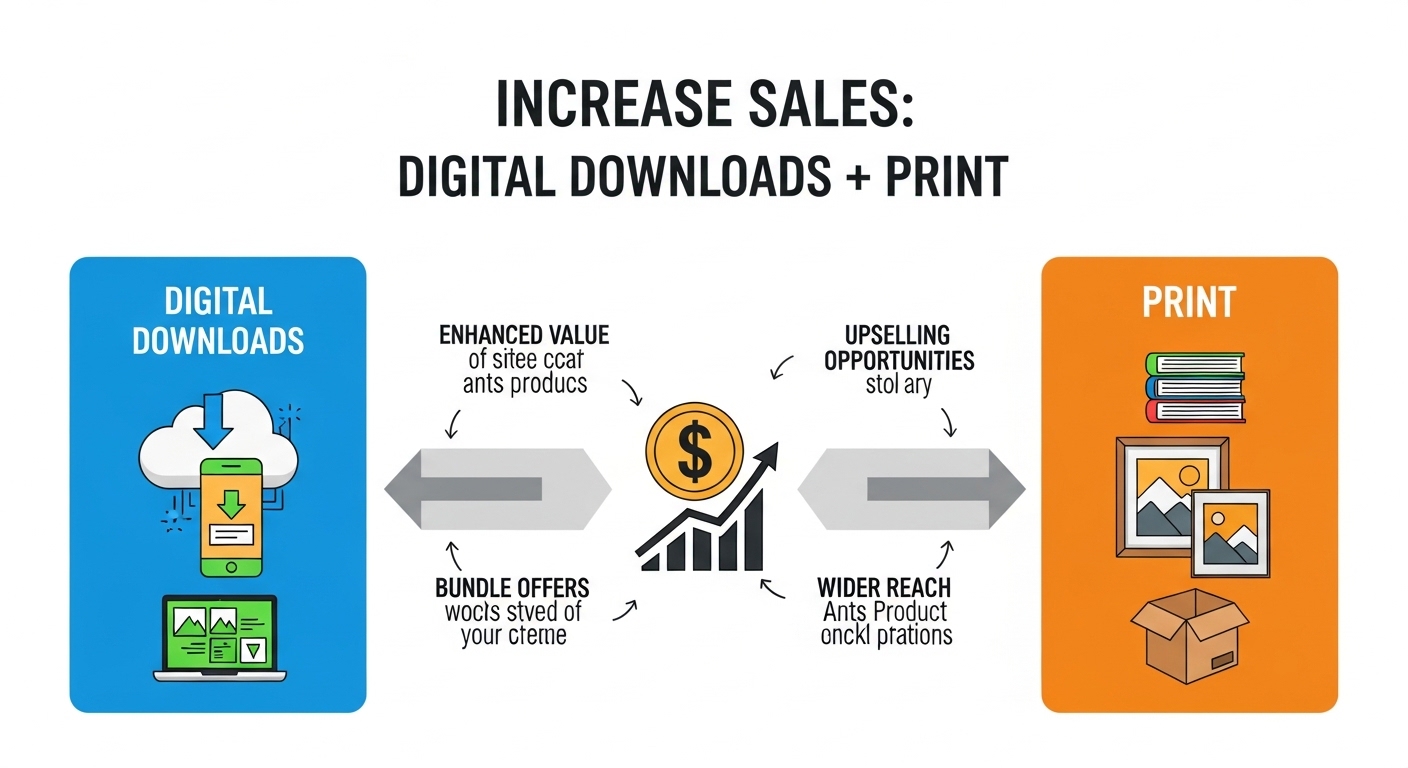
Selling digital products alone is no longer enough to stand out in today’s competitive writing, design, and creative marketplace. While digital downloads offer convenience, speed, and scalability, they often lack perceived value and emotional depth. On the other hand, print products feel tangible, premium, and long-lasting—but they don’t provide the instant accessibility that digital formats deliver.
Smart creators and businesses are now combining both approaches. By pairing digital downloads with print design products, they build hybrid offers that appeal to both logic and emotion. Customers gain immediate access to digital content along with a physical product they can keep, gift, or display. This blend not only enhances perceived value but also creates stronger pricing flexibility, better upselling opportunities, and ultimately leads to higher conversions and more meaningful customer relationships.
Why Digital-Only Products Often Hit a Sales Ceiling
Digital products are efficient, but they come with limitations that affect long-term sales performance. They are catered to you by writing professionals. Because they are intangible, customers often undervalue them, even if the content is high quality. There is also an issue of saturation—buyers are overwhelmed with options and may hesitate to purchase something that feels easily replaceable.
Additionally, digital fatigue plays a role. Many users consume content quickly and forget it just as fast. Without a physical reminder, the product rarely stays top of mind. This reduces repeat engagement and lowers perceived return on investment, ultimately limiting how much customers are willing to pay.
The Unique Advantage of Print in Modern Selling
Print introduces something digital cannot replicate: physical presence. When customers receive a printed product, it becomes part of their environment. It sits on a desk, a shelf, or a workspace, reinforcing its value over time.
This tangibility creates emotional attachment. A printed planner, workbook, or guide feels more intentional and complete than a downloadable file. It signals effort, quality, and permanence. Because of this, customers are often willing to pay more for print products. When combined with digital, print acts as a value amplifier, elevating the entire offering rather than replacing it.
How Pairing Digital and Print Increases Perceived Value
When digital and print are combined, the product transforms from a simple purchase into a complete experience. Customers receive instant access through digital downloads while also anticipating the arrival of a physical product.
This dual-layer experience increases perceived value significantly. Buyers feel they are getting more for their money, even if the core content remains the same. The digital version offers convenience, while the print version offers depth and permanence. Together, they create a stronger justification for higher pricing, making it easier to position the product as premium.
Structuring a Hybrid Product That Converts
A successful hybrid product requires intentional structuring. The digital component should provide immediate usability—something customers can access right after purchase. The print component should feel like an upgrade, not a duplicate.
For example, a digital guide might include interactive elements, while the printed version offers a refined, distraction-free reading experience. The key is differentiation without disconnection. Both formats should complement each other rather than compete. When structured properly, the digital version drives quick satisfaction, while the print version reinforces long-term engagement and perceived quality.
Pricing Strategies for Digital and Print Bundles
Pricing is not just about assigning numbers—it is about shaping perception, guiding decisions, and maximizing value without increasing production effort. When digital downloads and print products are paired correctly, pricing becomes a strategic tool that drives upgrades, increases average order value, and strengthens positioning.
A well-structured pricing model makes the bundle feel like the obvious choice, not a forced upsell. Below are five proven strategies that work effectively for hybrid products.
Tiered pricing for clear decision paths
Tiered pricing creates structured options for different types of buyers. Instead of offering a single product, you present multiple levels—typically digital-only, print-only (optional), and a bundled premium version. This approach works because it removes confusion. Customers can quickly identify which option suits their needs and budget. The digital version serves as the entry point, while the bundle is positioned as the most complete experience.
When designed properly, most customers naturally gravitate toward the middle or premium tier because it feels more valuable relative to the base option.
Price anchoring to increase perceived value
Anchoring works by showing the individual value of each component before presenting the bundle price. When customers see the digital product priced separately and the print product priced separately, the combined bundle appears more economical.
For example, if a digital product is priced at $20 and the print version at $40, presenting the bundle at $49 makes it feel like a smart deal rather than an expensive upgrade. This strategy shifts focus from cost to savings. Instead of asking “Is this expensive?”, the customer thinks, “I’m getting more for less.”
Bundle discount strategy for conversion boost
A bundle discount is one of the simplest and most effective pricing techniques. By offering a slightly reduced price when both digital and print are purchased together, you create an incentive without reducing perceived value.
The key is moderation. The discount should feel rewarding but not so large that it devalues the product. Typically, a 10–25% difference between combined individual pricing and bundle pricing works well. This approach increases conversions because it introduces urgency—customers feel they might miss out on a better deal if they choose only one format.
Premium positioning for higher perceived quality
Instead of competing on price, this strategy focuses on positioning the bundle as a premium offering. The digital version remains accessible, but the print bundle is framed as a higher-end experience. This works particularly well for products that benefit from physical interaction, such as workbooks, planners, or storytelling content. The print version can include enhanced design, better materials, or exclusive elements that justify the higher price.
When positioned correctly, customers are not just buying a product—they are investing in a more refined and complete experience.
Limited-time or exclusive bundle offers
Creating time-sensitive or exclusive bundle pricing introduces urgency into the decision-making process. Customers are more likely to upgrade when they believe the offer is temporary or limited. This can be applied during product launches, seasonal promotions, or special campaigns. For example, offering a discounted bundle for a limited period encourages faster conversions.
The effectiveness of this strategy lies in reducing hesitation. Instead of delaying the decision, customers are pushed to act while the offer is available.
Example Pricing Table for Digital and Print Bundles
| Product Option | Includes | Price (Example) | Perceived Value |
|---|---|---|---|
| Digital Only | Downloadable file | $20 | Entry-level, flexible |
| Print Only | Physical product | $40 | Tangible, premium feel |
| Bundle (Best Value) | Digital + Print | $49 | High value, cost-efficient |
| Premium Bundle | Digital + Print + Bonus Content | $59 | Exclusive, enhanced offering |
How to Choose the Right Pricing Strategy
The best pricing approach depends on your audience, product type, and positioning. If your goal is volume, tiered pricing with bundle discounts works well. If your goal is premium branding, focus on value perception and positioning rather than discounts.
In many cases, combining multiple strategies delivers the strongest results. For example, using tiered pricing alongside anchoring and limited-time offers creates both clarity and urgency.
Ultimately, effective pricing is not about lowering cost—it is about increasing perceived value. When customers clearly understand what they are getting and why it matters, they are far more likely to choose the bundle over the basic option.
Creating Upsell Opportunities That Feel Natural
Pairing digital and print products opens the door to seamless upsells. After purchasing a digital download, customers can be offered a printed version at a discounted rate. Because they already see value in the content, the decision feels easy and logical.
Similarly, print buyers can be offered exclusive digital add-ons such as bonus chapters, templates, or updates. These upsells should feel like extensions of the original product, not unrelated offers. When done correctly, upselling becomes a value-driven experience rather than a sales tactic, increasing revenue without damaging trust.
Using Design to Bridge Digital and Print Experiences
Consistency in design is essential when combining formats. The digital and print versions should feel like parts of the same system, not separate products. Typography, color schemes, and layout structures should align across both formats.
At the same time, each format should leverage its strengths. Digital design can include interactive elements, while print design should focus on readability and tactile appeal. When design is cohesive, customers experience continuity, which reinforces professionalism and brand identity. This alignment strengthens trust and increases the likelihood of repeat purchases.
Leveraging Instant Gratification and Delayed Satisfaction
One of the most powerful psychological advantages of pairing digital and print is the combination of instant and delayed gratification. The digital download satisfies the customer immediately—they can start using the product right away.
The printed version, however, introduces anticipation. Waiting for a physical product creates a sense of excitement and perceived value. This dual experience keeps customers engaged over a longer period. Instead of a single moment of satisfaction, the purchase becomes an extended experience, increasing emotional connection and overall satisfaction.
Reducing Refunds and Increasing Customer Satisfaction
Hybrid products often lead to lower refund rates. With digital-only products, dissatisfaction can happen quickly if expectations are not met. However, when print is included, customers are more likely to perceive the purchase as valuable and complete.
The physical product reinforces commitment. Customers are less likely to request refunds when they have received something tangible. Additionally, the combination of formats caters to different preferences—some users prefer digital, others prefer print. By offering both, businesses reduce the risk of dissatisfaction and increase overall customer satisfaction.
Building Long-Term Brand Value Through Hybrid Products
Pairing digital and print is not just a short-term sales strategy—it contributes to long-term brand positioning. Businesses that offer hybrid products are often perceived as more professional, thoughtful, and premium.
Over time, this perception builds trust and loyalty. Customers begin to associate the brand with quality and completeness. They are more likely to return for future purchases and recommend the product to others. This creates a compounding effect where each sale contributes to stronger brand equity and sustainable growth.
When Hybrid Products Work Best
Hybrid models are particularly effective for certain types of products. Educational content, planners, workbooks, and storytelling-based materials benefit greatly from both formats.
For example, a digital course paired with a printed workbook enhances learning retention. Similarly, a downloadable story paired with a printed version creates both convenience and emotional value. The key is choosing products where physical interaction adds meaningful benefit rather than unnecessary complexity.
FAQs
What are digital and print bundles?
They are product packages that include both downloadable content and a physical printed version of the same or enhanced material.
Do hybrid products really increase sales?
Yes, they increase perceived value, improve pricing flexibility, and create upsell opportunities, all of which contribute to higher sales.
What types of products work best for this strategy?
Educational materials, planners, guides, and storytelling-based content benefit the most from combining digital and print formats.
How should I price a digital and print bundle?
Use tiered pricing and anchor the bundle against individual product prices to make it feel like a better deal.
Is print necessary for all digital products?
No, but it is highly effective when the content benefits from physical interaction or long-term use.
Conclusion
Pairing digital downloads with print is not just a trend—it is a strategic shift in how products are perceived and consumed. By combining the speed of digital with the depth of print, businesses create a more complete and valuable offering.
This approach enhances customer experience, increases perceived value, and opens new revenue opportunities. When executed thoughtfully, it transforms a simple product into a layered experience—one that customers not only use but also remember.