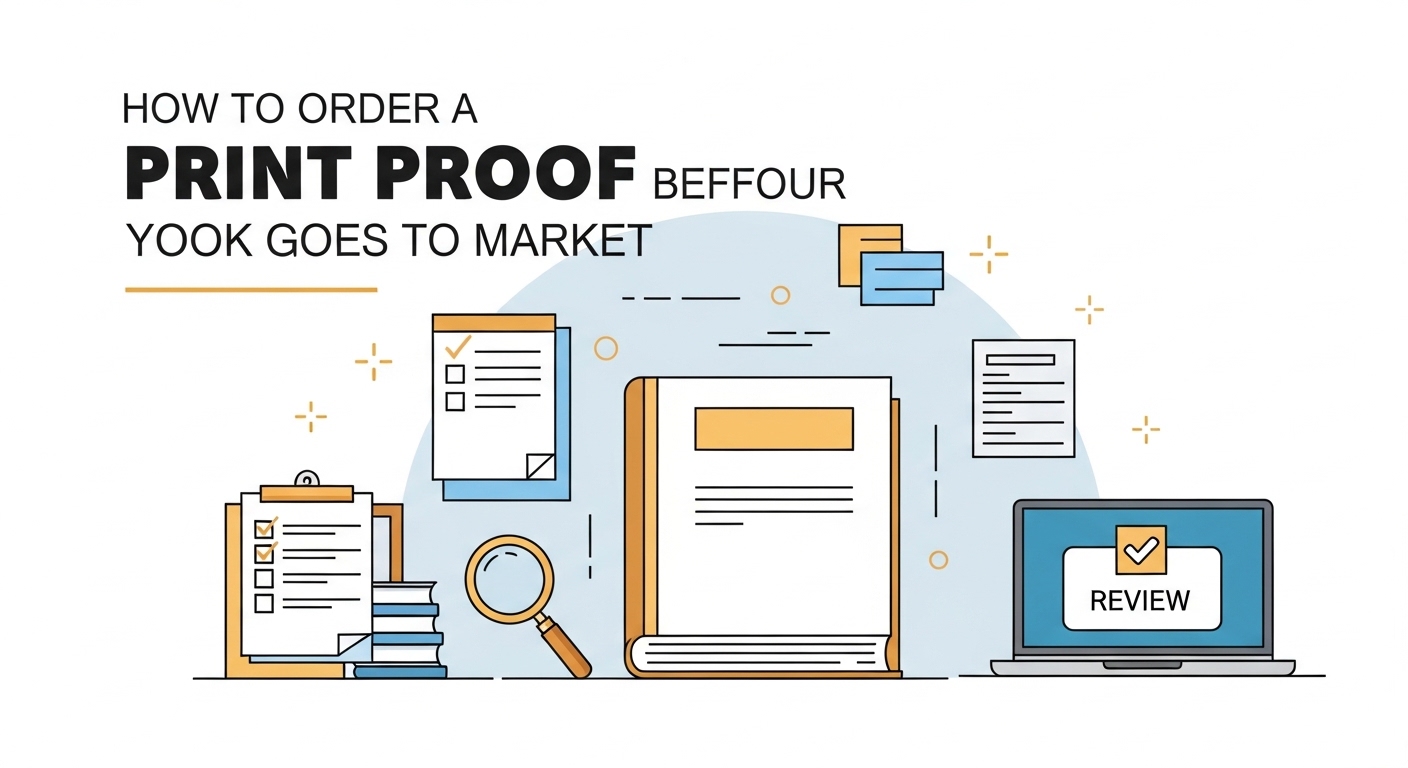
Finishing your manuscript feels like the final milestone, but in reality, it’s only the beginning of your book’s production journey. One of the most overlooked yet essential steps is understanding how to order a print proof before your book goes to market.
At this stage, everything may appear flawless on your screen. Your formatting looks aligned, your cover design feels polished, and your layout seems consistent. But print is a completely different medium. What works digitally does not always translate accurately onto paper.
A print proof gives you a physical version of your book before it becomes available to readers. It allows you to evaluate not just the content, but the experience of the book—how it looks, feels, and reads in real life. Without this step, you’re essentially approving your book without ever seeing its final form.
That’s a risk no serious author should take.
What Is a Print Proof and Why Does It Matter?
A print proof is a pre-publication sample copy of your book created using your final files. It is not meant for sale or distribution but serves as a quality control tool.
The importance of a print proof lies in the gap between digital design and physical production. Screens display light; paper absorbs ink. This fundamental difference changes how text appears, how images render, and how spacing feels.
When reviewing a digital file, you unconsciously adjust—zooming in, scrolling, or correcting perspective. A printed book removes those adjustments. It forces you to engage with your work exactly as a reader would.
This is where issues reveal themselves.
A print proof allows you to evaluate:
- Layout consistency and margin balance
- Font readability and spacing
- Cover alignment and spine accuracy
- Print clarity and color behavior
These are not minor details—they define the overall reading experience.
The Real Risks of Skipping a Print Proof
Skipping a print proof might seem like a shortcut, especially when you’re eager to publish. However, it often leads to problems that could have been easily avoided. Many authors assume that a clean PDF guarantees a clean print. Unfortunately, that assumption is rarely accurate.
Small inconsistencies can become much more noticeable in print. For example, margins that appear acceptable on screen may feel too tight when physically reading. Similarly, a cover that looks perfectly aligned digitally may shift slightly during trimming.
Common issues found after skipping proofing include:
- Text placed too close to the edges
- Uneven spacing between paragraphs or chapters
- Spine text that appears off-center
- Colors that print darker or less vibrant than expected
Individually, these issues may seem minor. Collectively, they create a book that feels unrefined. Readers may not identify the exact problem, but they will sense a lack of polish.
That perception can influence reviews, recommendations, and overall credibility.
When to Order a Print Proof in the Publishing Process
Timing is critical when ordering a print proof. Doing it too early leads to repeated revisions, while doing it too late can delay your launch.
The ideal time is when your book is fully prepared for production. This means your manuscript has gone through editing, your layout is finalized, and your cover design matches the exact specifications of your book. At this stage, your files should represent your final product. Ordering a print proof before reaching this point often results in unnecessary costs and extra steps. On the other hand, delaying proofing increases the risk of publishing errors.
A well-timed print proof ensures efficiency while maintaining quality.
Preparing Your Book Files Before Ordering a Proof
The accuracy of your print proof depends heavily on how well your files are prepared. Most print-related issues originate from formatting decisions rather than printing errors. Your interior file should be reviewed carefully. Pay attention to margins, alignment, and spacing consistency across all pages. Look at how chapters begin and end, and ensure there are no awkward breaks or inconsistencies.
Your cover file requires precision. Spine width must match your final page count, and all elements should remain within safe zones to prevent trimming issues.
Before ordering your proof, confirm that:
- Margins allow comfortable reading space
- Page numbers and headers are consistent
- The spine width matches the final layout
- All images, if included, are high resolution
This preparation step reduces the need for multiple proof copies and streamlines the process.
Step-by-Step: How to Order a Print Proof
Uploading Your Files
Begin by uploading your finalized manuscript and cover files to your chosen printing service. Most platforms automatically check for technical errors such as incorrect dimensions or missing bleed areas. These alerts are valuable. Addressing them early prevents complications later in the process.
Selecting Print Specifications
Next, you’ll define your book’s physical characteristics. This includes trim size, paper type, ink settings, and binding style. Each choice affects how your book looks and feels. Even subtle differences, such as cream versus white paper, can influence readability and tone. Make sure these selections align with your intended final product.
Reviewing the Digital Preview
Before ordering your physical proof, you’ll be provided with a digital preview. While it cannot replace a printed copy, it serves as an important checkpoint. Take your time reviewing it. Look beyond the text and focus on layout, spacing, and alignment. Pay attention to how elements appear near the edges of the pageA careful review at this stage can prevent unnecessary revisions later.
Ordering the Proof Copy
Once everything appears correct, place your order for a single print proof. There is no need to order multiple copies at this point. Shipping times may vary, so plan accordingly. Avoid rushing this step, as it plays a critical role in ensuring quality.
Evaluating the Physical Proof
When your proof arrives, review it thoroughly. This is your opportunity to experience the book exactly as your readers will. Read sections slowly. Flip through pages naturally. Observe how the book feels in your hands. Focus on overall readability, spacing, and visual consistency. Check the cover alignment and ensure the spine text is correctly positioned. Take notes throughout the process. Even small observations can lead to meaningful improvements.
What to Do After Reviewing Your Print Proof
After reviewing your proof, you will likely identify areas for improvement. These may range from minor adjustments to more noticeable issues. Minor changes, such as spacing refinements or alignment tweaks, are common and easy to fix. Updating your files and reviewing them again is usually sufficient. More significant issues require careful attention. If you encounter layout errors or incorrect dimensions, it’s important to correct them fully before moving forward. Taking the time to refine your book at this stage ensures a more professional final product.
How Many Print Proofs Do You Need?
Most books require one or two proof copies to reach a final version. However, the number may vary depending on the complexity of your design. Text-based books with simple layouts often need fewer revisions. Books with images, detailed formatting, or custom design elements may require additional proofing rounds. Instead of focusing on the number of proofs, focus on achieving a polished result. The goal is not speed, but accuracy.
Absolutely! We can add light, purposeful bullet points to emphasize key best practices without overloading the section. Here’s the revised version:
Best Practices for Maximizing Your Print Proof Review
Ordering a print proof is only valuable if you approach it strategically. The goal isn’t merely to confirm that everything looks “okay,” but to use this opportunity to refine your book and ensure it provides the best possible experience for readers.
Start by reviewing your book with fresh eyes. After working closely with your manuscript for weeks or months, your brain naturally fills in gaps or overlooks inconsistencies. Approach the proof as if you’re seeing it for the first time. This mindset helps you notice layout details, spacing issues, and visual inconsistencies that might otherwise go undetected.
Break your review into multiple sessions rather than trying to complete it all at once. Examining a few chapters at a time reduces fatigue and allows you to engage with each section more critically. It’s also helpful to review the book in different environments—different lighting, seating positions, or even holding it at various angles. This reveals subtleties in readability, text clarity, and visual balance that a single environment might mask.
Focus on both the interior and the physical experience of the book. Notice how it feels when you open it, how comfortably the pages turn, and how the book sits in your hands. These aspects affect the overall reading experience just as much as the content and design.
Finally, consider getting an additional perspective. A fresh pair of eyes—someone who hasn’t been immersed in the manuscript—can provide invaluable feedback. They may spot inconsistencies, awkward spacing, or readability concerns that you have adapted to over time.
Some key best practices to maximize the value of your print proof include:
- Review in multiple sessions: Avoid fatigue and maintain attention to detail by dividing your review over time.
- Examine in different environments: Natural light, desk setup, and even different seating positions reveal subtle issues.
- Assess physical usability: Check page-turning ease, spine flexibility, and how the book feels in hand.
- Focus on visual balance: Ensure margins, spacing, and images feel consistent throughout.
- Seek a second perspective: Another reader can identify overlooked formatting or readability issues.
By following these best practices, your print proof review becomes a deliberate, structured step in your publishing process. It moves beyond a simple check and transforms into an opportunity to elevate the quality and presentation of your book before it reaches readers.
Final Thoughts
Understanding how to order a print proof before your book goes to market is one of the most important steps in the publishing process. It bridges the gap between digital preparation and physical reality. It allows you to see your book as your readers will see it, ensuring that every detail aligns with your expectations A print proof is not an optional step—it is a safeguard. It protects your work, your credibility, and the experience you deliver to your audience.
Taking the time to review your book properly is an investment in quality. It ensures that when your book reaches the market, it represents your effort in the best possible way.
Frequently Asked Questions (FAQ)
What is a print proof in publishing?
A print proof is a sample copy of your book created before final publication, allowing you to review formatting, layout, and print quality.
Is ordering a print proof necessary?
Yes. It helps identify issues that cannot be seen in digital previews and ensures your book is ready for readers.
How long does it take to receive a print proof?
Delivery times vary depending on the printing service and shipping method, but it typically takes several days to a couple of weeks.
Can I publish without a print proof?
You can, but it increases the risk of publishing errors that may affect your book’s quality and reader experience.
What should I check in a print proof?
Focus on readability, spacing, alignment, print clarity, and overall presentation to ensure a professional result.