Why This Detail Matters More Than You Think
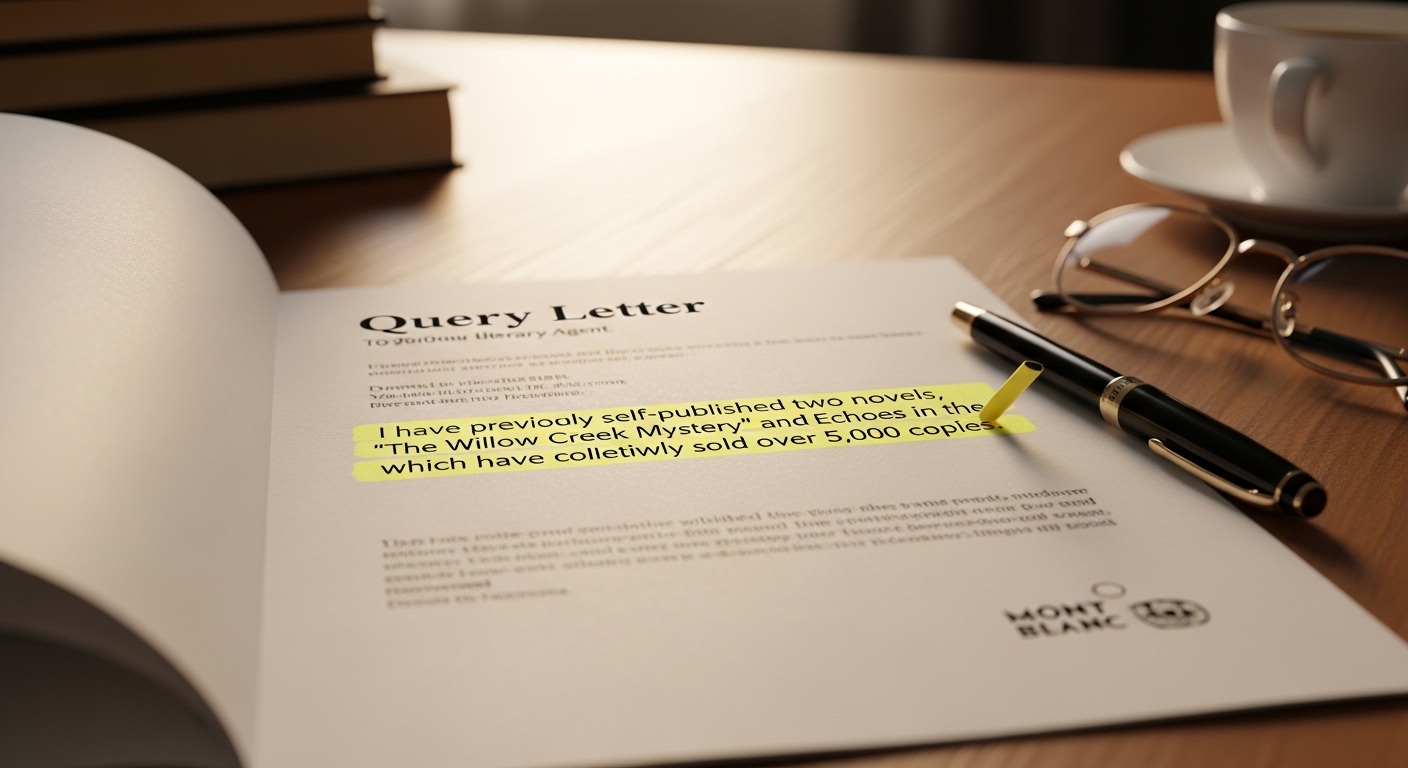
Self-publishing has become a legitimate entry point into the writing world, and many authors now approach literary agents after releasing their own books independently. This creates an important strategic question: should prior self-publishing experience be included in a query letter, or does it risk harming your chances?
The short answer is that it depends on how relevant it is to your current submission and how well it reflects your trajectory as a writer. Literary agents are not automatically impressed or discouraged by self-publishing history—they evaluate how that history positions you for traditional publishing.
Understanding when and how to mention it can directly influence how professionally your query is perceived.
- Self-publishing is now common in author careers
- Agents evaluate relevance, not just history
- Presentation determines whether it helps or hurts your pitch
- Context matters more than the fact itself
How Literary Agents View Self-Publishing Experience
Literary agents generally do not interpret self-publishing as a formal credential in the same way they would view traditionally published work, nor do they see it as a disadvantage by default. Instead, they evaluate it as contextual information about your development as a writer. What matters most is not the fact of self-publication itself, but what it reveals about your ability to write, position, and potentially sell books in a real market environment.
From an agent’s perspective, a self-published book becomes meaningful only when it demonstrates evidence of readership, engagement, or professional growth. In some cases, it can strengthen your submission; in others, it is simply neutral background. The deciding factor is always relevance to your current manuscript and how convincingly it reflects your trajectory as an author.
Self-Publishing Is Viewed Neutrally by Most Agents
For most literary agents, self-publishing is neither a plus nor a minus at first glance. It is treated as part of an author’s history rather than a defining qualification. Agents do not automatically assume that self-published work indicates lower quality, nor do they assume it signals readiness for traditional publishing.
Instead, they quickly assess whether the self-published work has any bearing on the submission in front of them. If it does not relate in genre, quality, or audience, it is typically set aside mentally and does not influence the decision process in a significant way.
- Self-publishing is not considered a traditional publishing credential
- It does not automatically increase or decrease credibility
- Irrelevant history is often disregarded in evaluation
- Focus remains on the current manuscript, not past publishing method
Performance Matters More Than Publication Method
What carries real weight in an agent’s evaluation is not how a book was published, but how it performed after publication. A self-published book that has achieved strong sales, consistent readership, or meaningful reviews can demonstrate that the author understands how to reach and engage an audience.
This kind of evidence is especially valuable because agents are ultimately in the business of selling books. If an author has already shown they can generate attention independently, it reduces perceived risk. However, without measurable performance, the fact that a book was published independently carries little persuasive value.
- Sales figures and readership indicate market viability
- Reviews suggest reader engagement and reception
- Visibility shows ability to reach an audience independently
- Lack of traction usually results in neutral evaluation
Audience Engagement Can Strengthen Your Case
When self-published work has developed a genuine readership, it becomes a powerful signal of author potential. Agents are particularly interested in authors who already have some form of audience connection, even if it is small or niche. This suggests that the writer understands positioning, marketing basics, and reader expectations.
Engagement can take many forms beyond sales alone. For example, consistent reader feedback, community building, or genre-specific recognition can all contribute positively. In nonfiction especially, an existing audience can reinforce credibility and subject authority.
- Active readership demonstrates market demand
- Positive engagement reflects content resonance
- Niche communities can signal strong targeting ability
- Nonfiction audiences strengthen perceived expertise
Career Progression Is a Key Consideration
Agents are not only evaluating what you have published—they are also evaluating whether your writing is improving over time. A self-published book can serve as a reference point for growth, helping them assess whether your current manuscript represents a meaningful step forward.
If your new work shows stronger storytelling, better structure, or clearer market positioning compared to earlier self-published projects, it signals development. This progression is often more important than the earlier work itself.
- Improvement in writing quality indicates development
- Stronger concept execution suggests readiness for traditional publishing
- Growth between projects reflects long-term potential
- Current manuscript carries the most weight in evaluation
When You SHOULD Mention Self-Publishing
Self-publishing should be included in your query letter when it adds meaningful value to your submission. The goal is not to list every past project, but to highlight experience that strengthens your credibility or demonstrates market relevance.
If your self-published book performed well or is directly related to your current manuscript, it becomes an asset rather than background noise. In nonfiction especially, prior published work can reinforce expertise and authority.
It is also useful when your self-published work is in the same genre, showing consistency in your writing direction and audience understanding.
- Strong sales or readership performance
- Positive reviews or engagement
- Same genre or related subject matter
- Evidence of audience-building ability
- Relevant professional writing experience
When You SHOULD NOT Emphasize It
There are situations where mentioning self-publishing adds little value or may even distract from your current submission. If your previous work is unrelated, unpublished in reach (low visibility), or significantly weaker than your current manuscript, it does not need to be highlighted.
Agents are focused on what you are submitting now, not everything you have written in the past. Overloading your query with irrelevant history can dilute the strength of your pitch and shift attention away from your current project.
In some cases, simply omitting it is the more strategic choice.
- Irrelevant genre or subject matter
- Very low visibility or engagement
- Weak or outdated earlier work
- When it distracts from your current pitch
- When space in query letter is limited
How to Mention It Without Weakening Your Query
If you decide to include self-publishing experience, the key is positioning. It should be framed briefly, professionally, and only in relation to your current manuscript or author platform. Avoid oversharing or turning it into a narrative about your publishing journey.
The mention should function as a supporting detail, not the focal point of your introduction. Ideally, it appears in your author bio section or closing paragraph of the query.
The most effective approach is to connect it to credibility, readership, or genre alignment without exaggeration.
- Keep it concise and factual
- Place it in the author bio section
- Focus on relevance, not history
- Avoid overexplaining or justifying
Common Ways Authors Misuse Self-Publishing in Queries
Many first-time authors either ignore their self-publishing background completely or overemphasize it in a way that weakens their submission. Both extremes can be problematic.
Some writers treat it as a major achievement regardless of results, while others attempt to justify it as “practice” or “training,” which can come across as unnecessary explanation. Agents prefer clarity and confidence rather than defensive framing.
The goal is to present your experience in a way that feels natural and proportionate.
- Overstating minor or irrelevant publications
- Treating self-publishing as a major credential
- Excessively explaining past decisions
- Including unrelated publishing history
Where It Fits in a Query Letter Structure
In most query letters, self-publishing experience belongs in the author bio section. This section is brief and focused on establishing context for your writing background. It should not interrupt your pitch or summary of the book itself.
A clean structure typically includes your hook, book summary, and closing, followed by a short author paragraph where publishing history is mentioned only if relevant.
This ensures your story remains the central focus of the query, not your publishing history.
- Best placed in author bio section
- Should not interrupt book pitch
- Keep it secondary to manuscript description
- Maintain balance between book and author info
Strategic Perspective: Does It Help or Hurt Your Chances?
Whether self-publishing helps or hurts depends entirely on how it reflects your current readiness for traditional publishing. If it demonstrates that you understand your audience and can execute a book professionally, it can strengthen your position. If it appears unrelated or unremarkable, it is usually neutral.
Agents are primarily looking for potential in your current manuscript, not evaluating your publishing path as a career summary. Therefore, the decision to include it should always serve one purpose: improving clarity and credibility for the book you are pitching now.
- It can strengthen credibility if relevant
- It is neutral if unrelated or low-impact
- It can distract if overemphasized
- Relevance determines its value
FAQ: Mentioning Self-Publishing in Query Letters
Should I always mention self-published books?
No, only include them if they are relevant or add credibility to your current submission.
Will agents reject me because I self-published?
Not by default. Most agents focus on the quality of your current manuscript.
Where exactly should I include it?
In the author bio section, briefly and factually.
Does sales performance matter?
Yes. Strong sales or engagement can improve how your experience is perceived.
What if my self-published book didn’t perform well?
It is usually better to omit it unless it is directly relevant to your current pitch.
Conclusion: Relevance Is the Deciding Factor
Mentioning self-published work in a query letter is not about whether it is “allowed,” but whether it is strategically useful. Literary agents are evaluating your current manuscript first, and your background only matters insofar as it supports that pitch.
A well-placed, concise reference can strengthen credibility, while unnecessary emphasis can distract from your core submission. The most effective approach is simple: include it only when it clearly supports the book you are trying to sell.