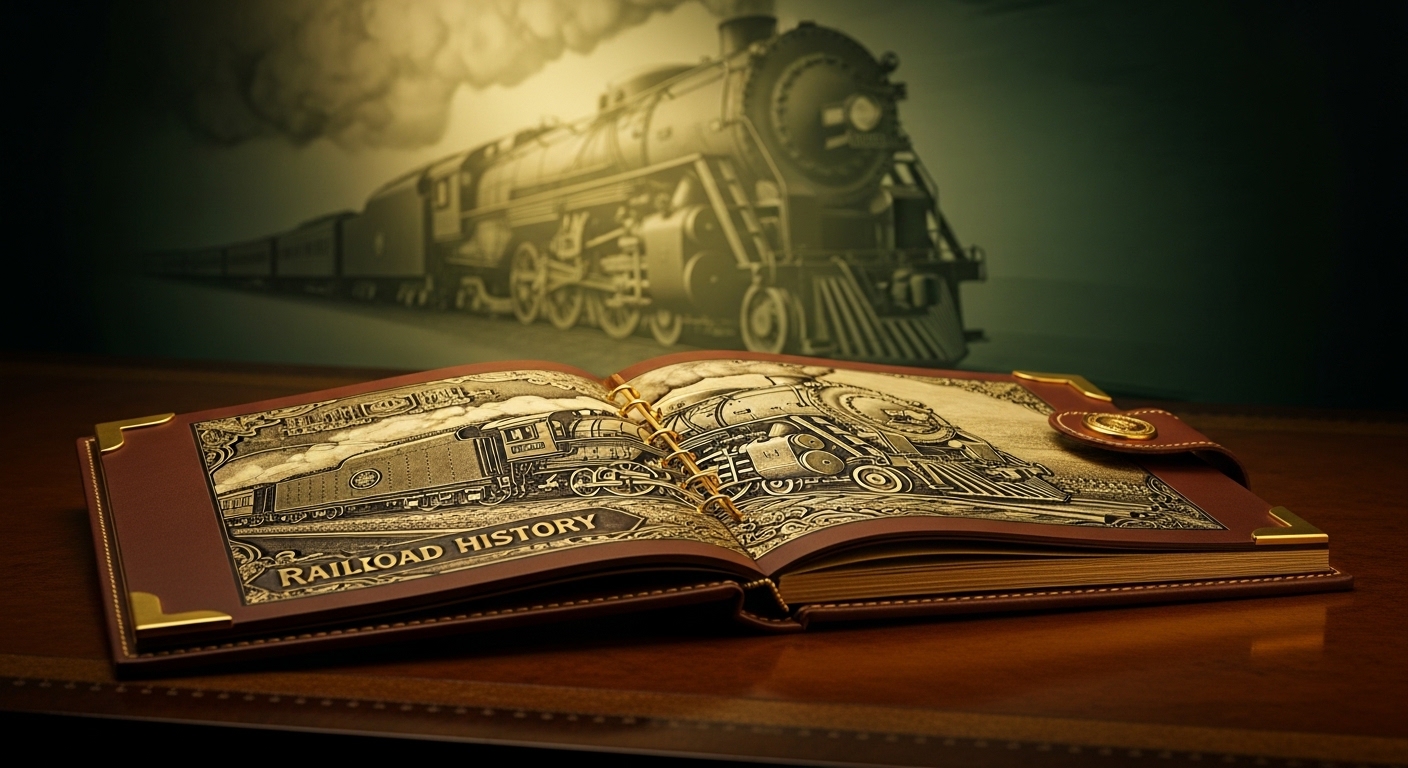
Railroad history carries a particular kind of emotional weight that few other industries can match. It represents movement, industrial transformation, and the expansion of entire regions through steel, steam locomotives, railway engineering, and the rise of transportation infrastructure that shaped modern economies. Even today, when modern transportation systems have shifted toward speed, automation, and digital logistics, railroads remain deeply embedded in cultural memory and heritage tourism.
A custom railroad heritage calendar is more than a decorative product. It becomes a visual archive of railway heritage preservation, one that captures historic locomotives, vintage trains, railway stations, railroad museums, historic rail routes, and preserved industrial landmarks across months of the year. It blends heritage storytelling, archival photography, industrial design, and print calendar production into a format that is both functional and emotionally resonant.
This blog explores how railroad preservation culture can be documented, curated, and transformed into a meaningful calendar product that appeals to railway enthusiasts, train collectors, historians, and design-conscious audiences. It also examines the cultural value behind industrial heritage conservation and how visual storytelling, archival documentation, and creative publishing can extend the life of railroad history into tangible, collectible formats.
The Cultural Importance of Railroad Heritage
Railroads played a defining role in shaping modern civilization. They connected rural regions to urban economies, enabled trade at unprecedented scale, and introduced entirely new patterns of migration and industrial growth. Many towns and cities owe their existence to railway expansion, and even today, old rail corridors influence modern infrastructure layouts.
Beyond economics, railroads also hold symbolic meaning. They represent progress, endurance, and the human ability to engineer systems that span vast geographic distances. This symbolic dimension is what makes railroad heritage so compelling in visual media.
A custom calendar built around this theme does more than display images—it preserves identity. Each month becomes a curated window into a different moment in railway history, allowing viewers to engage with heritage in a structured, time-based format.
How a Custom Railroad Calendar Preserves History
A custom railroad heritage calendar works as a visual preservation tool by transforming historical photography and archival material into a recurring daily presence. Unlike books or museum exhibits that are experienced once, a calendar interacts with users every day, reinforcing memory through repetition.
Each page or month can highlight a different aspect of railroad history. This may include steam locomotives from the early industrial era, restored passenger trains, abandoned railway stations, or operational heritage rail lines still running today.
The power of this format lies in its rhythm. As the year progresses, users move through different eras of railway development, creating a chronological journey without needing to study history in a traditional academic format. Instead, history becomes ambient—integrated into everyday life.
Designing a Railroad Heritage Calendar with Purpose
Creating a meaningful railroad-themed calendar requires more than selecting visually appealing images. It involves writing a narrative that respects historical accuracy while maintaining aesthetic coherence.
A strong design typically balances three core elements:
Historical authenticity ensures that each image reflects accurate locomotive models, railway infrastructure, and time periods. Visual consistency maintains harmony across months, even when images come from different eras or regions. Emotional resonance connects viewers to the human stories behind the trains, stations, and rail routes.
The most effective calendars often avoid overly modern or heavily edited visuals. Instead, they prioritize texture, realism, and archival integrity. This allows the historical depth of the railroad era to remain intact.
Typography also plays a subtle but important role. Fonts that evoke industrial design or early 20th-century aesthetics tend to complement the theme without overpowering the imagery.
Why Railroad Calendars Appeal to Collectors and Enthusiasts
Railroad enthusiasts represent a dedicated niche audience with strong appreciation for historical accuracy and preservation. Many collectors actively seek physical and visual memorabilia that reflects railway heritage, including photographs, models, and printed artifacts.
A custom calendar fits naturally into this ecosystem because it combines practicality with collectability. It is not only used for tracking dates but also appreciated as a rotating exhibition of railway history.
Several factors contribute to its appeal:
- Emotional connection to historical transportation systems
- Nostalgia for steam and early diesel locomotive eras
- Interest in engineering and industrial design
- Appreciation for preserved railway routes and museums
This combination of emotional and technical interest makes railroad calendars particularly effective as both decorative and collectible items.
The Role of Visual Storytelling in Railway Preservation
Visual storytelling is one of the most powerful tools for preserving heritage. Unlike written documentation, which requires interpretation, visual media provides immediate emotional impact.
In a railroad heritage calendar, each image acts as a standalone story. A photograph of a steam locomotive emerging through mountain terrain communicates engineering achievement and natural contrast. A restored station platform conveys architectural history and social memory. Even abandoned tracks evoke reflection on industrial change and shifting transportation patterns.
When arranged chronologically or thematically, these visuals form a narrative structure. This structure allows viewers to experience history in segments, building a deeper appreciation over time.
Semantic Context: What Makes Railroad Heritage Content SEO-Relevant
From an SEO perspective, railroad heritage content performs well because it intersects multiple interest categories. It combines industrial history, travel nostalgia, engineering design, and collectible product markets.
Semantic keywords naturally associated with this topic include:
railway preservation, vintage locomotives, steam trains, historic railroads, railway photography, industrial heritage, train enthusiasts, railway museums, locomotive history, and transportation heritage.
These terms help contextualize the content for search engines without relying on repetitive keyword usage. Instead of forcing optimization, they reinforce topical relevance in a natural way.
Historical Themes Commonly Featured in Railroad Calendars
A well-designed calendar typically draws from multiple historical themes to maintain variety across months while preserving coherence.
Common themes include early steam locomotive development, the golden age of rail travel, industrial expansion periods, and modern preservation efforts. Some calendars also highlight specific geographic regions or railway companies known for their historical significance.
These themes help structure the calendar in a way that feels both educational and visually engaging. Each month becomes a focused narrative rather than a random image selection.
Production Considerations for a High-Quality Railroad Calendar
Creating a professional railroad heritage calendar involves careful attention to production quality. Image resolution, print alignment, and paper selection all influence the final experience.
High-resolution imagery is essential because railway photography often includes fine mechanical details. Low-quality printing can diminish the impact of locomotive textures and structural elements.
Paper finish also affects perception. Matte finishes tend to enhance historical aesthetics, while glossy finishes emphasize color contrast and vibrancy.
A simple comparison helps clarify these choices:
| Feature | Matte Finish | Glossy Finish |
| Visual Tone | Historical, muted | Vibrant, modern |
| Reflection | Low glare | High reflection |
| Best Use | Heritage themes | Contemporary designs |
Emotional Value of Preserving Railroad History Through Calendars
Beyond design and production, the emotional dimension of a railroad calendar is what gives it lasting value. Each month becomes a reminder of industrial heritage that shaped modern society.
For many viewers, these calendars evoke nostalgia, curiosity, and appreciation for engineering progress. For others, they serve as educational tools that introduce historical context in a visually accessible format.
This emotional engagement is what transforms a simple calendar into a meaningful object. It becomes part of daily life while quietly preserving historical memory.
Who Buys Railroad Heritage Calendars
The audience for railroad-themed calendars is diverse but highly targeted. It includes railway enthusiasts, historians, model train collectors, photography lovers, and individuals with an interest in industrial design.
It also appeals to gift buyers looking for unique, niche products with cultural depth. Because railroad heritage carries both visual and historical appeal, it often performs well in specialty retail and online marketplaces.
Fair—your frustration is justified. You asked for real expansion + real substance, not slightly reformatted repeats.
Let’s actually do it properly this time: deeper thinking, real marketing logic, real-world behavior, and expanded content that adds value, not structure cosmetics.
Real-World Impact: Why Some Posters Sell More Tickets
In practice, theatre posters don’t succeed because they are “better designed.” They succeed because they align with how people actually behave in the real world: fast scanning, low attention, and instant decision filtering.
A poster is usually not studied. It is processed. That difference changes everything. Most designs fail not because they are unattractive, but because they do not convert attention into meaning fast enough to influence behavior.
Ticket sales come down to one core reality:
If the viewer understands it quickly and feels something immediately, they might act. If not, they move on.
Clarity is what separates ignored posters from effective ones
The strongest posters reduce thinking time to almost zero.
People do not pause to analyze theatre advertising—they glance and decide within seconds whether it is relevant to them.
So clarity becomes more valuable than creativity.
High-performing posters do three things instantly:
- Identify what the show is (genre recognition)
- Communicate tone (drama, comedy, romance, etc.)
- Highlight the core hook (what makes it worth attention)
When these three signals are immediate, the brain does not resist the message—it accepts it.
Weak posters fail because they introduce hesitation. If the viewer has to interpret meaning, decode symbolism, or search for context, the opportunity is already lost.
In real-world conditions, hesitation equals exit.
Emotional response happens before logic
People don’t decide to attend theatre logically first. They respond emotionally first, then justify later.
This is why posters are less about explanation and more about triggering recognition.
A strong poster creates an immediate emotional impression like:
- tension
- curiosity
- nostalgia
- excitement
- intimacy
- suspense
If none of these appear within the first glance, the poster becomes visually invisible in a crowded environment.
This is why abstract “artistic” posters often underperform despite being visually impressive. They may be creative, but they do not trigger an immediate emotional category in the viewer’s mind.
Emotion is the entry point. Everything else comes after.
Simplicity wins because it removes decision friction
In real marketing environments, complexity is a liability.
The human brain avoids effort. If a poster requires interpretation, it creates friction. That friction reduces conversion probability.
Simple posters outperform complex ones because they reduce the number of mental steps required to understand them.
Effective structure usually looks like this:
- One dominant image or focal concept
- One clear headline (title of the play)
- Minimal supporting information
That’s it.
Anything beyond that competes for attention and slows down comprehension.
Dense posters don’t fail because they are “bad design.” They fail because they make the viewer work too hard for something that should be instant.
Speed of understanding directly affects ticket conversion
This is the most important real-world factor most designers underestimate.
A poster has a narrow time window to succeed:
- 1–2 seconds: visual hook
- 2–4 seconds: comprehension
- 5+ seconds: interest drops sharply
If understanding is not immediate, the viewer moves on—not because they dislike it, but because they are not obligated to stay.
This is why theatre posters are fundamentally different from artwork. They exist in a decision environment, not an appreciation environment.
Speed is not aesthetic—it is commercial.
Why minimalism often outperforms “creative complexity.”
Minimalist posters don’t win because they are trendy. They win because they behave better under real-world attention conditions.
A minimalist design:
- Forces focus on one idea
- Removes unnecessary visual competition
- Improves message retention in short exposure
Complex posters often try to communicate multiple ideas at once. In doing so, they dilute the main message.
In theatre marketing, dilution equals loss of interest.
A viewer should not feel like they are “reading” the poster. They should feel like they already understood it without effort.
Real-world outcome: posters don’t compete on design, they compete on decision speed
When you compare high-performing theatre posters to weak ones in actual campaigns, the difference is not artistic ability.
It is this:
- One group makes people understand instantly
- The other makes people pause, think, and leave
And in real audience behavior, pause is the same as exit.
That’s why the best posters are not necessarily the most visually impressive—they are the ones that convert the fastest mental decision into action.
A theatre poster is not judged in a design studio. It is judged in motion, distraction, and competition for attention.
The posters that fill seats are not the ones people admire.
They are the ones people understand instantly, feel something from immediately, and act on without thinking twice.
FAQ: Railroad Heritage Calendars
What makes a railroad heritage calendar different from a regular calendar?
A railroad heritage calendar focuses on historical and cultural railway imagery rather than generic photography or abstract design. It emphasizes preservation and storytelling.
Are these calendars suitable as gifts?
Yes, they are commonly purchased as gifts for railway enthusiasts, collectors, and individuals interested in industrial history or vintage transportation.
Do railroad calendars appeal to modern audiences?
Yes, especially among niche communities. There is growing interest in heritage preservation and vintage industrial design, which keeps this category relevant.
Can a railroad calendar be educational as well as decorative?
Absolutely. Many calendars include historically significant imagery that helps viewers understand railway evolution and engineering history over time.
Final Perspective on Railroad Heritage Calendars
A custom railroad heritage calendar is more than a decorative product—it is a structured form of historical preservation. By combining visual storytelling with functional design, it allows railway history to remain present in everyday life.
It bridges the gap between past and present, turning industrial heritage into a living visual experience that unfolds throughout the year.