Finishing a manuscript is a monumental achievement, but it’s not the end of the journey—it’s the beginning of a critical phase. Many writers mistakenly believe that completing the writing process is the same as publishing. In reality, publishing is a carefully structured process that transforms your work from a private manuscript into a polished book ready for readers.
At this stage, the goal is not to rush into publishing but to prepare your book in a way that maximizes its impact. Every choice you make—from final revisions to cover design—affects how your readers will experience your work. Approaching this stage with strategy and care ensures your book stands out and delivers the value it deserves.
Deep Dive Into Pre-Publishing Preparation
Before you even think about hitting “publish,” taking the time to prepare strategically is essential. Many authors underestimate how much preparation influences the success of their book. Investing time here ensures you make informed, confident decisions later on.
Key steps include:
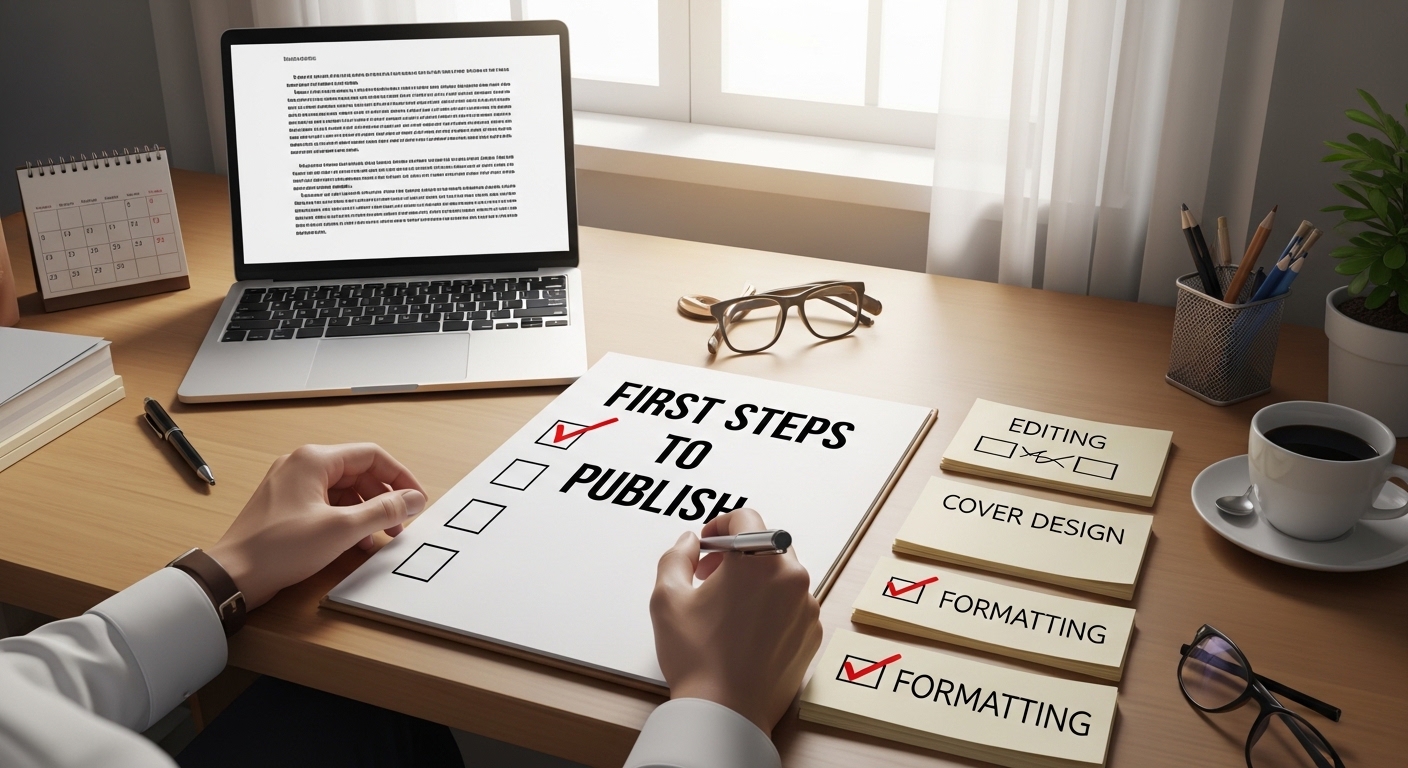
- Creating a publishing checklist – Map out everything from final manuscript edits to cover design, formatting, pricing, and marketing efforts. This keeps you organized and prevents last-minute surprises.
- Building a reader profile – Identify your ideal readers, their preferences, and how they consume content. Knowing your audience helps tailor your book, marketing, and presentation effectively.
- Competitive research – Study other books in your genre. Pay attention to titles, covers, book descriptions, and formatting choices. Understand what works, what doesn’t, and where your book can stand out.
Why it matters:
Many authors rush into publishing and then realize too late that their approach doesn’t resonate with readers. A thoughtful preparation phase reduces guesswork, strengthens your strategy, and positions your book for a stronger reception.
The Editing Process: Professional vs. Self-Editing
Editing isn’t just about fixing typos—it’s about shaping the reading experience. How your story flows, how characters feel, and how ideas are communicated can dramatically impact the success of your book. Understanding different types of editing helps ensure your manuscript is polished and professional:
- Developmental Editing – Focuses on big-picture elements such as story structure, pacing, and character development. It ensures the narrative or argument makes sense and engages readers from start to finish.
- Copy Editing – Looks at grammar, clarity, and sentence-level readability. This ensures your writing is smooth, clear, and professional.
- Proofreading – The final stage before formatting, checking for spelling mistakes, typos, and minor inconsistencies.
Insight:
Layering these editing stages transforms a good manuscript into an exceptional one. First-time authors often skip steps, but careful editing protects your credibility and gives readers a seamless experience.
Marketing Basics Before You Publish
Marketing often begins too late in the publishing process, but pre-launch planning can set the foundation for a successful book release. Early marketing efforts don’t need to be overwhelming—they just need to be deliberate.
Key strategies include:
- Creating a book launch plan – Map out a timeline for teasers, social media posts, and pre-order promotions. Planning ahead ensures you maintain momentum.
- Building an email list – Engaging with potential readers before your launch creates anticipation and helps secure early sales.
- Networking with beta readers or reviewers – Early feedback not only improves your manuscript but also provides testimonials that can support your launch.
Why it’s important:
Publishing is more than making your book available; it’s about making readers aware and excited. Small, intentional pre-launch efforts often yield long-term benefits, including higher engagement and sales.
Understanding Publishing Formats
Choosing the right format is an important decision that influences how your book is experienced and who it reaches. Each format has unique advantages and trade-offs. Consider this comparison:
| Format | Pros | Cons |
| Ebook | Instant delivery, easy to update, accessible globally | Lacks physical presence, less collectible |
| Tangible, collectible, preferred by traditional readers | Higher production cost, slower distribution | |
| Audiobook | Expands audience, great for multi-tasking readers | Recording, editing, and narration can be costly |
Context:
Every format appeals to a different type of reader. Understanding your audience and how they prefer to consume content allows you to make informed decisions about whether to release digitally, in print, or as an audiobook—or a combination of all three.
Step One: Take a Step Back and Reassess Your Manuscript
Before diving into formatting, covers, and publishing platforms, it’s crucial to create a clear space between yourself and your manuscript. After weeks or months of writing, your perspective is often too close to the material. A brief pause allows you to view your work with fresh eyes and identify areas for improvement.
During this reassessment phase, focus on the following:
- Structural consistency – Check whether chapters flow logically and ideas build progressively.
- Clarity of content – Ensure that your points are communicated clearly and concisely.
- Reader engagement – Identify sections that may feel slow, confusing, or repetitive.
- Tone and voice – Verify that your writing maintains a consistent style throughout.
This is also the time to separate writing from editing mentally. Resist the urge to tweak every sentence on the first read. Instead, concentrate on how your manuscript reads as a whole. When you approach it in layers—first big-picture structure, then finer details—you reduce the risk of getting bogged down in minor edits too early.
Taking this step seriously allows you to enter the publishing process with confidence, knowing your book is both coherent and compelling.
Step Two: Finalize Your Manuscript for Professional Standards
Once you have a fresh perspective, it’s time to ensure your manuscript meets professional standards. This doesn’t mean it needs to be perfect—but it must be polished enough to provide a smooth reading experience.
Key areas to focus on include:
- Consistency in formatting: Ensure headings, paragraphs, and spacing are uniform throughout.
- Chapter organization: Each chapter should serve a clear purpose and transition naturally to the next.
- Grammar and spelling: A careful review or professional editing helps eliminate distracting errors.
- Pacing and flow: Check that the narrative or argument moves logically and maintains reader interest.
A well-prepared manuscript not only improves reader experience but also reduces complications later when formatting or converting files for publication.
Step Three: Refine Your Book’s Presentation
Before your book can reach an audience, it must make a strong impression. This extends beyond content and includes elements that guide a reader’s perception from the moment they see your book.
- Title and Subtitle – Should be clear, engaging, and reflective of the book’s content.
- Book Description – Focus on what readers will gain from your book. Avoid exaggeration and keep it concise yet compelling.
- Cover Concept – Begin brainstorming ideas that reflect the genre and tone, keeping clarity and readability in mind.
Your presentation is the first layer of engagement with potential readers. A strong title, clean description, and thoughtful cover are subtle yet powerful ways to communicate professionalism and attract attention.
Step Four: Formatting – Making Your Book Readable
Formatting is a stage many authors overlook, but it’s crucial for creating a seamless reading experience. Even a well-written book can feel amateurish if it’s poorly formatted.
Elements to prioritize include:
- Consistent paragraph spacing and indentation
- Readable, genre-appropriate fonts
- Proper alignment of headings and subheadings
- Correct page breaks and chapter separation
Consider the difference in reading experience between a clean, visually balanced layout and a manuscript with inconsistent spacing or font changes. Professional formatting elevates your book and signals quality to readers.
Step Five: Prepare a Professional Cover Design
Your cover is often the first point of contact with a potential reader. A well-designed cover communicates both genre and tone instantly, influencing whether someone decides to explore further.
Keep the following in mind:
- Simplicity and clarity often outperform complex visuals.
- Use typography that is easy to read, even in thumbnail size.
- Ensure imagery aligns with your book’s content and audience expectations.
Remember, your cover isn’t just decoration—it’s a marketing tool that sets expectations for your reader before they open the book.
Step Six: Plan Your Publishing Strategy
Publishing a book involves several strategic decisions, including format, pricing, and audience positioning. Consider the following:
- Target audience – Who will benefit most from your book?
- Format choices – Digital, print, or both, depending on audience preferences.
- Market positioning – How does your book fit into its category? What makes it unique?
Here’s a quick comparison to help guide your decision:
| Factor | Ebook | Print Book |
| Accessibility | Instant delivery | Tangible, traditional experience |
| Production Effort | Low | Moderate to high |
| Reader Preference | Tech-savvy readers | Traditional readers |
| Flexibility | Easy to update | Fixed once printed |
A thoughtful strategy ensures that your publishing decisions are aligned with your goals and audience needs.
Step Seven: Prepare Mentally for Publication
Publishing can be as emotional as it is practical. Doubts, fears, and questions about reader reception are normal. Accept that no book is ever perfect. Your goal is readiness, not perfection.
Consider these mental preparation strategies:
- Reflect on your journey from idea to manuscript—acknowledge your progress.
- Visualize your book reaching readers and the impact it could have.
- Set realistic expectations; early feedback will guide your next steps.
This mindset ensures that you approach publication with confidence rather than hesitation.
Frequently Asked Questions (FAQ)
Q1: How do I know my book is ready to publish?
A: Your book is ready when it has been thoroughly reviewed for structure, clarity, and readability. It should feel complete, even if not perfect.
Q2: Should I hire professionals before publishing?
A: Professional input for editing or design can improve quality, but careful self-review can also suffice if done rigorously.
Q3: What’s the biggest mistake first-time authors make?
A: Rushing to publish without proper preparation, which can affect reader experience and perception of quality.
Q4: Should I publish digitally or in print first?
A: Both have benefits. Many authors start with digital for ease and accessibility, then expand to print.
Q5: Is it normal to feel anxious before publishing?
A: Absolutely. Almost every author experiences self-doubt; the key is to focus on readiness and take the next step.
Conclusion: Move Forward with Confidence
Publishing is not just the culmination of your writing—it’s a strategic phase that determines how your book is experienced by readers. By pausing to reassess your manuscript, refining content and presentation, formatting carefully, and planning your strategy, you set the stage for a strong, confident launch. Your book doesn’t need to be perfect. It needs to be ready, polished, and intentional. With thoughtful preparation and focus, you transform a completed manuscript into a book that readers will value and remember.