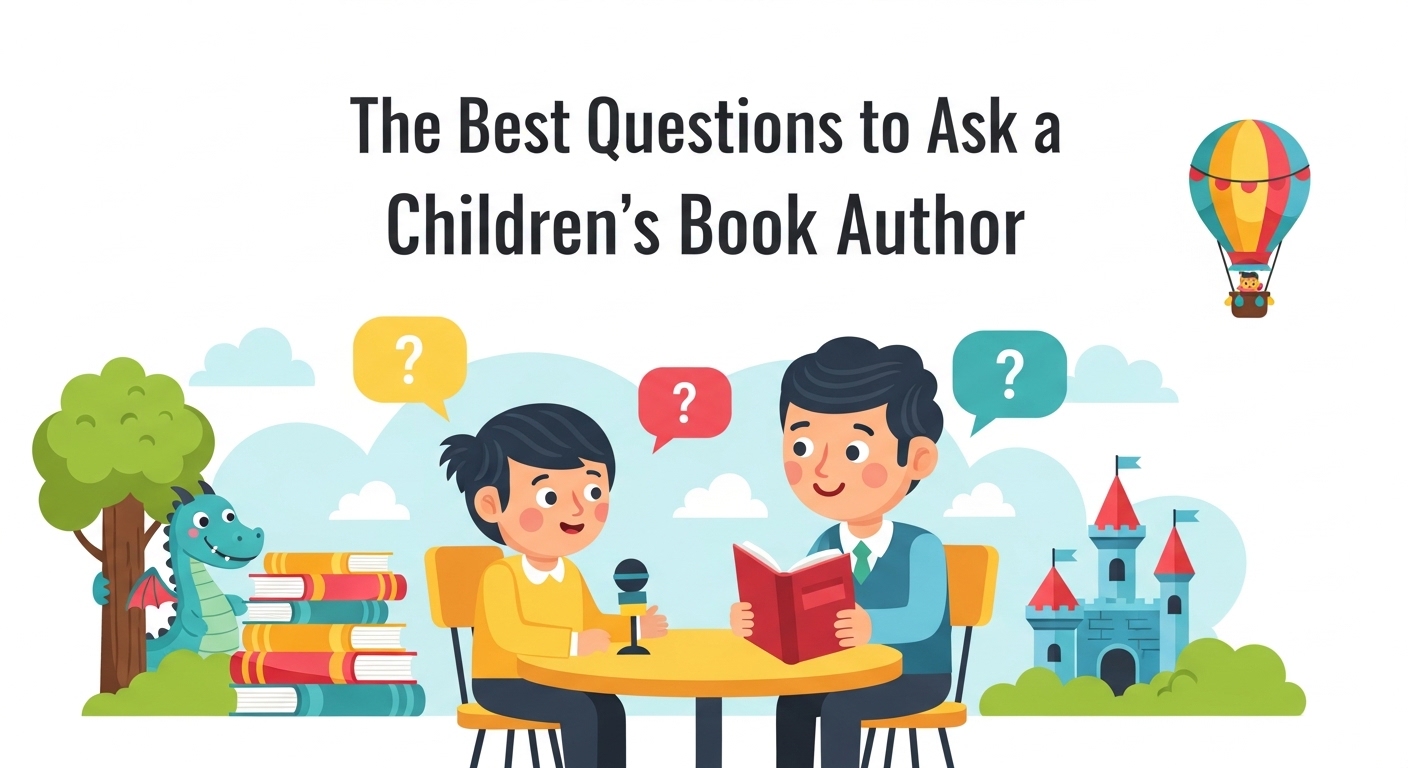
Children’s books often look simple at first glance, yet they carry a surprising depth of intention, structure, and emotional design. Behind every picture book or early reader lies a deliberate craft that balances language, imagination, illustration, and developmental psychology. This makes conversations with children’s book authors uniquely valuable—because they reveal not just how stories are written, but how childhood itself is understood and shaped through literature.
A strong interview with a children’s book author is not about collecting surface-level facts. It is about uncovering the thinking process behind storytelling choices, emotional framing, and creative discipline. The right questions can transform a casual conversation into a meaningful exploration of creativity, learning, and artistic responsibility.
This expanded guide presents a comprehensive set of interview themes and questions designed to help you build a deep, engaging, and SEO-optimized conversation around children’s literature.
Understanding the Author’s Creative Beginning
Every author has a point of origin, but in children’s literature, that origin is often tied to memory, emotion, or early reading experiences. Many writers are drawn to this genre because of a personal connection to childhood storytelling or a desire to recreate the sense of wonder they once experienced.
A thoughtful conversation begins by exploring how that journey started and what initially pulled them toward writing for younger audiences. These answers often reveal emotional motivations that shape their entire writing style.
The discussion can naturally explore how personal history influences storytelling direction, especially in terms of tone, themes, and moral framing. Many authors connect their early influences—family storytelling, childhood books, or classroom experiences—to their current creative identity.
Exploring the Process Behind Writing for Young Readers
Writing for children requires precision in simplicity. It is not about reducing complexity but about translating ideas into accessible emotional and linguistic forms. This process is often more structured than people assume, involving drafting, testing, revising, and refining.
Most authors develop a workflow that allows them to move from idea generation to polished manuscript in stages. Early drafts tend to focus on story flow, while later revisions refine language rhythm, clarity, and emotional pacing.
Understanding this process helps reveal how children’s books are constructed from the ground up, especially how writers ensure that meaning remains intact even when language is simplified for younger readers.
The Importance of Tone in Children’s Literature Interviews
Tone is one of the most defining elements in children’s literature. It determines how a child emotionally experiences the story—whether it feels playful, comforting, adventurous, or reflective.
Authors often adjust tone based on age group, theme, and narrative purpose. A humorous tone may help engage early readers, while a more reflective tone may suit older children dealing with complex emotions.
In conversation, tone becomes an important lens for understanding how writers balance entertainment with emotional sensitivity. It also reveals how carefully they choose language to avoid overwhelming or underestimating their audience.
The Role of Imagination and Inspiration in Storytelling
Imagination in children’s writing is rarely random. While it may appear spontaneous, it is often fueled by observation, memory, and emotional curiosity. Many authors draw inspiration from everyday interactions, childhood memories, or even visual impressions that evolve into full narratives.
Creative inspiration can also come from structured habits such as journaling, sketching ideas, or revisiting old drafts. This blend of spontaneity and discipline helps sustain long-term creativity.
Understanding where ideas originate helps reveal how stories are shaped long before they reach the page.
Observation as a Creative Trigger
A large portion of children’s storytelling begins with simple observation. Authors often notice small, overlooked details in daily life and mentally transform them into story concepts. A conversation between children, a unique expression, or even a quiet moment in a park can become the foundation of a narrative.
These observations are rarely used as direct story material. Instead, they act as emotional seeds that later develop into characters, conflicts, or entire fictional worlds. This ability to convert ordinary life into imaginative storytelling is one of the core strengths of successful children’s authors.
Memory and Childhood Experience as Story Fuel
Memory plays a powerful role in shaping imagination, especially in children’s literature. Many authors revisit their own childhood experiences to understand how young readers perceive the world.
These memories are not always used literally. Instead, they are often reshaped into symbolic or thematic elements within a story. A childhood fear may become a fictional monster, or a moment of friendship may evolve into a central narrative theme.
This connection between memory and storytelling helps create emotional authenticity that resonates with readers.
Emotional Curiosity as a Driving Force
Beyond observation and memory, emotional curiosity is a key driver of imagination. Authors often ask internal questions such as “How would a child feel in this situation?” or “What would happen if this emotion had a shape or character?”
This curiosity pushes storytelling beyond simple plot construction. It allows writers to explore emotional depth in ways that are accessible to children while still meaningful for adult readers.
Emotional curiosity often leads to stories that focus on empathy, resilience, and understanding rather than just external action.
Structured Creative Practices That Support Imagination
While imagination feels spontaneous, many authors rely on structured creative habits to keep ideas flowing consistently. These routines help organize thoughts and prevent creative stagnation.
Common practices include:
- Writing daily idea logs or short story fragments
- Sketching visual concepts for characters or settings
- Rewriting old drafts with new perspectives
These methods create a continuous feedback loop between imagination and execution. Over time, they help authors develop a reliable system for generating and refining ideas.
How Inspiration Evolves Into a Complete Story
Initial inspiration is rarely the final story. Instead, it goes through multiple stages of transformation. A small idea may begin as a single image, then expand into a character concept, and eventually evolve into a structured narrative.
During this process, authors refine emotional themes, adjust pacing, and build coherent story arcs. What starts as a fleeting thought gradually becomes a fully developed manuscript.
This transformation highlights the fact that storytelling is not just about imagination—it is about shaping imagination into structured meaning.
Understanding Characters and Emotional Design
Characters in children’s books are designed to be emotionally readable. They often represent clear emotional states such as curiosity, fear, kindness, or bravery. Unlike adult fiction, where ambiguity is common, children’s literature tends to prioritize clarity in emotional expression.
Authors carefully construct characters so that young readers can quickly understand their motivations and relate to their experiences. Even when characters are fantastical, their emotional logic remains grounded in real human behavior.
This emotional design helps children not only follow the story but also learn empathy and perspective-taking.
Collaboration Between Authors and Illustrators
Illustrations are not decorative elements in children’s books—they are part of the storytelling structure. In many cases, they carry narrative weight equal to or greater than the text itself.
Authors and illustrators often collaborate closely, though the level of involvement varies. Some writers visualize scenes in detail, while others allow illustrators creative freedom to interpret the text visually.
This collaboration requires alignment in tone, pacing, and emotional intent. The final result is a synchronized narrative experience where words and images work together to guide the reader.
How Cultural Background Shapes Storytelling
Cultural influence plays a significant role in shaping how stories are told. It affects character behavior, narrative structure, moral framing, and even humor.
Many authors draw from cultural traditions, folklore, or lived experiences when creating stories for children. This adds depth and authenticity to their writing while also making stories more relatable to specific audiences.
At the same time, cultural storytelling often aims for universality, ensuring that children from different backgrounds can still connect emotionally with the narrative.
How Authors Approach Moral and Ethical Themes
Children’s literature often carries implicit moral or ethical lessons, though these are rarely presented directly. Instead, values such as kindness, honesty, resilience, and empathy are woven into the narrative through character actions and consequences.
Authors are typically careful not to appear overly instructional. Instead, they prefer storytelling that allows children to infer meaning through experience rather than explanation.
This subtle approach ensures that lessons feel natural and emotionally grounded rather than imposed.
The Influence of Reading Habits on Writing Style
Most children’s book authors are also passionate readers. Their early reading experiences often shape their storytelling instincts, influencing how they structure plots, develop characters, and build emotional arcs.
Reading habits expose writers to different narrative rhythms, illustration styles, and thematic approaches. These influences gradually merge into their own creative voice.
Understanding this connection helps explain why certain storytelling patterns feel familiar or comforting to readers.
How Feedback from Children Shapes Final Stories
Children’s reactions provide invaluable insight into how stories function in real-world reading environments. Authors often observe how children respond to pacing, humor, emotional moments, and visual elements.
This feedback can lead to significant revisions, especially when certain sections fail to hold attention or create confusion. It also helps refine language choices to better suit developmental comprehension levels.
In many cases, children’s responses become the most honest measure of a story’s success.
Writing Discipline and Daily Creative Routines
Behind imaginative storytelling lies structured discipline. Many authors rely on consistent routines to maintain creative momentum.
These routines may include daily writing sessions, idea tracking systems, or structured revision schedules. Over time, such habits help transform creativity from sporadic inspiration into a sustained practice.
This disciplined approach is often what allows authors to complete full-length manuscripts successfully.
How Authors Handle Creative Blocks
Creative blocks are an inevitable part of writing, even in children’s literature. When they occur, authors often shift their approach rather than forcing progress. Some revisit earlier drafts, others step away from the manuscript temporarily, while some engage in unrelated creative activities to reset their thinking. These strategies help restore clarity and allow new ideas to emerge organically.
The Role of Publishers and Editors in Children’s Books
Publishing is a collaborative process that significantly shapes the final version of a children’s book. Editors and publishers help refine structure, language, and overall market suitability.
This collaboration ensures that the story is both creatively strong and accessible to its intended audience. Editors often provide feedback on clarity, pacing, and readability, while publishers guide production and distribution decisions. The result is a balanced blend of creative vision and professional refinement.
The Evolution of Children’s Book Writing Over Time
Children’s literature has evolved significantly in response to cultural shifts, educational changes, and new media influences. Modern children’s books often reflect broader emotional awareness and diverse representation compared to earlier decades.
Authors who have worked across different periods often notice changes in reader expectations, attention spans, and thematic openness. This evolution continues to shape how stories are written and received today.
The Emotional Connection Between Authors and Their Readers
Even without direct interaction, children’s book authors often develop strong emotional bonds with their readers. Feedback from schools, letters, and public readings reinforces this connection.m This relationship provides motivation and meaning, reminding authors that their work has a lasting emotional impact. For many writers, this connection becomes one of the most rewarding aspects of their career.
FAQ
What makes a good interview question for a children’s book author?
A strong question encourages storytelling and reflection rather than short factual answers. It should invite discussion about creativity, emotion, or process.
How do I prepare for interviewing a children’s book author?
Reading their books carefully is essential. Understanding themes, tone, and style helps you ask more specific and meaningful questions.
Should interviews focus more on writing process or personal life?
Both can be valuable, but the strongest interviews connect personal experience with creative decisions in storytelling.
Can I ask about publishing challenges?
Yes, but it is best to balance business-related questions with creative exploration to maintain depth and engagement.
What makes children’s book authors different from other writers?
They must combine storytelling with developmental awareness, ensuring that language, tone, and structure are appropriate for young readers.
Conclusion
Interviewing a children’s book author is an opportunity to explore how imagination, discipline, and emotional intelligence come together to shape stories for young readers. The most effective questions move beyond surface-level curiosity and instead uncover the creative reasoning behind every narrative choice.
When approached thoughtfully, these conversations reveal not just how stories are written—but how childhood experiences, learning, and emotion are translated into lasting literary work.