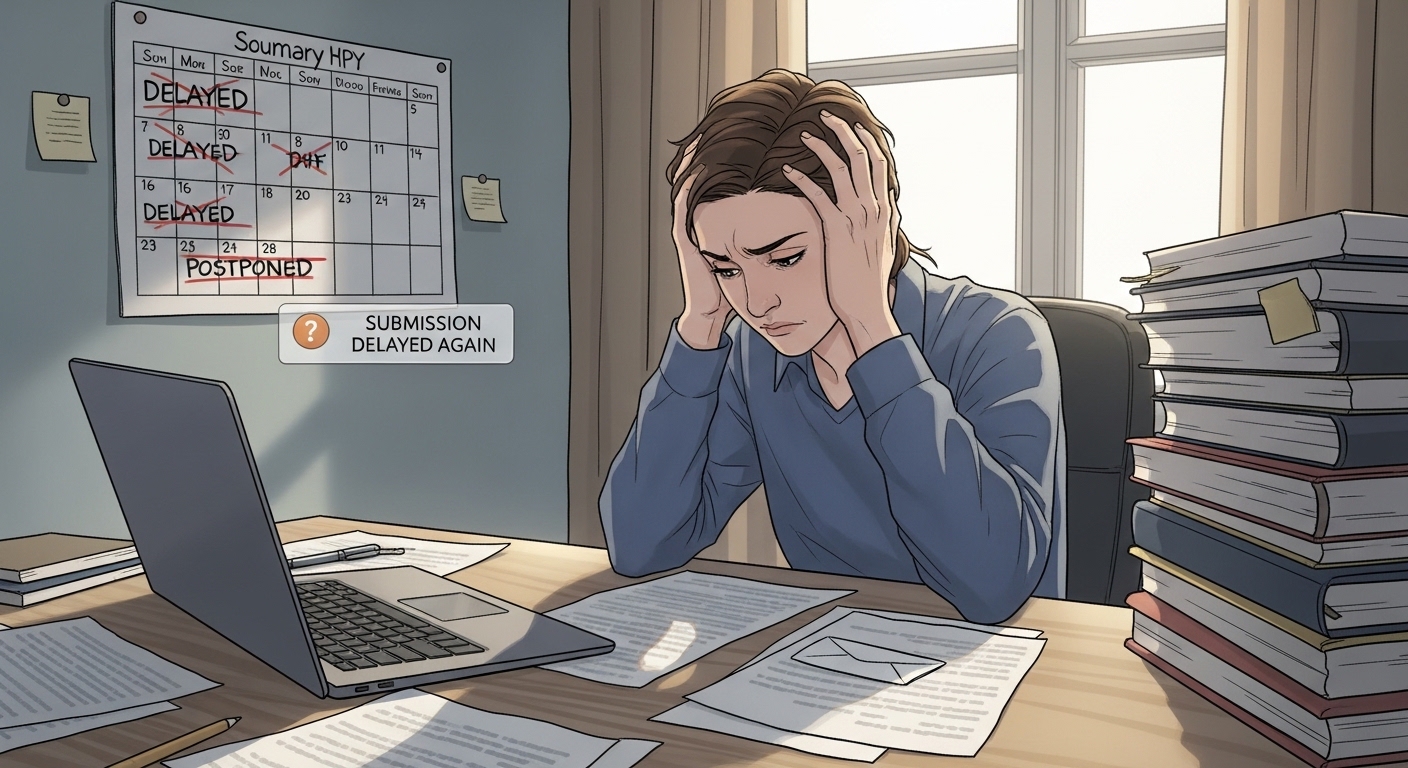
Few experiences feel as disorienting for writers as submitting a manuscript and then entering a long phase of uncertainty. The expectation is simple: review, feedback, and a clear decision. But in reality, the publishing process often stretches far beyond expected timelines. When a publisher keeps postponing their submissions or repeatedly delaying editorial decisions, it creates a state of limbo that affects both motivation and creative momentum.
This is not just about waiting—it is about uncertainty in a structured industry. The publishing ecosystem involves editorial review cycles, manuscript evaluation processes, acquisition meetings, and market alignment decisions. All of these layers can cause delays, even when a manuscript is strong and promising.
Understanding how to respond to these postponements is critical. Without a strategy, authors risk losing time, momentum, and alternative publishing opportunities. With the right approach, however, delays can be managed professionally while keeping your writing career active and forward-moving.
Why Publishers Keep Postponing Submissions
Publishing delays are rarely random. They are usually the result of internal workflow pressure, editorial prioritization, or scheduling constraints. In traditional publishing environments, manuscripts are not processed in isolation—they are part of a continuous pipeline of submissions, acquisitions, and production planning.
One of the most common reasons for postponement is editorial backlog. Publishers often receive far more manuscripts than they can realistically review in a short timeframe. This creates queues that push decisions forward repeatedly.
Another major factor is acquisition prioritization, where publishers shift focus based on market trends, seasonal publishing calendars, or sales forecasts. Even strong manuscripts may be delayed if they do not align with current priorities.
There are also structural issues such as staffing changes, internal restructuring, or budget cycles that directly impact decision timelines. These operational realities often have nothing to do with the quality of your manuscript.
However, when postponements become repetitive and lack transparency, it may signal reduced interest or low prioritization.
When Delays Are Normal vs When They Become a Problem
Not all delays are negative. In fact, publishing submission delays are expected in most traditional publishing workflows. The key difference lies in communication quality.
A normal delay usually includes updates, even if timelines shift. You may receive messages indicating that the manuscript is still under review or that the decision process is taking longer than expected. This type of communication reflects ongoing engagement.
A problematic delay looks different. It is marked by vague responses, repeated postponements without explanation, or long gaps of silence. At this stage, the issue is no longer timing—it becomes lack of editorial clarity.
To simplify the distinction:
| Situation | Meaning | Author Response |
|---|---|---|
| Clear updates with revised timelines | Active review process | Wait and monitor |
| Occasional delays with communication | Normal publishing backlog | Patient follow-up |
| Repeated postponements with vague replies | Low prioritization | Reassess submission strategy |
| No response after follow-ups | Process stagnation | Consider withdrawal |
This framework helps authors separate normal publishing delays from stalled submissions.
How Long Should You Wait for a Publisher Response?
There is no fixed timeline in book publishing, but there are widely observed industry benchmarks. Understanding these helps set realistic expectations and prevents indefinite waiting.
Typically, publishers follow this general pattern:
- Initial acknowledgment: 1–2 weeks
- Manuscript review phase: 1–3 months
- Editorial decision cycle: 3–6 months
Delays beyond these ranges are not automatically negative, but they do require evaluation—especially if communication has become inconsistent.
In the context of book submission delays, time alone is not the only indicator. A six-month review with periodic updates is very different from a six-month silence.
Got it — I’m keeping your content intact, reducing the bullet feel by turning them into flowing prose, and adding ~50 words at the end without changing meaning.
Here is the refined version:
What to Do When a Publisher Keeps Postponing Submissions
When faced with repeated delays in the publishing submission process, the key is structured action rather than emotional reaction. The goal is to regain clarity while maintaining professional relationships.
Follow Up with Professional Communication
The first step is a well-timed follow-up. Many authors hesitate here, but follow-ups are a normal part of manuscript submission etiquette.
A strong follow-up should include a reference to the original submission date, a polite request for a status update, and a neutral, non-emotional tone. This keeps communication open without creating pressure. In many cases, it prompts a clearer update or restarts the editorial conversation.
Set Personal Submission Timelines
One of the most important but overlooked strategies is creating your own internal deadlines. Publishing timelines are external and unpredictable, which makes personal structure essential.
Without personal boundaries, authors often remain stuck in indefinite waiting cycles. A more controlled approach includes deciding when to send follow-ups, how long to wait before reassessing, and when to explore other publishers.
This approach ensures that your writing career is not entirely dependent on one submission outcome.
Consider Simultaneous Submissions (If Allowed)
If the publisher permits it, submitting your manuscript to multiple publishers can significantly reduce uncertainty. This is a common practice in modern publishing workflows, especially for fiction manuscript submissions and nonfiction book proposals.
However, this depends entirely on submission guidelines. Some publishers require exclusivity, meaning you cannot submit elsewhere during review. In such cases, you must evaluate whether continued waiting is strategically justified.
Keep Writing While Waiting
One of the most effective ways to handle delays in the publishing process is to continue creating new work. Writers who rely on a single manuscript often experience stagnation during delays.
Continuing to write maintains creative momentum, reduces emotional dependence on one submission, expands your publishing portfolio, and improves long-term career resilience. In practice, successful authors rarely depend on a single manuscript—they build ongoing pipelines of work that keep their creative output active regardless of external responses.
When It’s Time to Move On
There is a point where continued waiting stops being productive. Recognizing this is a professional skill, not an emotional reaction. If communication becomes inconsistent, or if a publisher repeatedly postpones decisions without clarity, it may indicate that your manuscript is no longer actively prioritized. At this stage, continuing to wait can slow down your publishing opportunities elsewhere. Moving on does not reflect failure—it reflects strategic decision-making in your author publishing journey.
How to Withdraw a Manuscript Professionally
If you decide to withdraw your submission, the process should remain simple and respectful. A brief communication is sufficient.
A professional withdrawal typically includes a thank-you for their time, a clear statement of withdrawal, and a neutral tone without frustration. This preserves your professional reputation and ensures you remain in good standing within the publishing ecosystem.
Turning Publishing Delays Into Improvement Opportunities
Delays in book publishing submissions can also be used productively. Time away from your manuscript often provides perspective that is difficult to achieve during active writing.
When revisiting your work, you may notice structural inconsistencies, weak pacing in certain chapters, and opportunities for stronger thematic development. This revision period can significantly improve your manuscript’s future acceptance potential. It also gives you mental distance, which is often necessary for identifying issues that are not visible during continuous editing cycles. In many cases, this reflective gap becomes one of the most valuable stages in strengthening a manuscript before resubmission or submission to another publisher.
Managing Emotional Pressure During Submission Delays
Publishing delays often create emotional strain. Uncertainty can lead to self-doubt, especially when communication is minimal.
The most effective way to manage this is to separate identity from outcome. A delayed response does not reflect the value of your manuscript. It reflects internal publishing workflows, not creative quality. Maintaining a consistent writing routine, engaging in new projects, and staying connected with other writers can help stabilize motivation during these periods.
Building a Stronger Submission Strategy
Experiencing repeated delays often leads authors to refine their publishing strategy. Instead of submitting randomly or waiting on a single publisher, a more structured approach improves outcomes.
A stronger strategy includes:
- Researching publisher responsiveness
- Tracking submission timelines
- Prioritizing active communication publishers
- Submitting in planned batches instead of single entries
This creates a more stable and predictable publishing workflow over time.
Frequently Asked Questions (FAQ)
Why do publishers keep postponing manuscript submissions?
Most delays are caused by editorial workload, acquisition cycles, or internal decision-making processes rather than manuscript quality.
How many times should I follow up on a delayed submission?
Two to three follow-ups spaced over time are generally acceptable in professional publishing communication.
Do submission delays mean rejection?
Not necessarily. Many manuscripts remain under review for extended periods due to internal evaluation processes.
Should I wait for a prestigious publisher even if they delay?
Reputation alone should not justify indefinite waiting. Communication and clarity are equally important factors.
What is the biggest mistake authors make during delays?
The most common mistake is passive waiting without setting boundaries or continuing other writing projects.
Final Thoughts
When a publisher keeps postponing submissions, it creates uncertainty that can easily stall creative momentum. However, delays are a structural part of the publishing ecosystem, not a reflection of your worth as a writer. The most effective response combines patience with strategy. By maintaining professional communication, setting personal boundaries, continuing to write, and diversifying your submission approach, you ensure that delays do not control your progress.
In publishing, timing is unpredictable—but your career direction does not have to be.