There is a reason horror remains one of the most enduring and emotionally powerful storytelling genres. Long after readers finish a great horror story, certain scenes stay with them. A hallway remains unsettling. A creaking floorboard sounds suspicious. A quiet room suddenly feels too quiet.
That is the unique power of horror.
Unlike many genres that entertain through excitement, romance, or intellectual curiosity, horror works by creating emotional vulnerability. It taps into fear, anticipation, dread, and uncertainty in ways few storytelling forms can. When done well, horror doesn’t simply scare readers for a moment—it unsettles them in ways that linger.
Yet writing effective horror is far more difficult than many writers initially assume.
A common mistake among newer writers is believing horror depends on monsters, violence, gore, or jump scares. While these can contribute to fear, they are not what make horror truly effective. Plenty of stories include terrifying creatures and shocking events, but still fail to frighten readers.
Why?
Because real horror is not built on what happens.
It is built on how it is experienced.
The strongest horror stories are carefully constructed around specific storytelling elements that shape emotional response. They create tension before the scare. They build atmosphere before the reveal. They establish vulnerability before danger strikes. Whether you are writing supernatural horror, psychological horror, gothic fiction, body horror, cosmic terror, or suspense-driven dark fiction, certain foundational principles appear again and again in the genre’s most unforgettable works.
Understanding these principles allows you to create horror that feels immersive, intelligent, and deeply unsettling.
Let’s explore the ten essential elements every great horror story must have—and how you can use them in your own writing.
Why Horror Works So Powerfully
There is something uniquely compelling about horror. Few genres have the ability to affect readers so deeply that a story lingers in their minds long after they have finished reading. A great horror story does not simply entertain—it unsettles, disturbs, and creates a lasting emotional impression.
The reason horror works so powerfully lies in its relationship with uncertainty. As human beings, we naturally seek predictability. We feel most comfortable when situations make sense, when outcomes feel manageable, and when the world around us follows familiar patterns. Horror disrupts that sense of order. It introduces situations where normal logic begins to fracture, where danger feels hidden, and where safety becomes uncertain.
This disruption creates tension.
When readers cannot fully predict what will happen next, their minds become highly engaged. They begin imagining possibilities, anticipating danger, and mentally filling in the gaps. Often, what the imagination creates is far more frightening than anything directly described on the page.
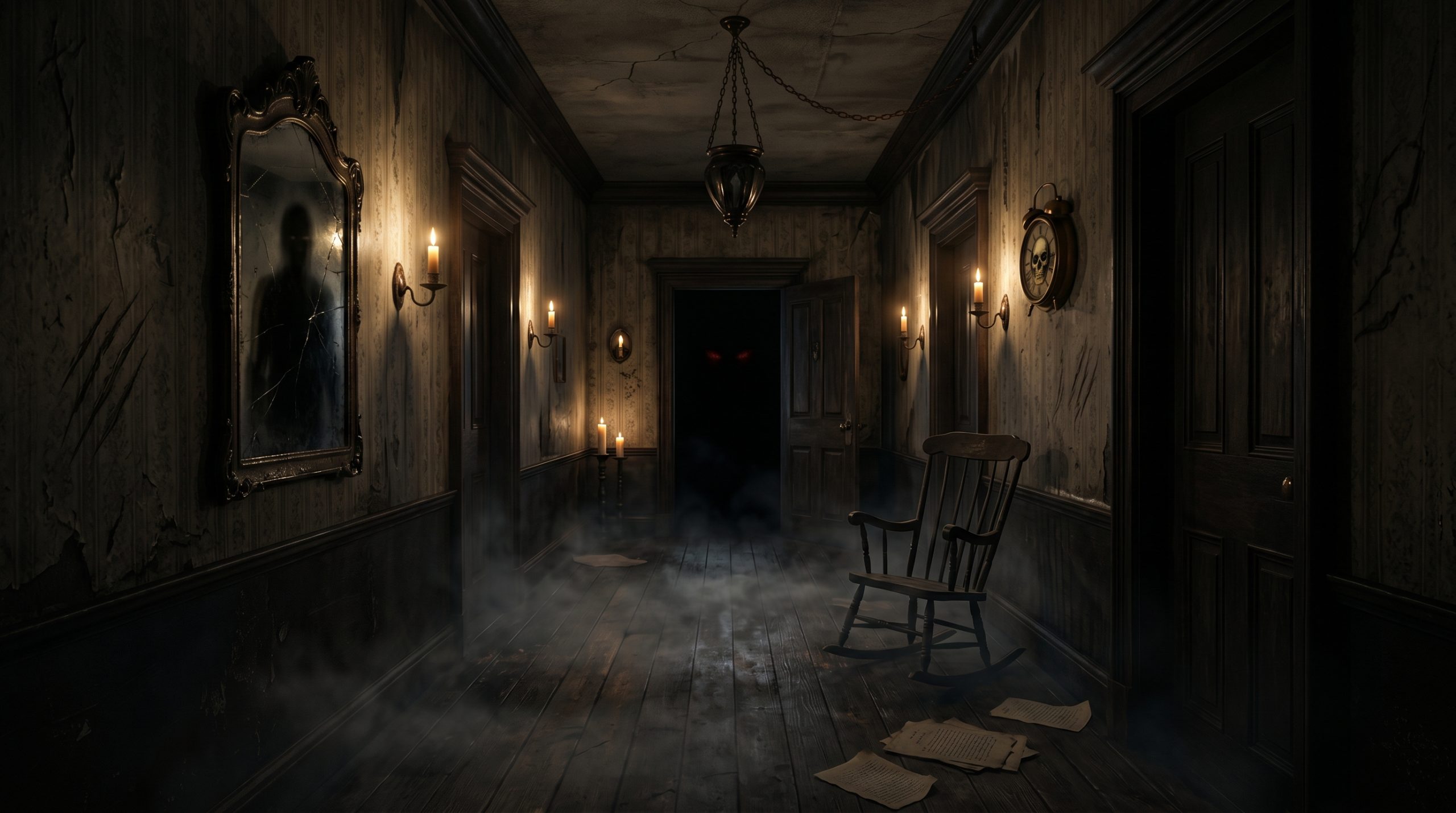
That is why subtle horror is often more effective than explicit horror. A shadow at the end of a hallway can be more unsettling than clearly seeing what cast it. A faint sound behind a locked door can create more fear than immediately revealing what is waiting on the other side.
Horror becomes powerful because it allows readers to participate in the fear.
It gives just enough information to trigger imagination, then leaves space for the mind to create its own terrifying possibilities. This interaction between suggestion and uncertainty is what gives horror its psychological depth.
Another reason horror resonates so strongly is that it often reflects real human fears. Beneath the supernatural elements, monsters, or strange events, horror usually taps into universal anxieties—fear of isolation, loss of control, death, grief, abandonment, or the unknown.
Even when the scenario itself is a fictional piece, the emotions beneath it are deeply familiar.
That emotional recognition is what makes horror feel real.
The strongest horror stories understand this. They do not rely only on frightening imagery or sudden shocks. They build emotional discomfort gradually, creating an atmosphere where fear feels natural and inevitable.
That is the true power of horror: it does not force fear onto the reader. It allows fear to grow from within.
The Anatomy of Great Horror
A single frightening idea never creates great horror.
It is built through layers of storytelling elements that work together to create sustained tension and emotional unease. A monster alone is not enough. A haunted house alone is not enough. Even a disturbing concept needs structure to become truly effective.
What makes horror memorable is how different elements combine to shape the reader’s experience. In many ways, this works similarly to Dystopian vs. Magical Realism: Choosing the Right Fantasy Sub-Genre for Your Book, where the effectiveness of a story depends not on one imaginative concept, but on how carefully its elements are layered to create a believable emotional experience.
Atmosphere creates the first sense of discomfort. It establishes the emotional tone of the story and signals that something is not quite right. Suspense builds on that discomfort by stretching anticipation and delaying resolution. Vulnerable characters make readers emotionally invested because their fear feels personal and real.
Isolation removes comfort and support, making danger feel unavoidable. Psychological instability introduces uncertainty, causing readers to question what is real. The antagonistic force gives fear direction, while unresolved tension ensures the emotional impact lasts beyond the final page.
These elements are most powerful when they work together.
Consider a simple scene: a character alone in an old house.
10 Elements Every Great Horror Story Must Have (With Examples)
1. Atmosphere
Atmosphere is the emotional environment of a horror story, created through setting, tone, and descriptive detail. It establishes the overall feeling of dread, unease, or tension before anything frightening even happens. A strong atmosphere makes the world feel unsafe or unpredictable, even in silence. Instead of relying on constant action, it uses environmental cues like darkness, isolation, decay, or silence to maintain psychological pressure on the reader. Example: The Haunting of Hill House builds terror through its oppressive and emotionally charged setting.
- Establishes mood and tone
- Uses setting and sensory detail
- Creates sustained unease
- Works before any action begins
2. Fear of the Unknown
Fear of the unknown is the idea that what is not fully seen or explained is more terrifying than what is visible. Horror uses this by withholding information about threats, motives, or supernatural forces, allowing imagination to amplify fear. This technique is effective because the human mind tends to imagine worse possibilities than reality. Example: The Blair Witch Project builds horror through absence and uncertainty rather than clear visual threats.
- Hides full information from reader
- Encourages imagination-based fear
- Increases psychological tension
- Avoids over-explaining threats
3. Tension and Suspense
Tension and suspense refer to the gradual buildup of anticipation before something frightening occurs. Instead of immediate scares, horror often stretches moments of uncertainty to increase emotional pressure. Suspense keeps the reader alert, expecting danger at any moment, while tension maintains discomfort even in quiet scenes. This slow escalation is often more effective than sudden shocks because it prolongs emotional stress. Example: Jaws creates fear through delayed visibility of the threat.
- Builds anticipation gradually
- Delays resolution or reveal
- Keeps reader in alert state
- Extends emotional discomfort
4. Vulnerable Characters
Vulnerable characters are essential because they make fear feel personal and realistic. When characters lack strength, knowledge, or control, the threat feels more dangerous and immediate. Vulnerability can be physical weakness, emotional instability, isolation, or lack of resources. Readers become more emotionally invested when survival feels uncertain. Example: The Ring features ordinary people facing supernatural danger without preparation or protection.
- Increases emotional connection
- Raises stakes of survival
- Makes danger feel realistic
- Enhances reader empathy
5. High Stakes
High stakes refer to what the characters stand to lose if they fail. In horror, stakes are often life, sanity, safety, or the well-being of loved ones. Strong horror stories clearly define what is at risk so that every decision carries weight. Without meaningful stakes, fear loses impact because consequences feel minor or reversible. Example: Hereditary builds terror through emotional and familial loss.
- Defines consequences clearly
- Increases urgency and pressure
- Strengthens emotional investment
- Makes fear more impactful
6. Isolation
Isolation removes safety and support systems from characters, making them more exposed to danger. It can be physical (remote locations), emotional (lack of trust), or social (cut off from society). Isolation intensifies fear because help is unavailable, forcing characters to face threats alone. Example: The Thing uses an isolated Antarctic base to heighten paranoia and terror.
- Removes external help
- Increases vulnerability
- Strengthens psychological pressure
- Enhances claustrophobic fear
7. Unreliable Reality
Unreliable reality occurs when the world or perception of events cannot be fully trusted. This may involve hallucinations, psychological breakdown, or supernatural distortion. It creates confusion between what is real and what is imagined, increasing anxiety and uncertainty. Example: Black Swan blurs mental instability with reality, creating constant doubt.
- Distorts perception of reality
- Creates confusion and doubt
- Heightens psychological horror
- Keeps reader uncertain
8. Antagonistic Force
The antagonistic force is the source of fear or conflict in the story. It may be a monster, ghost, psychological entity, or even an abstract concept like guilt or madness. A strong antagonist does not need constant visibility but must feel threatening and persistent. Example: It Follows uses an unstoppable, symbolic entity as its core threat.
- Drives central conflict
- Can be physical or abstract
- Maintains narrative tension
- Represents core fear theme
9. Psychological Horror
Psychological horror focuses on the mind rather than physical threats. It explores fear through mental instability, trauma, guilt, obsession, or paranoia. This type of horror is effective because it feels internal and personal, making it harder to escape or resolve. Example: The Babadook uses grief and emotional breakdown as the central source of horror.
- Focuses on mental fear
- Explores emotional trauma
- Creates internal conflict
- Builds slow, deep dread
10. Unresolved Ending
An unresolved ending leaves some questions unanswered or consequences ongoing. Instead of full closure, horror often ends with lingering uncertainty, suggesting that fear still exists beyond the story. This technique keeps the emotional impact alive after the story ends. Example: The Mist concludes with a devastating twist that intensifies the horror rather than resolving it.
- Leaves questions open
- Maintains lingering fear
- Avoids full resolution
- Extends emotional impact beyond ending
How These Elements Work Together
No single element is enough to create truly effective horror. A creepy setting alone will not sustain fear, just as an unsettling antagonist or a shocking reveal cannot carry an entire story on its own. What makes horror powerful is the way different elements work together to build emotional pressure and psychological tension.
Great horror is layered.
Each element strengthens the others, creating a reading experience that feels immersive and deeply unsettling. Atmosphere establishes discomfort from the beginning, setting the emotional tone and making readers feel that something is not right. Suspense then stretches that discomfort, forcing readers to sit with uncertainty as tension slowly builds.
Character vulnerability makes this tension matter. When readers care about the people at the center of the story, fear becomes personal rather than distant. Isolation intensifies this effect by removing safety and support, leaving characters exposed to whatever threat is approaching.
At the same time, the unknown keeps readers mentally engaged. When a threat is not fully explained, imagination begins filling in the gaps, often creating possibilities more frightening than any direct reveal.
As emotional stakes rise, the fear becomes even more powerful. A reader is no longer simply observing danger—they are emotionally invested in its outcome. This is where immersion happens.
Quick Reference Table
| Element | Purpose |
| Atmosphere | Creates emotional unease |
| Unknown | Builds imagination-driven fear |
| Suspense | Sustains tension |
| Vulnerability | Increases reader investment |
| Stakes | Adds urgency |
| Isolation | Removes safety |
| Instability | Distorts reality |
| Antagonist | Drives fear |
| Emotion | Adds depth |
| Ending | Leaves lasting impact |
Final Thoughts
Writing horror is not about trying to shock readers. It is about understanding fear as a psychological experience. The most effective horror stories build discomfort gradually, layer emotional tension carefully, and leave readers unsettled long after the final page.
Master these ten elements, and your horror writing will move beyond simple scares into something far more powerful: Stories readers cannot stop thinking about.
Frequently Asked Questions
What makes a horror story truly scary?
A truly scary horror story combines atmosphere, suspense, emotional investment, and uncertainty rather than relying solely on graphic imagery or jump scares.
Is psychological horror better than supernatural horror?
Neither is inherently better. Psychological horror often creates deeper internal discomfort, while supernatural horror can build stronger external tension.
How long should suspense build before a scare?
Long enough to create anticipation, but not so long that pacing stalls. Balance is crucial.
Do horror stories need unhappy endings?
Not always. But unresolved or bittersweet endings often leave stronger emotional impact.
What is the biggest mistake horror writers make?
Explaining too much too early. Fear weakens when mystery disappears.