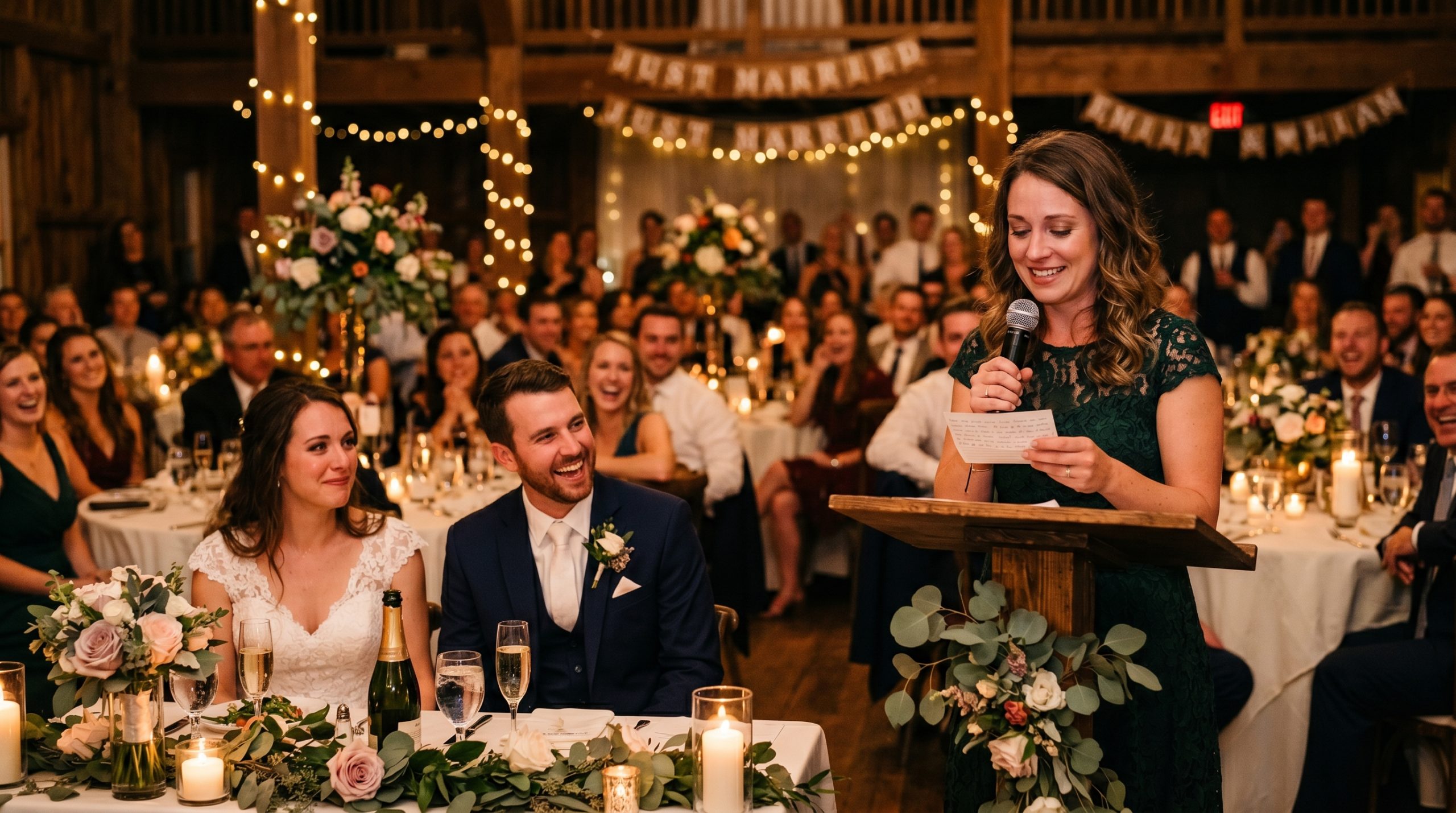
What makes a wedding speech powerful is not structure alone, but the ability to translate personal memories into spoken moments that others can feel. This is where speech writing, personal storytelling, and emotional narrative construction intersect. You are not just speaking to a crowd—you are speaking to people who share a meaningful moment in someone’s life. That requires clarity, sincerity, and restraint. A wedding speech is not about performance—it is about presence. It is one of the rare moments where words carry emotional weight not because they are perfectly written, but because they are personally true. Many people approach wedding speech writing with pressure to sound polished, funny, or impressive, but the most memorable speeches are rarely the most elaborate. They are the ones that feel real, specific, and emotionally grounded in lived experience. This same principle applies to how to write a TED-style talk that connects, where impact is created not through complexity or performance, but through clarity, honesty, and the ability to make an audience feel understood rather than impressed.
A personal wedding speech does not rely on generic praise or overused phrases. Instead, it focuses on specific memories, meaningful observations, and honest emotion. The goal is not to impress the audience but to connect them to the relationship being celebrated. Whether you are the best man, maid of honor, parent, or friend, your role is to reflect a version of the couple that only you can see.
Writing such a speech requires you to think carefully about tone, pacing, and emotional balance. Too much humor can feel shallow. Too much emotion can feel heavy. The strength lies in combining both in a natural way that reflects real relationships.
A strong speech also begins long before writing—it starts with observation. Think about how the couple behaves when no one is watching, how they support each other in small moments, and what changes in them when they are together. These details are what transform a speech from generic to memorable.
- A wedding speech is about emotional truth, not performance
- Specific memories are more powerful than general compliments
- Personal storytelling creates a connection more than polished language
Finding the Emotional Core of Your Wedding Speech
Every meaningful wedding speech begins with an emotional core. This is the central feeling or truth you want to communicate about the couple or your relationship with them. Without this, the speech becomes a collection of random memories or polite statements that lack direction.
The emotional core is not the story itself—it is the meaning behind the story. For example, instead of “they are a great couple,” the emotional core might be “they make each other feel safe in a chaotic world” or “their relationship brings out the best version of both of them.” Once this core is clear, every memory or anecdote should support it.
A strong approach in writing for personal speeches and narrative communication is to filter content through relevance rather than quantity. Not every memory belongs in the speech. Only the ones that reinforce emotional truth should remain.
This stage also requires honesty. A forced emotional core will always sound artificial. The most powerful speeches come from simple truths that are observed, not invented. You are not trying to define perfection in the couple—you are trying to capture something real about how they exist together. That authenticity becomes the emotional anchor of your entire speech.
Structuring a Wedding Speech That Feels Natural
Structure in wedding speech writing should never feel mechanical. It should feel like a story being shared, not a presentation being delivered. A natural flow helps the audience stay emotionally engaged without feeling like they are being guided through sections.
Typical structure:
| Section | Purpose | Focus |
| Opening | Set tone | Warmth + connection |
| Middle | Share stories | Personal memories + meaning |
| Transition | Emotional shift | From humor to sincerity |
| Ending | Final message | Blessing or reflection |
A strong speech does not announce its structure. It moves through it naturally, like conversation. The audience should not feel where one section ends and another begins.
Structure also helps control emotional pacing. Without structure, speeches tend to drift into either randomness or repetition. A well-designed flow ensures that each part of the speech builds on the previous one, gradually deepening emotional engagement.
Transitions between sections should feel like natural thought movement rather than formal shifts. This is what makes the speech feel alive instead of scripted.
Choosing Personal Stories That Actually Matter
The heart of a wedding speech lies in storytelling. However, not every story is useful. The goal is not to entertain with randomness but to reveal character and emotion through memory. A strong wedding speech is built on selection, not accumulation. The moments you choose matter far more than how many you include, because each story becomes a lens through which the audience understands the couple.
What Makes a Strong Wedding Story
A strong story writing usually includes clear emotional and narrative structure rather than just description. It should feel like a complete moment that the audience can visualize and emotionally understand.
- A specific moment, not a general summary
- A clear emotional shift or realization
- A connection to the couple’s relationship or growth
These elements ensure the story does more than describe an event—it reveals something meaningful about the people involved. Without these components, even a funny or interesting memory can feel directionless in a speech.
Why Specificity Matters More Than Length
In speech writing and personal narrative crafting, specificity is what gives emotional weight to storytelling. A short, precise memory often lands more effectively than a long, loosely connected explanation. Specific details make the audience feel present in the moment, which increases emotional engagement.
Instead of describing a relationship in general terms, focus on one scene, one interaction, or one turning point that reflects the deeper truth you want to communicate. That single moment often carries more meaning than multiple broad statements combined.
The Power of Simple, Everyday Moments
The most effective wedding stories are rarely dramatic. They are usually small, ordinary moments that reveal something real. A shared laugh at the wrong time, a quiet moment of support during stress, or a simple gesture of care can carry more emotional weight than major life events.
These moments work because they feel authentic. They reflect how relationships actually function in everyday life rather than how they appear in idealized versions. When framed correctly, simplicity becomes emotional depth.
Connecting Stories to the Emotional Core
Every story in your wedding speech should connect back to the emotional core you defined earlier. Without this connection, stories feel disconnected or random, even if they are individually interesting.
The purpose of storytelling is not just to share memories but to reinforce meaning. Each story should answer a silent question: What does this reveal about the couple or your relationship with them? If it does not contribute to that answer, it should be reconsidered or removed.
Avoiding Story Overload
One of the most common mistakes in wedding speech writing is including too many stories. When a speech becomes a collection of unrelated memories, emotional focus is lost and impact weakens.
A more effective approach is restraint. Two or three carefully chosen stories are usually enough to build a complete emotional picture. Each story should serve a distinct purpose—one might introduce warmth, another might show growth, and another might highlight connection.
A focused structure ensures that the audience stays emotionally engaged rather than overwhelmed by information. In the end, it is not the quantity of stories that creates impact, but the clarity and meaning behind them.
Balancing Humor and Emotion
One of the most difficult parts of writing a wedding speech is balancing humor with sincerity. Humor helps ease tension and connect with the audience, but too much of it can reduce emotional depth. On the other hand, a speech that is entirely serious may feel heavy or distant.
The best approach is rhythm. Light moments should naturally lead into deeper emotional reflections. Humor should not feel separate from the message—it should support it.
Timing is crucial. A joke placed at the wrong moment can break emotional flow, while a well-placed humorous observation can make the following emotional moment even stronger. The contrast between laughter and sincerity is what creates depth.
A good speech feels like real conversation, where humor and emotion naturally coexist rather than compete.
Table: Strong vs Weak Wedding Speech Elements
| Element | Strong Approach | Weak Approach |
| Stories | Specific, personal, meaningful | Generic or vague anecdotes |
| Humor | Natural, story-based | Forced jokes or clichés |
| Emotion | Honest and grounded | Overly dramatic or exaggerated |
| Structure | Flowing and natural | Rigid and segmented |
| Language | Simple and personal | Overly formal or scripted |
Writing in a Conversational Tone
A wedding speech should sound like you, not like a written essay. This is where many people struggle—they over-edit their natural voice and end up sounding artificial.
Conversational writing means:
- Using natural phrasing
- Avoiding overly complex vocabulary
- Keeping sentences clear and direct
In personal speech writing, authenticity matters more than perfection. If a sentence sounds like something you would never actually say, it probably does not belong in your speech.
Tone should feel human, not rehearsed. Even small imperfections in phrasing can make the speech feel more genuine, as long as clarity is maintained. The audience is not expecting literary perfection—they are expecting honesty.
Creating Emotional Flow in Your Speech
A strong wedding speech moves emotionally rather than logically. It starts light, builds connection through stories, and gradually shifts into deeper reflection. This emotional progression helps the audience feel the speech rather than just hear it.
Flow is created through transitions between humor, memory, and meaning. Each shift should feel natural, not forced.
The emotional arc should feel like a journey. The audience begins with laughter or curiosity, moves through recognition of shared memories, and ends with a deeper appreciation of the couple’s relationship. This gradual build is what makes the speech memorable.
Delivering a Speech That Feels Authentic
Even the best-written speech can lose impact if delivery feels disconnected. Authentic delivery comes from familiarity with the content, not memorization. Instead of memorizing word-for-word, understand the emotional structure of your speech. This allows you to speak naturally while staying connected to your message. Pauses, eye contact, and pacing matter as much as words. A well-timed pause can carry more emotion than a sentence. Delivery should feel like sharing, not performing.
FAQ: Writing a Wedding Speech That Feels Personal
What makes a wedding speech feel personal?
A wedding speech feels personal when it includes specific memories, honest emotion, and a natural speaking tone that reflects real relationships.
How long should a wedding speech be?
Most effective wedding speeches last between 5 to 10 minutes, depending on role and setting.
Should I memorize my wedding speech?
It is better to understand the structure rather than memorize word-for-word. This helps you sound natural and less robotic.
How do I make my speech emotional without being overwhelming?
Balance emotion with light moments. Use storytelling instead of abstract emotional statements.
What should I avoid in a wedding speech?
Avoid generic phrases, inside jokes that no one understands, and overly long stories that do not connect to the couple.