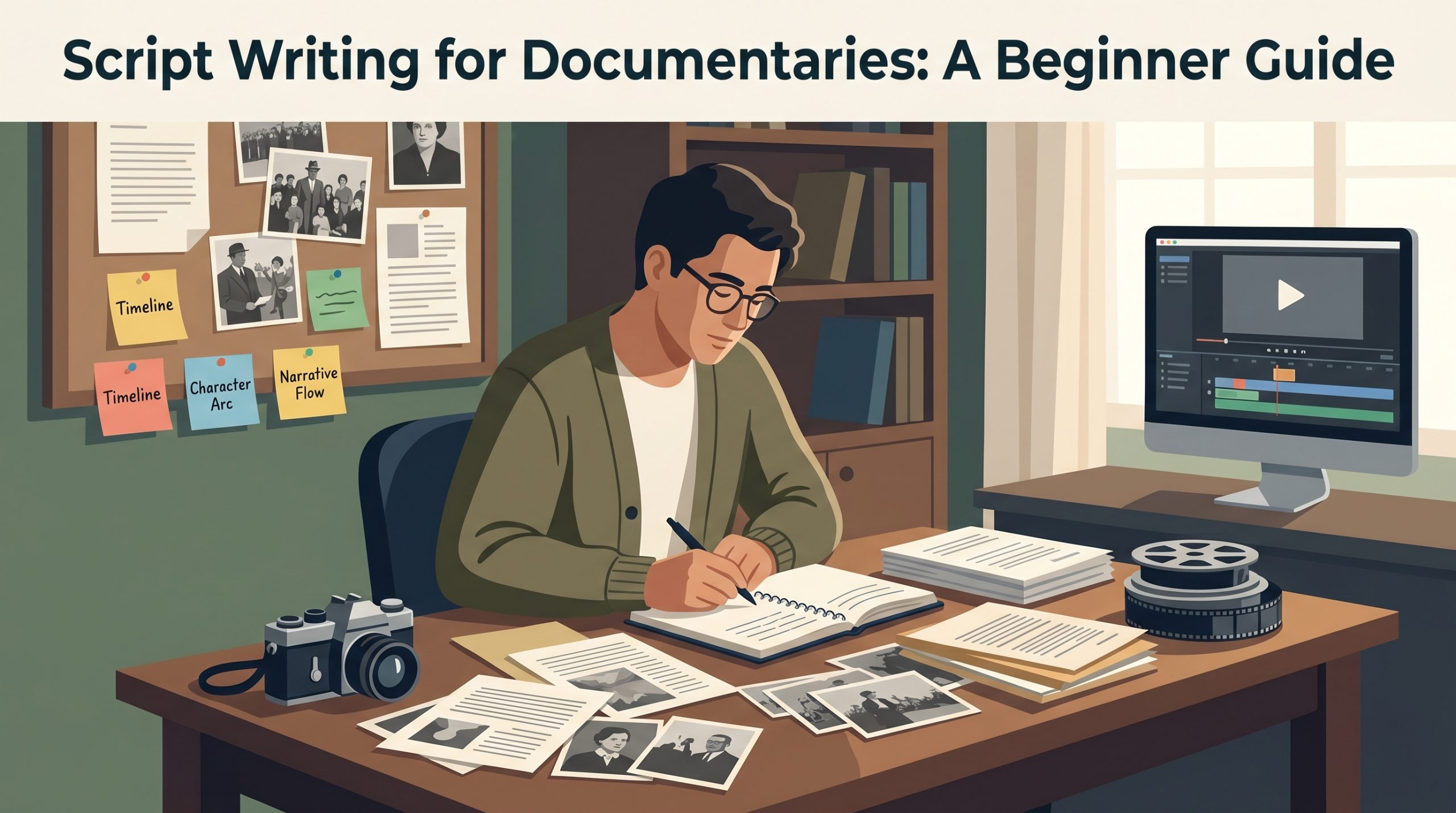
Documentary script writing is not a mechanical exercise of organizing facts; it is the disciplined process of shaping real-world material into a narrative that feels intentional, coherent, and emotionally grounded. In parallel, Script Writing for Corporate Videos Explained follows a similar principle—both require the transformation of raw ideas, business intent, or real-life documentation into a structured storytelling framework designed for visual communication. Whether the medium is documentary or corporate video, the writer’s responsibility is to convert unstructured input into a clear narrative that guides visuals, pacing, and voiceover with precision.
At its core, Script Writing for Documentaries and corporate narratives operates within a strict boundary of purpose-driven communication. Unlike fiction, where events are created from imagination, these formats rely on existing truth—interviews, research material, field observations, or organizational messaging. The challenge is not invention but selection, sequencing, and interpretation of information in a way that builds meaning without distorting authenticity.
A strong script in either domain does more than present information. It constructs understanding. It decides what the audience sees first, what is emphasized, what is left out, and how each idea contributes to a larger thematic direction. Every segment must carry a function—whether it is setting context, building narrative tension, presenting evidence, or guiding the viewer toward a conclusion.
In today’s fast-paced digital environment, both documentary and corporate video scripts must be increasingly precise. Attention spans are shorter, competition for engagement is higher, and clarity is non-negotiable. A well-structured script ensures that even complex subjects remain accessible while still retaining depth, credibility, and emotional resonance.
This guide explores Script Writing for Documentaries alongside principles drawn from Script Writing for Corporate Videos Explained, focusing on how research, narrative design, structure, and visual alignment come together to create effective, production-ready storytelling frameworks.
- Understanding how real-world information is shaped into narrative form
- Structuring documentary scripts for clarity, flow, and emotional depth
- Aligning narration with visuals and factual storytelling requirements
Turning Raw Reality into Structured Narrative
Documentary script development is the process of shaping unfiltered real-world material—interviews, observational footage, archival records, and field research—into a coherent storytelling framework. Instead of inventing events, the writer works like a curator, selecting and organizing existing material into a sequence that carries meaning, direction, and emotional weight. In Script Writing for Documentaries, this transformation is less about creation and more about interpretation, where structure becomes the tool that gives chaos a readable form.
Unlike fictional storytelling, there is no pre-written plot waiting to unfold. The narrative emerges from evidence, not imagination. This makes the writing process heavily dependent on judgment: what stays, what gets removed, and how each piece of information connects to the next. The goal is not to dramatize reality but to shape it into something understandable without distorting its truth.
The Script as a Narrative Lens
A documentary script does not dictate reality; it frames it. Its primary function is to guide how viewers perceive information through narration, visuals, and sequencing. Rather than controlling events, it organizes perspective. This distinction is critical because it defines the ethical and creative boundaries of documentary storytelling.
Within production, the script operates as a reference system for directors and editors. It helps determine how footage should be arranged, how voiceover should interact with visuals, and how pacing should shift across different narrative segments. Without this guiding structure, even strong footage can lose coherence during editing a script.
Narrative Discipline as the Core Principle
At the heart of documentary scripting lies narrative discipline—the ability to maintain focus while handling complex, often scattered information. Real-world stories rarely arrive in a clean sequence. They are fragmented, layered, and sometimes contradictory. The scriptwriter’s responsibility is to impose order without oversimplifying meaning.
This discipline ensures that every segment of content serves a defined narrative function. Nothing exists in isolation. Each interview excerpt, visual reference, or data point must contribute to a larger thematic direction. When this structure is missing, documentaries tend to feel disjointed, no matter how strong the individual elements are.
Building Meaning Through Structured Progression
Effective documentary scripts rely on deliberate sequencing. Information is not just presented—it is staged. Early sections establish context, middle sections develop depth and complexity, and later sections provide synthesis or insight. This progression allows viewers to build understanding gradually rather than being overwhelmed by raw information.
In practice, this means the writer is constantly balancing two forces: factual accuracy and narrative clarity. Too much emphasis on raw detail disrupts flow, while excessive simplification weakens authenticity. The strength of script writing for documentaries lies in maintaining equilibrium between these two demands.
Understanding Documentary Script Development
Turning Raw Reality into Structured Narrative
Documentary script development is the process of shaping unfiltered real-world material—interviews, observational footage, archival records, and field research—into a coherent storytelling framework. Instead of inventing events, the writer works like a curator, selecting and organizing existing material into a sequence that carries meaning, direction, and emotional weight. In Script Writing for Documentaries, this transformation is less about creation and more about interpretation, where structure becomes the tool that gives chaos a readable form.
Unlike fictional storytelling, there is no pre-written plot waiting to unfold. The narrative emerges from evidence, not imagination. This makes the writing process heavily dependent on judgment: what stays, what gets removed, and how each piece of information connects to the next. The goal is not to dramatize reality but to shape it into something understandable without distorting its truth.
The Script as a Narrative Lens
A documentary script does not dictate reality; it frames it. Its primary function is to guide how viewers perceive information through narration, visuals, and sequencing. Rather than controlling events, it organizes perspective. This distinction is critical because it defines the ethical and creative boundaries of documentary storytelling.
Within production, the script operates as a reference system for directors and editors. It helps determine how footage should be arranged, how voiceover should interact with visuals, and how pacing should shift across different narrative segments. Without this guiding structure, even strong footage can lose coherence during editing.
Narrative Discipline as the Core Principle
At the heart of documentary scripting lies narrative discipline—the ability to maintain focus while handling complex, often scattered information. Real-world stories rarely arrive in a clean sequence. They are fragmented, layered, and sometimes contradictory. The scriptwriter’s responsibility is to impose order without oversimplifying meaning.
This discipline ensures that every segment of content serves a defined narrative function. Nothing exists in isolation. Each interview excerpt, visual reference, or data point must contribute to a larger thematic direction. When this structure is missing, documentaries tend to feel disjointed, no matter how strong the individual elements are.
Building Meaning Through Structured Progression
Effective documentary scripts rely on deliberate sequencing. Information is not just presented—it is staged. Early sections establish context, middle sections develop depth and complexity, and later sections provide synthesis or insight. This progression allows viewers to build understanding gradually rather than being overwhelmed by raw information.
In practice, this means the writer is constantly balancing two forces: factual accuracy and narrative clarity. Too much emphasis on raw detail disrupts flow, while excessive simplification weakens authenticity. The strength of script writing for documentaries lies in maintaining equilibrium between these two demands.
Research-Driven Foundation of Documentary Scripts
Every documentary begins with research, and script writing depends heavily on how well that research is organized. Writers often deal with large volumes of unstructured material, making it essential to categorize information before writing begins.
Research in documentary scripting is not passive reading—it is active structuring. Writers must identify themes, contradictions, timelines, and key narrative points. These elements form the foundation of the script’s structure.
| Research Element | Purpose | Script Outcome |
| Interviews | Human perspective | Emotional grounding |
| Archival footage | Historical accuracy | Visual authenticity |
| Field research | Context building | Narrative depth |
| Data sources | Factual support | Credibility reinforcement |
A well-organized research base prevents the script from becoming scattered and ensures that storytelling remains focused and evidence-driven.
Structuring a Documentary Script for Narrative Flow
Building Order from Raw Material
Structuring a documentary script is the process of converting scattered research, footage, and interviews into a controlled narrative sequence. Whether the subject is historical events, social issues, or scientific exploration, the structure determines how effectively the audience understands and absorbs information. In Script Writing for Documentaries, structure is not a formatting choice—it is the backbone of clarity, guiding how meaning unfolds from one idea to the next.
Most documentaries rely on either thematic progression or chronological sequencing. Chronological structures follow time-based events in order, while thematic structures organize content around ideas or concepts rather than timelines. The choice depends entirely on the subject matter, but in both cases, clarity of progression remains non-negotiable.
Core Narrative Progression in Documentary Scripts
A well-built documentary script does not simply present information; it layers understanding. Each segment must naturally lead into the next, gradually expanding the viewer’s perspective without creating confusion or cognitive overload.
The typical progression moves through a controlled narrative arc: introduction of subject, establishment of context, presentation of tension or central question, exploration through evidence, and finally synthesis or resolution. This structure allows even complex topics to feel accessible and logically connected.
Transitions between these stages are particularly important. Abrupt shifts break immersion, while smooth narrative linking maintains engagement and comprehension. This is where scripting discipline directly impacts viewer retention.
Role of Narration and Voiceover Design
Unlike dialogue-driven formats, documentaries rely heavily on narration to carry the story forward. Voiceover becomes the primary storytelling mechanism, connecting visuals, interviews, and data into a unified experience.
Because of this, script structure must account for spoken rhythm, not just written logic. Pacing determines how information is absorbed. Tone influences how credibility and emotional weight are perceived. Rhythm ensures that transitions feel natural rather than mechanical.
A strong documentary script balances narration with visual space, ensuring that voiceover supports rather than overwhelms the imagery.
Functional Breakdown of Documentary Script Structure
| Script Segment | Function | Viewer Impact |
| Opening | Introduce subject and hook attention | Immediate engagement and curiosity |
| Context | Provide background and framing | Cognitive orientation |
| Core Narrative | Develop central storyline or argument | Sustained understanding |
| Evidence Layer | Present interviews, data, and visuals | Credibility and trust building |
| Conclusion | Deliver insight or resolution | Reflection and meaning retention |
Why Structure Determines Clarity
A documentary may contain strong footage, powerful interviews, and compelling data, but without structure, these elements lose coherence. Structure acts as the invisible framework that organizes complexity into a guided viewing experience. When executed effectively, it prevents information overload, strengthens narrative continuity, and ensures that each segment reinforces the central idea rather than competing with it.
Narrative Voice and Storytelling Approach
Narrative voice in documentaries plays a crucial role in shaping how information is perceived. The tone of narration can shift a topic from purely informational to emotionally engaging. Writers must carefully decide whether the voice should be neutral, investigative, reflective, or emotionally expressive.
Unlike commercial scripting, documentary voice must maintain a balance between authority and subtlety. Overly dramatic narration can reduce credibility, while overly dry narration can weaken engagement.
Storytelling in documentaries often relies on contrast—between perspectives, timelines, or interpretations. This allows the script to present complexity without oversimplifying reality. The goal is not to persuade the viewer toward a single interpretation but to guide them through structured understanding.
Writing Techniques for Documentary Scripts
Documentary script writing requires a different rhythm compared to other forms of content writing. Sentences must feel natural when spoken while still carrying informational weight. Writers often use layered phrasing, where one idea flows into another without breaking continuity.
Clarity remains the primary priority. Even when dealing with complex topics, language must remain accessible. This does not mean simplifying truth but structuring it in a way that can be absorbed easily.
Effective techniques include controlled pacing, strategic repetition of key ideas, and integration of visual cues within narration. These techniques ensure that viewers remain engaged even when topics are dense or technical.
Visual and Script Synchronization
In documentaries, script writing is inseparable from visual planning. Every line of narration must correspond to visual material such as footage, images, or animations. Without this alignment, the final product feels disconnected.
Script writers often include visual markers within the script to guide editors. This ensures that narration does not overpower visuals and vice versa.
| Script Element | Visual Requirement | Purpose |
| Historical claim | Archival footage | Authenticity |
| Interview quote | On-screen subject | Emotional depth |
| Data explanation | Graphs/charts | Clarity |
| Narrative transition | B-roll footage | Flow |
This synchronization ensures that storytelling remains cohesive across both auditory and visual channels.
Editing Awareness in Script Writing
Documentary scripts must be written with editing in mind. Unlike written articles, documentaries are shaped heavily during post-production. A strong script anticipates this process by allowing flexibility in pacing and structure. Writers must understand that not every scripted line will appear exactly as written. Some segments may be shortened, rearranged, or removed depending on available footage. Therefore, scripts are often designed as adaptable frameworks rather than fixed narratives. Editing awareness also influences how scenes are written. Writers often build in transitions that allow editors to connect segments smoothly without abrupt shifts.
FAQ: Script Writing for Documentaries
What is documentary script writing?
It is the process of organizing real-world information into a structured narrative that guides narration, visuals, and editing in a documentary.
How is it different from fiction script writing?
Unlike fiction, documentary scripting is based on real events and relies on research, interviews, and factual material rather than invented plots.
Do documentaries always follow a fixed script?
Not always. Many documentaries use flexible scripts that evolve during editing depending on available footage and narrative direction.
What skills are important for documentary script writing?
Research ability, narrative structuring, clarity in writing, and understanding of visual storytelling are essential.
Why is structure important in documentaries?
Structure ensures that complex information is presented in a logical sequence, making it easier for viewers to understand and engage with the content.